


By CA Anil K Jain

Poor infrastructure in India remains one of the most serious obstacles to economic development, industrial growth, employment generation and national progress. Roads, railways, ports, airports, power systems, water supply, sanitation, logistics and digital infrastructure form the foundation of a modern economy. When these systems are weak, the entire development process slows down.
India has made remarkable progress in many sectors, but infrastructure gaps continue to affect productivity, competitiveness and quality of life. The country still faces problems such as congested roads, delayed railway modernization, unreliable power distribution, weak logistics systems, poor urban planning, inadequate sanitation, water supply issues and slow implementation of large public projects.
Infrastructure is not merely a physical facility. It is the backbone of economic activity. Efficient infrastructure reduces transportation cost, improves trade, supports agriculture, attracts investment, strengthens manufacturing and improves the life of citizens. A country cannot become a developed economy without reliable roads, power, logistics, communication, water and sanitation systems.
For India to become a global economic power, infrastructure development must remain one of the highest national priorities. Without strong infrastructure, even good policies, talented people and natural resources cannot deliver their full economic potential.
India has a long history of infrastructure development. Ancient India had well-developed trade routes, water management systems, tanks, stepwells, canals and advanced urban planning. The cities of Harappa and Mohenjo-Daro reflected sophisticated drainage and civic systems. During the colonial period, railways, ports and telegraph systems were developed, but largely to serve colonial commercial and administrative interests.
After independence, India invested in dams, steel plants, roads, railways, irrigation systems and public sector infrastructure through Five-Year Plans. Later, economic liberalization opened the door for private investment and public-private partnerships. Projects such as the Golden Quadrilateral, Smart Cities Mission, Bharatmala, Sagarmala, Digital India and PM Gati Shakti reflect India’s infrastructure ambitions.
Infrastructure projects require huge financial resources. India’s National Infrastructure Pipeline estimated a requirement of ₹111 lakh crore for 2019–2025. However, funding shortages, high public debt, fiscal constraints, banking sector stress and limited private participation continue to delay many major infrastructure projects.
Land acquisition remains one of the biggest reasons for delay in infrastructure projects. Compensation disputes, rehabilitation issues, litigation and local opposition often slow down highways, airports, rail corridors and industrial projects. Large projects such as airports, metro lines and expressways frequently face such bottlenecks.
Infrastructure projects often require approvals from several departments. Environmental clearances, forest permissions, utility approvals, local permissions and inter-agency coordination consume time and increase costs. A predictable and time-bound approval system is necessary for faster execution.
Modern infrastructure requires specialized technical expertise in tunnelling, high-speed transport, smart city systems, renewable energy, logistics planning and digital monitoring. India needs stronger vocational training, industry-linked education and specialized infrastructure management skills.
Corruption, weak monitoring, opaque tendering and red tape increase costs and reduce project quality. Transparent procurement, digital dashboards, independent audits and strong accountability are essential for improving infrastructure governance.
Infrastructure projects must balance development with environmental protection. Poor planning can cause ecological damage, displacement and public opposition. Strong environmental impact assessments, public consultation, fair rehabilitation and sustainable design should be built into project planning from the beginning.
India’s logistics costs are high compared with many advanced economies. Poor warehousing, weak cold-chain systems, port connectivity issues, fragmented transport networks and urban congestion reduce competitiveness. Multimodal logistics and better freight corridors can significantly reduce costs.
Indian Railways remains one of the largest railway networks in the world, but congestion, aging assets, safety concerns, capacity limitations and slow modernization continue to affect performance. Dedicated Freight Corridors and modern signalling systems can improve efficiency.
India has a vast road network, but road quality, congestion, safety and maintenance remain major issues. National highways carry a large share of traffic despite forming a small portion of total road length. Better rural roads, urban traffic planning and intelligent transport systems are urgently needed.
India’s aviation market is expanding rapidly, but airport capacity, high operating costs, regional connectivity gaps and airline financial stress remain concerns. Airport expansion and better regional air connectivity can support tourism, trade and business.
India has a long coastline and many river systems, yet inland waterways remain underutilized. Port modernization, better hinterland connectivity and inland water transport can reduce logistics costs and improve trade efficiency.
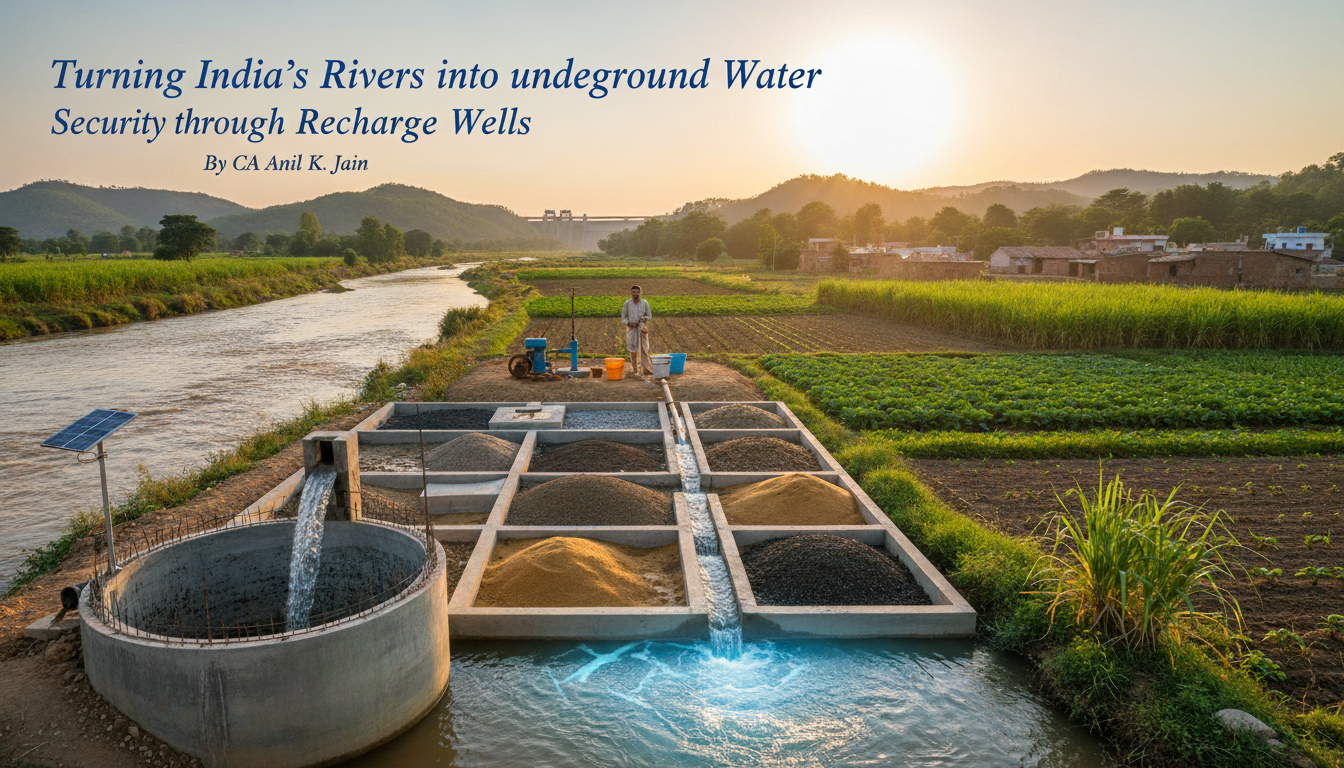
Water infrastructure is critical for both households and economic growth. India faces groundwater depletion, water contamination, aging urban supply networks, poor sewage treatment and waste management challenges. Water security must become part of national infrastructure planning.
India has made progress in electricity generation, but transmission losses, DISCOM financial stress, regional shortages and renewable energy integration remain major challenges. Reliable power supply is essential for industry, agriculture, services and households.
India must increase public and private investment in infrastructure. Stronger public-private partnerships, municipal bonds, infrastructure investment trusts and long-term financing institutions can help bridge the funding gap.
A single-window approval system with strict timelines can reduce bureaucratic delays. All major infrastructure projects should be tracked through digital dashboards and reviewed regularly.
Land acquisition should be fair, transparent and time-bound. Compensation, rehabilitation and community consultation should be handled professionally to reduce disputes and litigation.
Transparent tendering, digital monitoring, independent audits and accountability of officials can reduce corruption and improve project quality.
India should adopt Building Information Modelling, prefabrication, smart signalling, intelligent transport systems, smart grids, digital twins and artificial intelligence for project monitoring and demand forecasting.
Infrastructure development requires engineers, planners, technicians, project managers and skilled workers. Industry-linked vocational training and specialized technical education can reduce execution delays.
Infrastructure must be environmentally responsible. Renewable energy, green buildings, water recycling, climate-resilient roads and sustainable transport should be promoted.
Poor infrastructure is discussed as one of the major development challenges in the book Bharat: The Development Dilemma by CA Anil K Jain. The book examines 21 major challenges affecting India’s economic growth and offers practical solutions for policymakers, UPSC aspirants, economists, entrepreneurs and development professionals.
CA Anil K Jain is a Chartered Accountant, economist, policy researcher and author of Bharat: The Development Dilemma and River Water Recharge Wells. His research focuses on Indian economy, public policy, infrastructure development, taxation, water conservation and national development.
Poor infrastructure increases business costs, delays movement of goods, reduces productivity, discourages investment and slows economic growth.
Roads, railways, power, water supply, sanitation, logistics, ports, airports and urban transport are among the most affected sectors.
India can improve infrastructure by increasing investment, simplifying approvals, improving governance, adopting modern technology, strengthening project management and developing skilled manpower.
Yes. Reliable infrastructure is essential for industrial growth, agriculture, trade, employment, public services and overall national development.
Author: CA Anil K Jain | Topic: Poor Infrastructure in India, Infrastructure Development, Economic Growth and Public Policy
Ahimsa Foundation warmly welcomes information, photographs, literature, articles, and other meaningful contributions for publication on this web portal: www.jainsamaj.org | ✉ CAINDIA@HOTMAIL.COM
We also invite advertisements and sponsorship support to help us expand the reach of this social initiative and promote public awareness of Jain ideology.
Related
 Related
 Related

Copyright © 2026 jainsamaj. All rights reserved.