


The Inception and Legacy of Taoism
By CA A. K. Jain
 |
1. Inception of Taoism
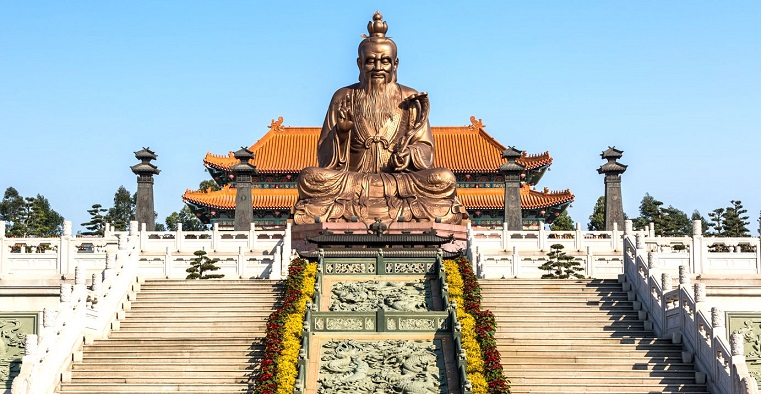
Taoism (or Daoism), one of the world’s oldest and most influential spiritual traditions, originated in ancient China around the 4th to 6th century BCE. It is primarily based on the teachings of Laozi (Lao Tzu), a semi-legendary figure believed to have authored the foundational text “Tao Te Ching” (The Book of the Way and Its Virtue). The word “Tao” means “the Way”- an underlying natural order of the universe that one should align with to achieve harmony and balance.
Taoism emerged as a reaction to the rigid structure of Confucianism, offering a more fluid, nature-oriented path to spiritual understanding. It blends philosophy, meditation, rituals, and alchemy, and over time evolved into both a philosophy and a religion.
2. Progress and Development Over Time
Taoism has undergone various phases of development:
| Period Key | Developments |
| Warring States Period (475–221 BCE) | Taoist philosophy gains recognition, Laozi’s Tao Te Ching and Zhuangzi’s writings become influential. |
| Han Dynasty (206 BCE – 220 CE) | Taoism becomes institutionalized; religious Taoism forms with rituals, deities, and temples. |
| Tang Dynasty (618–907 CE) | Taoism becomes state religion; emperors claim descent from Laozi. |
| Song & Yuan Dynasties | Taoist practices such as inner alchemy and meditation flourish. |
| Modern Era | Taoism spreads globally; integrates with martial arts, medicine, and wellness movements. |
3. People of Taoism
Taoists are practitioners who follow the teachings of the Tao. They can be monks, priests, lay followers, philosophers, or ordinary people who align their lives with the Tao. They emphasize simplicity, humility, compassion, and living in harmony with nature.
4. Religious Places
Taoist religious practices center around temples, mountain retreats, and sacred sites in nature. Some major Taoist places of worship include:
| Religious Place | Location | Significance |
| Wudang Mountains | Hubei, China | Center of Taoist martial arts and internal alchemy. |
| Mount Qingcheng | Sichuan, China | Birthplace of religious Taoism. |
| White Cloud Temple (Baiyun Guan) | Beijing | One of the oldest Taoist temples. |
| Mount Lao (Laoshan) | Shandong, China | Famous for Taoist scholarly studies and hermits. |
5. Philosophy of Taoism
Taoism emphasizes:
• Wu Wei : Effortless action, or acting in harmony with the flow of life.
• Yin and Yang : Duality of opposites that complement each other.
• Tao : The ultimate principle, indescribable and all-encompassing.
• Simplicity and Naturalness : Living close to nature, avoiding excess.
Taoism encourages inner peace, longevity, and spiritual wisdom through meditation, breathing exercises, diet, and ethical living.
6. Important Gurus and Contributors
| Name | Contribution |
| Laozi (Lao Tzu) | Founder of Taoism; author of Tao Te Ching. |
| Zhuangzi (Chuang Tzu) | Developed Taoist philosophy through allegorical writings and humor. |
| Zhang Daoling | Founded the Celestial Masters sect; instrumental in religious Taoism. |
| Lu Dongbin | One of the Eight Immortals; master of Taoist alchemy and meditation. |
7. Important Taoist Festivals
| Festival | Significance |
| Lantern Festival (Yuanxiao Festival) | Celebrates light and harmony, often associated with Laozi’s birthday. |
| Birthday of Laozi (15th day of 2nd lunar month) | Worship and readings of Tao Te Ching. |
| Ghost Festival (7th lunar month) | Honoring ancestors and wandering spirits. |
| Dragon Boat Festival | Originally tied to Taoist water deities and rituals for purification. |
8. Contributions to the Modern World
Taoism’s impact reaches far beyond religion :
• Health & Wellness: Practices like Tai Chi, Qigong, and Taoist Yoga promote holistic health.
• Environmentalism: Taoism’s reverence for nature has inspired ecological thinking.
• Martial Arts: Taoist principles underpin many Chinese martial arts, especially internal styles like Wudang Tai Chi.
• Mindfulness & Meditation: Taoist meditative practices have influenced modern spirituality and psychological well-being.
• Traditional Chinese Medicine: Rooted in Taoist philosophy of harmony and balance.
9. Contribution to India
While Taoism is not widely practiced in India as a religion, its philosophical and cultural exchange with Indian traditions like Buddhism and Yoga has been significant:
| Contribution | Explanation |
| Syncretic Influence | Taoism and Indian Buddhism cross-fertilized, especially in the development of Zen Buddhism (Chan) in China, which later influenced Indian Buddhist practices. |
| Cultural Curiosity | Indian scholars and yoga practitioners explore Taoist texts and alchemical traditions for comparative philosophy. |
| Spiritual Dialogues | Taoist teachings are discussed in Indian academic and spiritual circles. |
| Wellness Industry | Practices like Tai Chi and Qigong are now being taught in India for health and meditation. |
Conclusion
Taoism is not merely a religion but a way of life that offers timeless wisdom in a fast-paced world. Rooted in nature and simplicity, it teaches humanity to live in harmony with the universe-a message more relevant today than ever. Though it originated in China, Taoism’s soft yet profound influence has spread across continents, including India, enriching global thought, health, and spirituality.
-----------------------------------------------------
Author : CA A. K. Jain
Cell : +91 98 100 46108
-----------------------------------------------------
Mail to : Ahimsa Foundation
www.jainsamaj.org
R13052025
