


Shraman Sangh Upadhyay Shri Ramesh Muniji M.S.

1.
Introduction
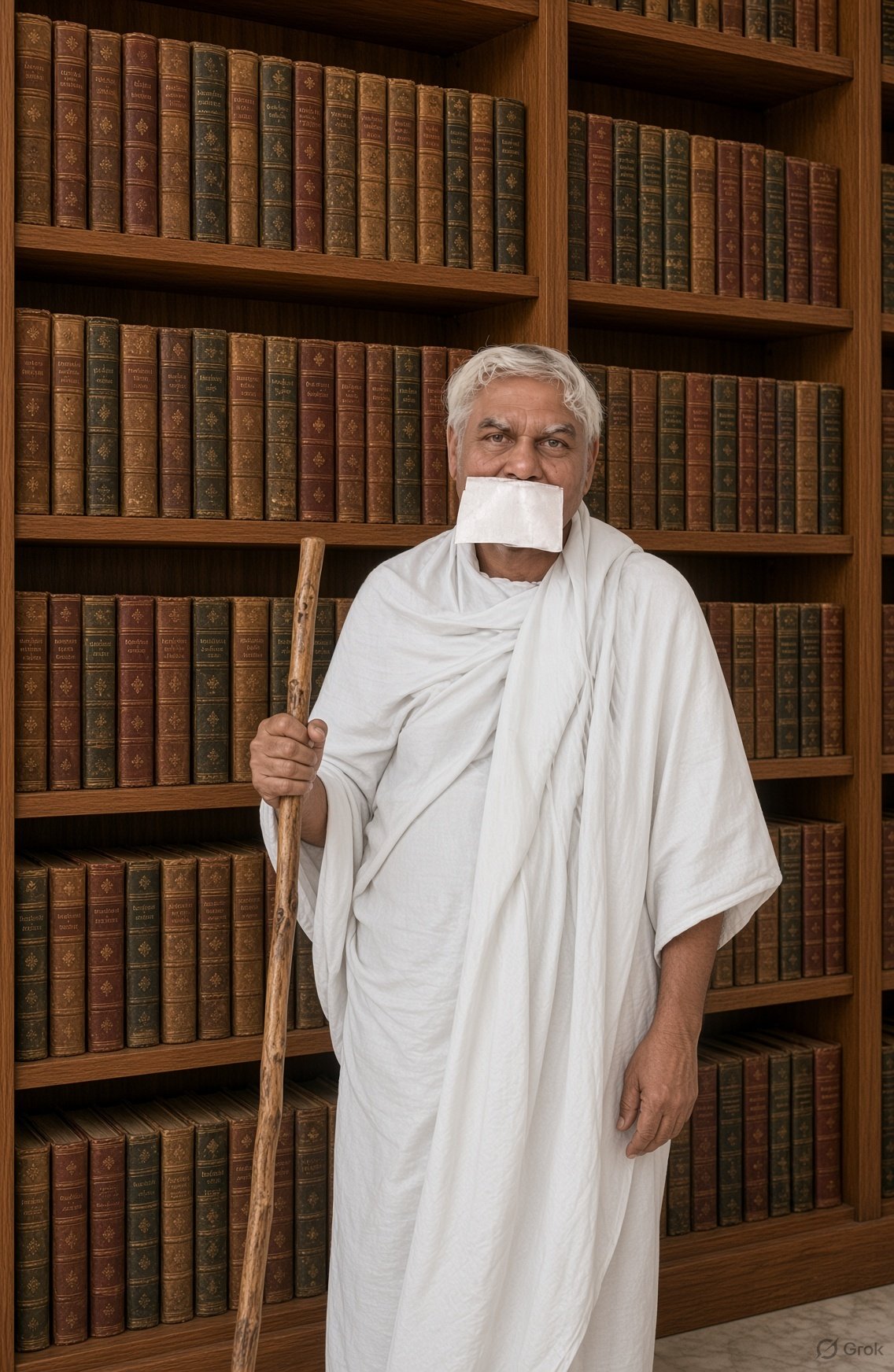
Pujya Upadhyay Shri Ramesh
Muniji Maharaj Saheb is a Jain monk, scholar, poet, editor and religious
teacher associated with the Shvetambar Sthanakwasi tradition. His life reflects
a commitment to Jain spiritual discipline, scriptural learning, literary
composition and the dissemination of Jain philosophy.
He is particularly associated
with the study of Jain Agamas, Sanskrit and Prakrit literature, Jain philosophy
and ethics. His extensive literary work and association with Jain religious
publications have contributed to the preservation and communication of Jain
teachings.
2. Birth and
family background
According to the biographical
record published , Shri Ramesh Muniji Maharaj Saheb was born on 24 January 1951
in Badu village, Nagaur district, Rajasthan. His birth name was Ramesh Kumar
Dosi, and he belonged to the Dosi Oswal Jain family.
His parents were:
The same biographical record
identifies his mother as Sadhvi Shri Prakashwati Ji following her religious
initiation. It also records that he had one brother, who became the Jain monk
Up-Pravartak Dr. Rajendra Muni Ji Maharaj. This family history is especially noteworthy
because both brothers embraced the Jain ascetic path, while their mother also
accepted renunciation. Their family's commitment to spiritual life provides an
important part of the background to Ramesh Muniji's religious journey.
3. Early
inclination towards renunciation
Jainism places considerable
importance on vairagya, or detachment from worldly attachments. The decision to
become a Jain monk involves accepting a disciplined life devoted to spiritual
development, non-violence, restraint and the study of religious teachings. The
published biography records a period of approximately two years of vairagya
before Ramesh Kumar Dosi accepted diksha. At a young age, he chose to leave
ordinary family life and dedicate himself to the Jain monastic tradition. His decision marked the beginning of a life in
which the pursuit of knowledge and spiritual discipline became central.
4. Diksha
and initiation into Jain monkhood
Upadhyay Shri Ramesh Muniji
Maharaj Saheb accepted Jain diksha on 15 March 1965.The record identifies the
place of initiation as Garh Siwana, Barmer district, Rajasthan, and names
Upadhyay Shri Pushkar Muniji Maharaj Saheb as his diksha guru.
Diksha is among the most
significant commitments in Jain religious life. It represents the renunciation
of worldly possessions and ambitions and the acceptance of a disciplined way of
living guided by the teachings of Lord Mahavir and the Jain Agamas. Under his
guru's guidance, Ramesh Muniji developed his understanding of Jain scriptures,
philosophy and religious conduct. His subsequent work as a scholar and teacher
reflects the importance he placed on the systematic study of Jainism.
5. Education
and scriptural scholarship
One of the distinguishing
features of Upadhyay Shri Ramesh Muniji's life is his commitment to learning. His
biographical record lists the following qualifications:
His areas of study include
Jain Agamas, Naya philosophy, ethics, philosophy and related religious
literature. The record also identifies Sanskrit, Prakrit and Hindi among the
languages he knows. These subjects are
central to the intellectual tradition of Jainism. The Jain Agamas preserve
religious teachings concerning the soul, karma, non-violence, self-restraint,
spiritual practice and liberation. The study of Sanskrit and Prakrit helps
scholars understand the language and philosophical context of traditional Jain
literature. His scholarly interests therefore encompass both the preservation
of classical teachings and their interpretation for students and religious
audiences.
6. Literary
contributions and editorial work
Upadhyay Shri Ramesh Muniji is
recorded as having written more than 5,000 articles and having served as an
editor of Jainaagam Sahitya. This
extensive literary activity is an important part of his contribution to the
Jain community. Religious writing and editing serve several purposes:
explaining scriptural teachings, making philosophical ideas accessible,
recording the lives of saints, and preserving the intellectual heritage of the
community. His association with Jain Agama literature reflects a particular
emphasis on religious scholarship. Through articles, teaching and editorial
work, a Jain scholar can help connect traditional texts with the questions and
circumstances of contemporary life.
The published record also
describes him as a poet, writer, teacher, critic and spontaneous Sanskrit poet.
These descriptions point to a combination of literary versatility and religious
learning.
7. Religious
preaching and teaching
The role of a Jain Upadhyay
traditionally centres on religious learning and instruction. An Upadhyay is
expected to possess a deep understanding of scriptures and to guide others in
their study. Ramesh Muniji's recorded qualifications and editorial work are
consistent with this scholarly and educational role. The Jain tradition emphasises
that knowledge must be accompanied by humility and right conduct. Intellectual
understanding becomes spiritually meaningful when it helps individuals
cultivate compassion, restraint and freedom from attachment. His association
with Jain religious literature and education is therefore an important
dimension of his religious service.
8. Vihar and
travel in the service of Jainism
Ramesh Muni ji travelled on foot through
numerous parts of India, including Rajasthan, Gujarat, Himachal Pradesh,
Maharashtra, Tamil Nadu, Jammu and Kashmir, Andhra Pradesh, Uttar Pradesh,
Delhi, Punjab, Madhya Pradesh and Haryana. The record estimates his total
walking distance at approximately 50,000 kilometres. Traditional Jain monks undertake vihar,
travelling from place to place in accordance with their monastic discipline.
Such journeys allow monks to deliver religious discourses, guide devotees,
teach scriptures and encourage the practice of Jain principles. Walking
journeys also reflect the importance of simplicity and restraint in Jain
ascetic life. They provide opportunities for personal discipline as well as
direct engagement with religious communities across different regions. The
geographical breadth of Ramesh Muniji's recorded travels illustrates the
extensive reach of his religious activities.
9.
Initiations and service to the Jain monastic tradition
The biographical record
credits Ramesh Muniji with having given diksha to several individuals. The
initiation of new monks and nuns is an important part of the continuity of Jain
religious life. Through the guru-disciple relationship, religious knowledge,
monastic discipline and scriptural traditions are transmitted from one
generation to the next. His association with the initiation of new ascetics
represents a contribution to the continuation of the Jain Shraman tradition.
10. His
relationship with Upadhyay Shri Pushkar Muniji Maharaj Saheb
Upadhyay Shri Pushkar Muniji
Maharaj Saheb was Ramesh Muniji's recorded diksha guru. Pushkar Muniji is
remembered in the Shvetambar Sthanakwasi tradition for his scholarship,
religious preaching and efforts to strengthen unity within the Jain Shraman
Sangh. The relationship between the two
illustrates the central role of the guru in Jain monastic education. A guru
does more than confer initiation. The guru provides instruction in religious
discipline, encourages scriptural study and guides the disciple's spiritual
development. Ramesh Muniji's subsequent work in scholarship and religious
writing can be understood within this broader tradition of learning and
transmission.
11. His
brother, Up-Pravartak Dr. Rajendra Muniji Maharaj Saheb
Another significant aspect of
Ramesh Muniji's biography is his relationship with his younger brother,
Up-Pravartak Dr. Rajendra Muniji Maharaj Saheb. The biographical record identifies Dr. Rajendra
Muniji as his brother and records that he too embraced Jain monastic life. A
separate biographical account describes Dr. Rajendra Muniji's extensive study
of languages, Jain philosophy and religious literature. The
religious commitment of both brothers, together with the renunciation of their
mother, makes their family history a notable example of a household whose members
embraced the Jain ascetic path. It also illustrates the importance of spiritual
inspiration within the family and the influence of Jain religious traditions on
personal choices.
12.
Spiritual ideals associated with his life
The principal values of Jainism
provide a useful framework for understanding the significance of Ramesh
Muniji's religious and literary work.
Ahimsa — non-violence: Respect
for every living being and the avoidance of unnecessary harm.
Satya — truthfulness:
Commitment to truthful speech and intellectual honesty.
Aparigraha —
non-possessiveness: Reducing attachment to wealth, possessions and worldly
status.
Samyam — self-restraint:
Discipline over thoughts, speech, desires and actions.
Swadhyaya — scriptural study:
Continuous learning and reflection on religious teachings.
Anekantavada — many-sided
understanding: Recognising that complex questions may require consideration of
different perspectives.
These principles are central
to Jain philosophy and are especially relevant to a religious scholar whose
life is associated with scriptural study, writing and teaching.
13.
Continuing legacy
Upadhyay Shri Ramesh Muniji
Maharaj Saheb's recorded contributions encompass monastic discipline, religious
education, literary work, editorial activity, travel and the initiation of new
ascetics.
His profile is preserved
through Jain community publications, including the biographical record on
JainSamaj.org. The record also provides a contact for the Shri Tarak Guru Jain
Granthalaya in Udaipur, Rajasthan, which may be useful for further historical
verification.
Conclusion
Pujya Upadhyay Shri Ramesh
Muniji Maharaj Saheb represents the scholarly and ascetic dimensions of the
Shvetambar Sthanakwasi Jain tradition. His early renunciation, education in
Jain scriptures, extensive literary work, editorial activities and long
journeys on foot reflect a life devoted to religious learning and service.
His family history is also
noteworthy: his brother became Up-Pravartak Dr. Rajendra Muniji Maharaj Saheb,
and his mother accepted religious initiation as Sadhvi Shri Prakashwati Ji.
The enduring significance of a
Jain monk's life lies not merely in scholarly accomplishments or religious
titles, but in the extent to which knowledge encourages self-restraint,
compassion, humility and spiritual progress. May the teachings of Lord Mahavir
and the Jain Shraman tradition continue to inspire humanity towards Ahimsa,
truth, self-discipline and universal compassion?

R26102026
Ahimsa Foundation warmly welcomes information, photographs, literature, articles, and other meaningful contributions for publication on this web portal: www.jainsamaj.org | ✉ CAINDIA@HOTMAIL.COM
We also invite advertisements and sponsorship support to help us expand the reach of this social initiative and promote public awareness of Jain ideology.
 Related
 Related
 Related

Copyright © 2026 jainsamaj. All rights reserved.