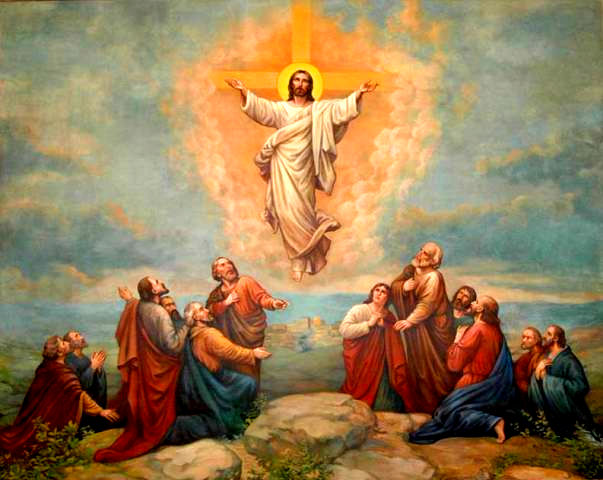
The Inception and Influence of Christianity
By CA A. K. Jain
Introduction
Christianity is one of the world's major religions, with over two billion adherents globally. Rooted in the teachings of Jesus Christ, it emerged over two thousand years ago in the Roman province of Judea. Over centuries, Christianity has shaped societies, cultures, philosophies, and global politics, leaving an indelible impact on the modern world, including India.
1. Inception of Christianity
Christianity began in the 1st century CE in the Middle East, specifically in Judea (modern-day Israel/Palestine), during the Roman Empire's reign. It arose from Judaism and centered around the life, teachings, crucifixion, and resurrection of Jesus of Nazareth, known as Jesus Christ, regarded by Christians as the Son of God and the Messiah (Christos in Greek).
After Jesus's death and resurrection, his apostles, particularly Paul the Apostle, spread his teachings across the Roman world, forming early Christian communities in Asia Minor, Greece, and Rome. Initially persecuted, Christianity eventually gained acceptance and became the state religion of the Roman Empire under Emperor Constantine in the 4th century CE.
2. Progress and Global Spread
• Early Centuries (1st-5th CE) : Christianity spread rapidly through missionary work and trade routes across the Roman Empire.
• Middle Ages (5th-15th CE) : Christianity became deeply rooted in Europe. The Roman Catholic Church held immense power. The Eastern Orthodox Church also emerged after the Great Schism of 1054.
• Renaissance and Reformation (16th CE) : Martin Luther's Protestant Reformation challenged the authority of the Catholic Church, leading to the rise of Protestant denominations.
• Modern Era: Missionary activities in the 18th-20th centuries brought Christianity to Asia, Africa, and the Americas.
3. People of Christianity
Christians are the followers of Jesus Christ and are divided into several branches :
• Roman Catholic
• Eastern Orthodox
• Protestant (includes Baptists, Methodists, Lutherans, Evangelicals, etc.)
• Other Eastern Churches (e.g., Coptic, Syrian, Armenian)
Christians share core beliefs in the Bible (Old and New Testaments), the Holy Trinity (Father, Son, Holy Spirit), salvation through Jesus, and the practice of sacraments like baptism and communion.
4. Religious Places of Christianity
• Churches - Places of worship; central to Christian community life.
• Cathedrals - Large and often historic churches, e.g., Notre-Dame Cathedral (France), St. Peter’s Basilica (Vatican).
• Pilgrimage Sites:
o Jerusalem - Site of Jesus’s crucifixion and resurrection.
o Bethlehem - Birthplace of Jesus.
o Vatican City - Center of the Roman Catholic Church.
o Santiago de Compostela (Spain), Lourdes (France), Mount Sinai (Egypt).
5. Christian Philosophy
Christianity emphasizes :
• Love and compassion for all (Agape).
• Forgiveness and repentance.
• Salvation through faith and grace.
• Service to others, humility, and truth.
• Ethical living inspired by the life and teachings of Jesus.
Christian theology has significantly shaped Western ethics, law, and human rights.
6. Contribution to the Modern World
|
Field
|
Contribution
|
|
Education
|
Founding of schools, universities (Oxford, Harvard, etc.)
|
|
Science
|
Many early scientists (e.g., Newton, Mendel) were Christian
|
|
Art and Culture
|
Influenced Renaissance art, architecture, music
|
|
Humanitarian Work
|
Charities, hospitals, orphanages globally
|
|
Human Rights
|
Christian ideas influenced abolition of slavery, civil rights movements (e.g., MLK Jr.)
|
7. Important Christian Gurus and Figures
|
Name
|
Contribution
|
|
Jesus Christ
|
Founder, moral teacher, central figure of Christianity
|
|
Paul the Apostle
|
Spread Christianity beyond Jewish communities
|
|
St. Augustine
|
Early theologian, philosopher
|
|
St. Francis of Assisi
|
Model of humility and service
|
|
Martin Luther
|
Leader of the Protestant Reformation
|
|
Mother Teresa
|
Missionary and humanitarian in India
|
|
Pope John Paul II
|
Advocate for peace and interfaith dialogue
|
|
Martin Luther King Jr.
|
Civil Rights Leader, Christian pastor
|
8. Christian Festivals
|
Festival
|
Significance
|
|
Christmas (Dec 25)
|
Celebrates birth of Jesus
|
|
Easter
|
Commemorates resurrection of Jesus
|
|
Good Friday
|
Marks Jesus’s crucifixion
|
|
Pentecost
|
Descent of the Holy Spirit on apostles
|
|
All Saints’ Day
|
Honors Christian saints
|
9. Contribution to India
Christianity came to India as early as 52 CE, believed to be brought by St. Thomas the Apostle, one of Jesus’s 12 disciples. Today, Christians make up about 2.3% of India's population (~28 million people).
|
Area
|
Contribution in India
|
|
Education
|
Missionary schools like St. Xavier’s, Loyola, St. Stephen’s
|
|
Healthcare
|
Christian missionaries founded hospitals in rural/tribal areas
|
|
Social Reform
|
Worked for the upliftment of Dalits, women, tribals
|
|
Humanitarian Services
|
NGOs like Caritas India, missions of Mother Teresa
|
|
Interfaith Harmony
|
Promoted peace and service irrespective of religion
|
Conclusion
Christianity, from its humble beginnings in Judea, has grown into a global religion with a profound influence on spirituality, philosophy, culture, education, and humanitarian work. Its core message of love, service, and compassion continues to inspire millions. In India, its contribution to education, social reform, and healthcare stands as a testimony to the positive integration of global religions into Indian society.
-----------------------------------------------------
Author : CA A. K. Jain
Cell : +91 98 100 46108
-----------------------------------------------------
Mail to : Ahimsa Foundation
www.jainsamaj.org
R15052025