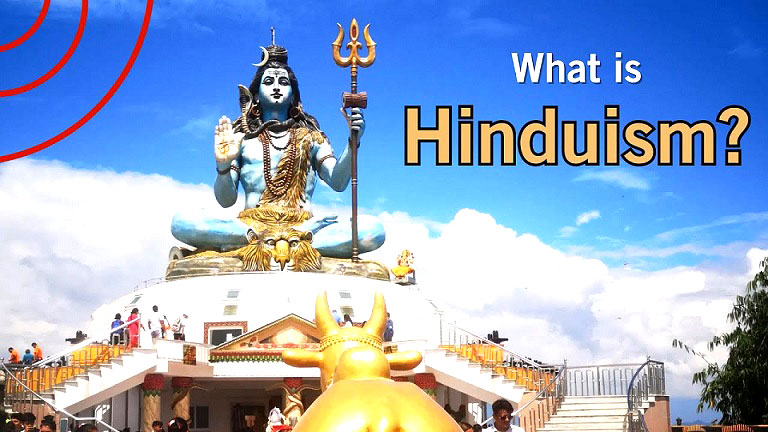
Hinduism
By CA A. K. Jain
Inception of Hindu Religion
Hinduism, often described as the world’s oldest living religion, does not have a single founder or a specific point of origin. It evolved over more than 4,000 years on the Indian subcontinent, rooted in the Indus Valley Civilization (c. 3300-1300 BCE) and further shaped by the Vedic period (c. 1500-500 BCE).
The sacred texts of Hinduism, particularly the Vedas, are among the earliest religious compositions in human history. Over millennia, this diverse faith developed a rich philosophical, spiritual, and cultural tradition, eventually known as Sanātana Dharma-meaning "Eternal Order" or "Eternal Duty."
Progress and Evolution
Hinduism has continuously evolved through several key phases:
| Period |
Development |
| Indus Valley Era |
Early spiritual practices, possibly proto-Shiva worship. |
| Vedic Period |
Composition of the Vedas; ritualistic traditions. |
| Upanishadic Era |
Emergence of philosophical thought-karma, moksha, atman. |
| Epics & Puranic Period |
Writing of the Mahabharata, Ramayana, and Puranas. |
| Bhakti Movement |
Emphasis on personal devotion and social reform. |
| Modern Era |
Reformist movements (e.g., Arya Samaj, Ramakrishna Mission), global influence, and revivalism. |
Hindu People and Global Presence
With over 1.2 billion adherents, Hinduism is the third-largest religion globally.
| Region |
Hindu Population (approx.) |
| India |
1.1 billion (80% of population) |
| Nepal |
~21 million (official state religion until 2008) |
| Bangladesh, Sri Lanka, Indonesia (Bali), Pakistan |
Significant minorities |
| Diaspora |
USA, UK, Canada, Australia, South Africa, Mauritius, Trinidad, Fiji, etc. |
Hindus have migrated across the globe and carried their cultural and spiritual heritage with them.
Sacred Religious Places
Hinduism has countless holy sites, but some are of pan-Indian importance:
| Place |
Significance |
| Varanasi (Kashi) |
Oldest living city, sacred to Shiva, spiritual capital. |
| Ayodhya |
Birthplace of Lord Rama. |
| Mathura-Vrindavan |
Associated with Lord Krishna. |
| Tirupati |
One of the richest temples, dedicated to Lord Venkateswara. |
| Kedarnath, Badrinath, Gangotri, Yamunotri |
Char Dham of Uttarakhand. |
| Rameswaram, Dwarka, Puri, Badrinath |
Char Dham circuit by Adi Shankaracharya. |
| Kumbh Mela Sites (Prayagraj, Haridwar, Nashik, Ujjain) |
World's largest religious gatherings. |
Philosophy and Beliefs
Hinduism is not a dogmatic religion but a vast system of thought based on Dharma (duty/righteousness), Karma (action and consequence), Moksha (liberation), and Samsara (cycle of birth and death).
Core Philosophical Schools (Darshanas) :
• Vedanta - Non-dualism (Advaita), qualified monism, and dualism.
• Samkhya - Dualism of spirit and matter.
• Yoga - Discipline of body and mind.
• Nyaya &Vaisheshika - Logic and atomic theory.
• Purva Mimamsa - Ritualistic interpretation of the Vedas.
Key Concepts :
• Brahman - The ultimate, formless reality.
• Atman - The individual soul; essentially one with Brahman.
• Gods and Goddesses - Various deities like Vishnu, Shiva, Devi, Ganesha, Hanuman are expressions of Brahman.
Hinduism accommodates monotheism, polytheism, pantheism, and atheism under its spiritual umbrella.
Contribution to the Modern World
| Field |
Contribution |
| Philosophy & Ethics |
Concepts of karma, reincarnation, and non-violence (Ahimsa) influenced global thinkers like Schopenhauer and Gandhi. |
| Science & Mathematics |
Zero, decimal system, trigonometry, surgery (Sushruta), and Ayurveda. |
| Yoga & Meditation |
Now global practices rooted in Hindu philosophy. |
| Ecological Thought |
Reverence for rivers, trees, animals as sacred. |
| Art & Architecture |
Temples, classical music, dance forms like Bharatanatyam, Odissi. |
Important Gurus and Saints
| Name |
Contribution |
| Adi Shankaracharya (8th century) |
Unified Hindu philosophy, established mathas across India. |
| Swami Vivekananda |
Global ambassador of Hinduism at 1893 Chicago Parliament of Religions. |
| Ramakrishna Paramahamsa |
Mystic who promoted universal religion. |
| Maharishi Patanjali |
Systematized Yoga through the Yoga Sutras. |
| Sri Aurobindo |
Integrated spirituality and nationalism. |
| Ravidas, Kabir, Mirabai, Tulsidas |
Saints of the Bhakti movement who spread devotion beyond caste lines. |
Major Festivals
| Festival |
Significance |
| Diwali |
Festival of lights; celebrates victory of light over darkness. |
| Holi |
Festival of colors; celebrates love, spring, and Krishna’s stories. |
| Navaratri / Durga Puja |
Worship of divine feminine energy. |
| Janmashtami |
Birth of Lord Krishna. |
| Rama Navami |
Birth of Lord Rama. |
| Makar Sankranti |
Harvest festival, solar transition. |
| Ganesh Chaturthi |
Celebration of Lord Ganesha’s birth. |
| Raksha Bandhan |
Celebrates sibling bond and familial duties. |
Contribution to India
Hinduism forms the cultural and spiritual backbone of India:
• Language and Literature : Sanskrit, epics like Ramayana, Mahabharata, and scriptures like Gita shape Indian thought.
• Arts : Classical dance, music, sculpture, and architecture are inspired by Hindu stories.
• Festivals : Hindu festivals unite people and boost local economies.
• Social Institutions : Concepts like Ashrama Dharma, Varna, and family structure influence Indian social life.
• Nationalism and Unity : Hindu reform movements led social awakening during colonial times.
• Legal and Moral Code : Many Indian laws, ethical codes, and daily practices draw from Hindu Dharma.
Conclusion
Hinduism is not merely a religion-it is a living civilization. With its pluralistic spirit, deep spiritual insights, tolerance, and respect for all life forms, Hinduism continues to illuminate human thought and practice. From the banks of the Ganga to classrooms in the West, from temples to global yoga studios, Hinduism’s eternal message of unity in diversity and harmony with nature resonates across cultures and eras.
-----------------------------------------------------
Author : CA A. K. Jain
Cell : +91 98 100 46108
-----------------------------------------------------
Mail to : Ahimsa Foundation
www.jainsamaj.org
R15052025