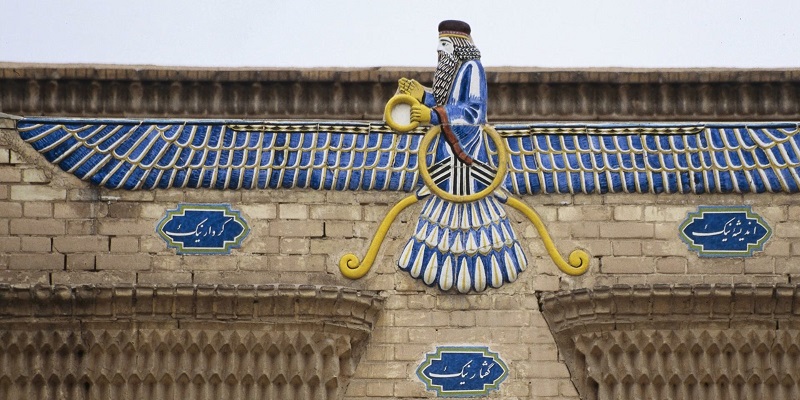
Zoroastrianism : Flame of Ancient Wisdom
By CA A. K. Jain
Inception of Zoroastrianism
Zoroastrianism, one of the oldest monotheistic religions in the world, was founded by the Prophet Zarathustra (Zoroaster) in ancient Persia (modern-day Iran), estimated around 1200 BCE - 1500 BCE. The core scripture of the faith, the Avesta, contains hymns and spiritual teachings attributed to Zoroaster himself. At a time when polytheism and ritual sacrifices dominated, Zoroaster introduced the worship of a single, supreme god: Ahura Mazda, the Wise Lord.
Zoroastrianism was the state religion of the Achaemenid Empire (550–330 BCE), the Parthian Empire (247 BCE-224 CE), and the Sassanian Empire (224-651 CE). Its decline began after the Arab conquest of Persia, which led to mass conversions to Islam.
Progress and Diaspora
With the fall of the Sassanian Empire in the 7th century CE, many Zoroastrians fled religious persecution and migrated to India, primarily Gujarat, where they were welcomed by local rulers. These refugees came to be known as the Parsis. Over the centuries, they flourished economically and culturally, integrating into Indian society while preserving their distinct religious identity.
Zoroastrian People
1. Parsis
• Descendants of Persian Zoroastrians who settled in India.
• Concentrated primarily in Mumbai, Gujarat, and some in Hyderabad.
2. Irani Zoroastrians
• More recent migrants from Iran, distinct in customs and dialect.
Though a small community globally (estimated 100,000-120,000 people), Zoroastrians have had a disproportionate influence on science, industry, law, and philanthropy, especially in India.
Religious Places and Pilgrimage
1. Fire Temples (Agiaries)
• Zoroastrian worship centers where a sacred fire is kept burning eternally.
• The fire symbolizes purity and the divine spark.
2. Atash Behrams
• The highest grade of fire temples.
• There are only nine Atash Behrams in the world-eight in India and one in Iran.
3. Tower of Silence (Dakhma)
• Used for the traditional sky burial ritual where bodies are placed for natural decomposition.
Philosophy and Beliefs
Core Beliefs :
• Monotheism : Belief in Ahura Mazda, the supreme god.
• Dualism : Cosmic struggle between good (Spenta Mainyu) and evil (Angra Mainyu).
• Free Will: Humans are free to choose between good and evil.
• Moral Code : “Good Thoughts, Good Words, Good Deeds.”
• Afterlife : Based on one’s choices, the soul faces judgment and enters heaven or hell.
Zoroastrianism deeply values truth, purity, charity, and respect for nature.
Contribution to the Modern World
Zoroastrianism has influenced major world religions including Judaism, Christianity, and Islam. Concepts such as :
• Heaven and Hell
• Day of Judgment
• Messianic Savior
• Angels and Demons
…originated or were developed in Zoroastrian thought.
Scientific & Ethical Contributions
• Early emphasis on cleanliness and hygiene.
• Respect for nature and ecological balance.
Important Guru : Prophet Zarathustra
• Regarded as one of the first religious reformers and philosophers.
• Preached a rational, ethical, and monotheistic religion.
• Encouraged questioning, truth-seeking, and spiritual development.
His teachings shaped the religious and political foundations of ancient Persia and resonate in modern ethical frameworks.
Important Zoroastrians Who Contributed to Humanity
| Name |
Contribution |
| Jamsetji Tata |
Founder of the Tata Group, father of Indian industry. |
| Dadabhai Naoroji |
First Indian MP in British Parliament; advocate of Indian independence. |
| Homi J. Bhabha |
Father of India’s nuclear program. |
| Freddie Mercury |
Iconic British rock singer (Queen); born Farrokh Bulsara to Parsi parents. |
| Field Marshal Sam Manekshaw |
Hero of the 1971 Indo-Pak war; first Indian field marshal. |
| Ratan Tata |
Business magnate and philanthropist; elevated Indian business globally. |
Important Festivals
| Festival |
Significance |
| Navroz (Nowruz) |
Persian New Year, celebrated on the spring equinox; symbolizes renewal and rebirth. |
| Khordad Sal |
Birthday of Prophet Zarathustra. |
| Zarthost No Deeso |
Commemoration of the death of Prophet Zarathustra. |
| Pateti |
Eve of the New Year; a day for reflection, repentance, and renewal. |
Contribution to India
Zoroastrians in India have been cultural torchbearers, philanthropists, and nation-builders.
Key Contributions:
• Industrialization : Through Tata, Godrej, Wadia, and others.
• Education : Institutions like Indian Institute of Science (IISc), Tata Institute of Social Sciences (TISS).
• Healthcare : Tata Memorial Hospital, major Parsi charitable trusts.
• Philanthropy : Massive contributions to disaster relief, housing, sanitation, and community welfare.
Their loyalty, work ethic, and civic-mindedness have earned them respect across India.
Conclusion
Though small in number, the Zoroastrian community stands tall in its legacy of righteousness, wisdom, and service to humanity. The eternal flame they guard is not just a religious symbol-it is a metaphor for the light of reason, morality, and progress that Zoroastrianism has ignited throughout history.
-----------------------------------------------------
Author : CA A. K. Jain
Cell : +91 98 100 46108
-----------------------------------------------------
Mail to : Ahimsa Foundation
www.jainsamaj.org
R14052025