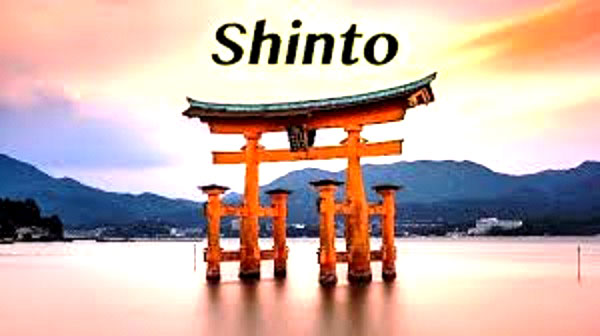
Shintoism
By CA A. K. Jain
Inception of Shintoism
Shintoism or Shinto, meaning "The Way of the Gods," is the indigenous religion of Japan, with its roots deeply embedded in the ancient culture and traditions of the Japanese people. It has no known founder or sacred scripture like the Bible or the Quran. Instead, it evolved organically through centuries of animism, folklore, and mythology.
Shintoism dates back to at least the Yayoi period (300 BCE to 300 CE). Its central belief is in kami-spirits or deities that inhabit natural objects, ancestors, and sacred places. These kami are not gods in the Western sense but rather spiritual presences that influence nature and human affairs.
Shintoism was formalized in the 8th century with the writing of Japan’s earliest historical records-the Kojiki (712 CE) and Nihon Shoki (720 CE)-which compiled Shinto myths, including the creation of Japan by deities Izanagi and Izanami, and the divine ancestry of the imperial family through the sun goddess Amaterasu.
Progress and Development
Shintoism has coexisted with Buddhism since it was introduced to Japan in the 6th century. Rather than conflicting, the two religions often merged in practice-a syncretic tradition known as Shinbutsu-shūgō. During the Meiji Restoration (1868), the Japanese government attempted to purify Shinto by separating it from Buddhism and promoting it as the state religion under State Shinto.
After World War II, State Shinto was abolished, and Shinto became a purely religious institution again, distinct from the government. Today, it is practiced both formally in shrines and informally in homes across Japan.
Shinto People and Followers
Shintoism has no formal conversion process, and most Japanese consider themselves both Shinto and Buddhist. As of 2025, there are an estimated 80 to 100 million Shinto practitioners, primarily in Japan, although some followers exist worldwide, especially in Hawaii, Brazil, and the U.S.
Unlike proselytizing religions, Shintoism emphasizes practice over belief, ritual over doctrine, and community harmony over individual salvation.
Philosophy of Shintoism
Shinto's philosophy is centered on purity, harmony with nature, ancestor veneration, and reverence for the kami. It emphasizes:
• Kansha (gratitude) toward life and nature
• Makoto (sincerity) in action
• Tsumi (impurity) caused by wrong actions or thoughts
• Misogi (ritual purification) through water
• Matsuri (festival) as communal expressions of reverence
It does not emphasize judgment, sin, or the afterlife but focuses on living in harmony with the world and one's community.
Religious Places
Important Shinto Shrines:
| Shrine |
Location |
Significance |
| Ise Grand Shrine |
Mie Prefecture |
Dedicated to Amaterasu, Japan’s most sacred shrine, symbolizing imperial origins |
| Izumo Taisha |
Shimane Prefecture |
One of Japan’s oldest shrines, dedicated to Ōkuninushi, god of nation-building |
| Fushimi Inari Taisha |
Kyoto |
Famous for its thousands of red torii gates, dedicated to the kami of agriculture |
| Meiji Shrine |
Kyoto |
Dedicated to Emperor Meiji, symbol of Japan’s modernization |
There are over 80,000 Shinto shrines across Japan.
Festivals of Shintoism
Shinto festivals, known as matsuri, celebrate seasonal changes, harvests, and the local deities. Major festivals include :
| Festival |
Time |
Significance |
| Shogatsu (New Year) |
January 1-3 |
Purification, renewal, and prayers for health and success |
| Tanabata |
July 7 |
Star festival, celebrating meeting of celestial lovers Vega and Altair |
| Obon |
Mid-August |
Honor of ancestors' spirits |
| Gion Matsuri |
July (Kyoto) |
One of Japan’s largest festivals with parades and purification rituals |
Important Gurus and Contributors
Shintoism does not have prophets or founders but does revere certain Shinto priests, emperors, and cultural figures :
Notable Figures :
• Emperor Jimmu: Mythological first emperor of Japan, believed to be descended from Amaterasu.
• Motoori Norinaga (1730-1801): A scholar of Kokugaku (National Studies) who revived Shinto classics and emphasized Japan's spiritual uniqueness.
• Hirata Atsutane (1776-1843): Another Kokugaku scholar, known for making Shinto more accessible to common people.
While not religious gurus, these individuals were central to Shinto philosophy, education, and revival.
Contribution to the Modern World
Shintoism’s influence extends beyond religion into environmental ethics, architecture, cultural aesthetics, and human harmony with nature :
Key Contributions :
1. Environmental Ethics : The reverence for nature and natural purity has shaped Japan’s conservation policies and ecological awareness.
2. Architecture : Shinto shrines and their minimalist, wooden structures have inspired modern architecture focused on harmony with the environment.
3. Cultural Identity : Shinto festivals, rituals, and customs are a cornerstone of Japanese identity and diplomacy.
4. Mental Health and Ritual Purification : Practices like misogi and shrine visits are seen as stress-relievers and mental reset mechanisms.
Contribution to India
Although Shintoism and Indian religions like Hinduism and Buddhism developed separately, their philosophies have influenced each other, particularly during the Buddhist transmission from India to Japan. The shared emphasis on :
• Rituals and purification
• Nature worship
• Reverence for ancestors
has allowed spiritual dialogue between the two cultures.
Cultural Bridges :
• Indian Buddhism shaped Japanese Buddhism, which interwove with Shintoism.
• Shinto deities like Benzaiten (originating from Hindu goddess Saraswati) show India’s indirect imprint on Shinto beliefs.
• Collaborative cultural festivals, martial arts exchanges, and spiritual retreats have strengthened India-Japan religious ties.
Conclusion
Shintoism, with its timeless reverence for kami, nature, and purity, remains a living tradition, shaping not only Japanese spirituality but also contributing to global understandings of environmental harmony, inner peace, and cultural continuity. While not widely practiced in India, its shared roots with Indian traditions foster mutual respect, philosophical alignment, and spiritual diplomacy between the two ancient civilizations.
-----------------------------------------------------
Author : CA A. K. Jain
Cell : +91 98 100 46108
-----------------------------------------------------
Mail to : Ahimsa Foundation
www.jainsamaj.org
R14052025