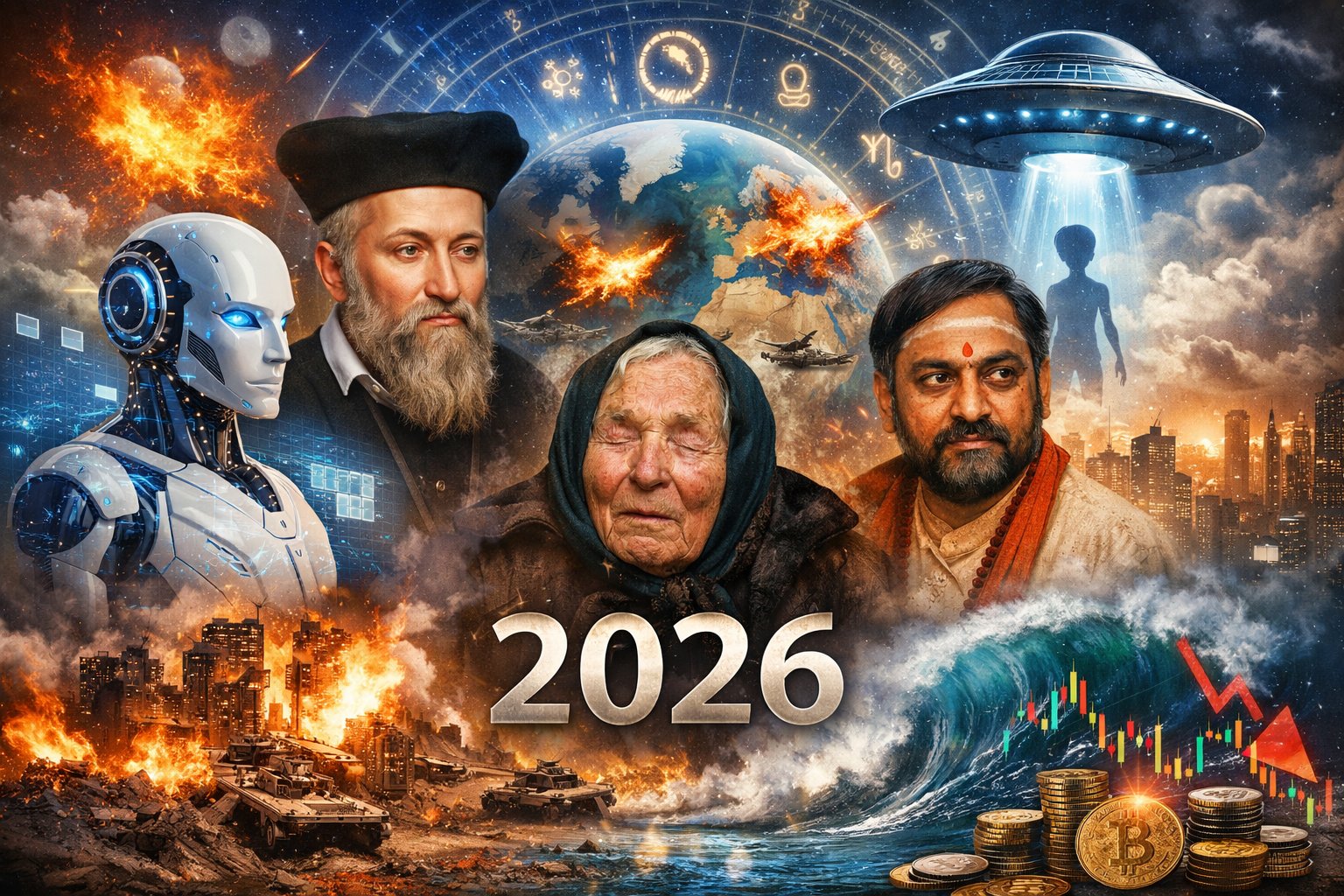
Major Global Forecasts for 2026: What Astrologers and Prophets Predict - 1.03.2026
|
Major Global Forecasts for 2026: What Astrologers and Prophets Predict
CA A.K.jAIN
As the world looks ahead to 2026, astrologers, mystics, and futurists from different traditions describe the coming year as a decisive turning point for humanity. Forecasts attributed to figures such as Baba Vanga, Nostradamus, interpretations of the ancient Indian text Bhavishya Malika, and modern astrologers including P. V. R. Narasimha Raosuggest that 2026 may be marked by rapid technological change, geopolitical tension, environmental upheaval, and deep social transformation. While these predictions are not scientific certainties, they continue to attract attention because of their symbolic alignment with current global trends. One of the most frequently discussed forecasts for 2026 concerns the rise of artificial intelligence.
Interpreters of predictions attributed to Baba Vanga, along with modern astrologers analyzing Uranus- and Mercury-driven planetary cycles, suggest that AI will move beyond simple assistance into autonomous decision-making roles. According to these forecasts, artificial intelligence could manage businesses, financial systems, and administrative processes, fundamentally reshaping daily life.
Many contemporary futurists echo this view, predicting that automation and AI governance tools will significantly alter employment and economic structures. Geopolitical instability is another recurring theme in forecasts for 2026. Baba Vanga, Nostradamus, and commentators drawing from Bhavishya Malika are often cited when discussing the possibility of escalating regional conflicts and power struggles among major nations.
These prophecies frequently describe wars driven by arrogance, ambition, and unresolved rivalries rather than clearly defined causes. Indian geopolitical astrologer P. V. R. Narasimha Rao has also suggested that planetary alignments indicate heightened international tension alongside shifts in global power balances. Predictions related to natural disasters are equally prominent. Forecasts attributed to Baba Vanga and interpretations of Bhavishya Malika warn of increased earthquakes, floods, cyclones, and other extreme environmental events. Astrologers associate these warnings with heavy planetary influences involving Saturn and Neptune, traditionally linked with karma, oceans, and large-scale natural forces.
Although symbolic, these predictions resonate with ongoing concerns about climate instability. Another widely circulated prediction connected to 2026 involves a possible revelation related to extraterrestrial life. Baba Vangais often credited with foreseeing a major discovery or disclosure that could change humanity’s understanding of the universe.
While highly speculative and unsupported by scientific evidence, this forecast continues to capture public imagination amid growing interest in space exploration and unidentified aerial phenomena. Political upheaval is also emphasized in prophecies linked to Nostradamus. Interpreters of his quatrains point to symbolic references to the sudden fall or death of a powerful global leader.
These verses are intentionally vague, allowing for broad interpretation, yet they contribute to expectations of instability within global leadership structures during this period. Health-related concerns appear in several forecasts as well. Bhavishya Malika, along with some modern astrologers, is interpreted as warning of new health challenges or disease outbreaks that could strain global healthcare systems. Rather than precise predictions, these are generally viewed as cautionary signals emphasizing preparedness and resilience.
Economic transformation is another major theme. Contemporary astrologers and futurists predict financial volatility, restructuring of global markets, and the deeper integration of digital currencies. Saturn’s long-term influence is frequently cited by astrologers as a symbol of economic correction, discipline, and the dismantling of outdated financial models, paving the way for new systems.
Several astrologers, most notably P. V. R. Narasimha Rao, have also forecast a shift in global influence toward Asia. According to these interpretations, countries such as India and China may assume stronger economic and political roles on the world stage. This forecast aligns with both astrological charts and observable demographic and economic trends.
Beyond specific events, many astrologers describe 2026 as a year of major social and cultural transformation. Changes in work culture, family structures, belief systems, and digital lifestyles are expected to accelerate. Symbolic readings of Nostradamus and interpretations by modern astrologers suggest a shift in collective consciousness and values, driven by rapid technological and societal change. Overall, Vedic and Western astrologers alike characterize 2026 as a karmic and transformational year—one in which unresolved issues resurface and long-standing cycles come to an end.
According to these astrological interpretations, the planetary alignments of the period indicate closures, reckonings, and the beginning of new global chapters. Whether viewed as prophecy, metaphor, or coincidence, the forecasts for 2026 consistently portray a year of intense change with the potential for lasting global impact.
Major Global Forecasts for 2026: What Astrologers and Prophets Predict
As the world looks ahead to 2026, astrologers, mystics, and futurists from different traditions describe the coming year as a decisive turning point for humanity. Forecasts attributed to figures such as Baba Vanga, Nostradamus, interpretations of the ancient Indian text Bhavishya Malika, and modern astrologers including P. V. R. Narasimha Raosuggest that 2026 may be marked by rapid technological change, geopolitical tension, environmental upheaval, and deep social transformation. While these predictions are not scientific certainties, they continue to attract attention because of their symbolic alignment with current global trends. One of the most frequently discussed forecasts for 2026 concerns the rise of artificial intelligence. Interpreters of predictions attributed to Baba Vanga, along with modern astrologers analyzing Uranus- and Mercury-driven planetary cycles, suggest that AI will move beyond simple assistance into autonomous decision-making roles. According to these forecasts, artificial intelligence could manage businesses, financial systems, and administrative processes, fundamentally reshaping daily life. Many contemporary futurists echo this view, predicting that automation and AI governance tools will significantly alter employment and economic structures. Geopolitical instability is another recurring theme in forecasts for 2026. Baba Vanga, Nostradamus, and commentators drawing from Bhavishya Malika are often cited when discussing the possibility of escalating regional conflicts and power struggles among major nations. These prophecies frequently describe wars driven by arrogance, ambition, and unresolved rivalries rather than clearly defined causes. Indian geopolitical astrologer P. V. R. Narasimha Rao has also suggested that planetary alignments indicate heightened international tension alongside shifts in global power balances. Predictions related to natural disasters are equally prominent. Forecasts attributed to Baba Vanga and interpretations of Bhavishya Malika warn of increased earthquakes, floods, cyclones, and other extreme environmental events. Astrologers associate these warnings with heavy planetary influences involving Saturn and Neptune, traditionally linked with karma, oceans, and large-scale natural forces. Although symbolic, these predictions resonate with ongoing concerns about climate instability. Another widely circulated prediction connected to 2026 involves a possible revelation related to extraterrestrial life. Baba Vangais often credited with foreseeing a major discovery or disclosure that could change humanity’s understanding of the universe. While highly speculative and unsupported by scientific evidence, this forecast continues to capture public imagination amid growing interest in space exploration and unidentified aerial phenomena. Political upheaval is also emphasized in prophecies linked to Nostradamus. Interpreters of his quatrains point to symbolic references to the sudden fall or death of a powerful global leader. These verses are intentionally vague, allowing for broad interpretation, yet they contribute to expectations of instability within global leadership structures during this period. Health-related concerns appear in several forecasts as well. Bhavishya Malika, along with some modern astrologers, is interpreted as warning of new health challenges or disease outbreaks that could strain global healthcare systems. Rather than precise predictions, these are generally viewed as cautionary signals emphasizing preparedness and resilience. Economic transformation is another major theme. Contemporary astrologers and futurists predict financial volatility, restructuring of global markets, and the deeper integration of digital currencies. Saturn’s long-term influence is frequently cited by astrologers as a symbol of economic correction, discipline, and the dismantling of outdated financial models, paving the way for new systems. Several astrologers, most notably P. V. R. Narasimha Rao, have also forecast a shift in global influence toward Asia. According to these interpretations, countries such as India and China may assume stronger economic and political roles on the world stage. This forecast aligns with both astrological charts and observable demographic and economic trends. Beyond specific events, many astrologers describe 2026 as a year of major social and cultural transformation. Changes in work culture, family structures, belief systems, and digital lifestyles are expected to accelerate. Symbolic readings of Nostradamus and interpretations by modern astrologers suggest a shift in collective consciousness and values, driven by rapid technological and societal change. Overall, Vedic and Western astrologers alike characterize 2026 as a karmic and transformational year—one in which unresolved issues resurface and long-standing cycles come to an end. According to these astrological interpretations, the planetary alignments of the period indicate closures, reckonings, and the beginning of new global chapters. Whether viewed as prophecy, metaphor, or coincidence, the forecasts for 2026 consistently portray a year of intense change with the potential for lasting global impact. CA Anil K Jain ----------------------------------------------------- Mail to : Ahimsa Foundation
|