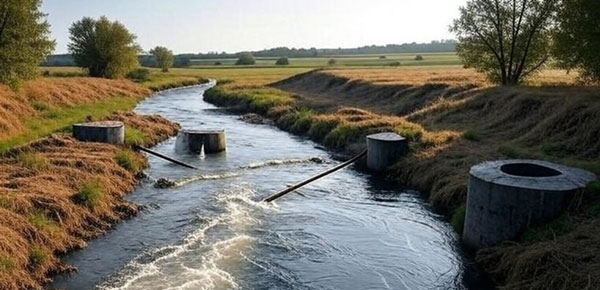
River Water Recharge Wells:- By CA Anil K. Jain
|
Author
Copyright Notice and Disclaimer The information, data, and analysis presented in this publication have been compiled from sources believed to be reliable, including publicly available government documents, reports of multilateral and international organisations, and peer-reviewed literature. While reasonable efforts have been made to ensure accuracy and relevance, the author and publisher make no representations or warranties, express or implied, regarding the completeness, accuracy, reliability, or fitness of the information for any particular purpose. The content is provided for informational and analytical purposes only and does not constitute legal, technical, or professional advice. Readers are encouraged to conduct independent verification and to seek appropriate professional guidance before taking any action based on this publication. The author and publisher disclaim all liability for any loss, damage, or consequence arising directly or indirectly from the use of, or reliance upon, the information contained herein. No part of this publication may be reproduced, stored, or transmitted in any form or by any means without the prior written permission of both the author and the publisher. Unauthorised use may result in legal action. Indicative data is presented solely for policy and analytical discussion. In the event of a defective copy, the publisher’s liability is limited to replacement if claimed within one month of purchase. All disputes shall be subject to the exclusive jurisdiction of the competent courts of Jodhpur, Rajasthan, India. ISBN NO. Sponsored By: Price: Rs. 500.00
Dedication........ This work is also dedicated to the institutions, authorities, and decision-makers who were entrusted with public resources, scientific knowledge, and governance responsibility, yet allowed preventable water scarcity to persist through inaction, misplaced priorities, and systemic neglect. Water insecurity is not a natural disaster alone; it is a failure of policy, planning, and accountability. This book stands as both evidence of that failure and a call to urgent, science-based, and people-centred action. I further dedicate this work to my teachers, whose guidance shaped my thinking, and to my friends and well-wishers, whose encouragement sustained me through every challenge. This book is offered in humble gratitude to them. Finally, with deep humility and reverence, I acknowledge the spiritual strength and inspiration drawn from the blessings of Shri Varun Dev, Shri Nakoda Bherujiand Shri Bhomiya Baba at Sammet Shikharji, which have guided this work in the service of humanity and the preservation of life. Anil K. Jain
About the Author CA Anil Kumar Jain is an eminent Chartered Accountant whose professional journey, spanning more than four decades, stands as a testament to intellectual rigour, ethical practice, and sustained contribution to public discourse. His career reflects a rare synthesis of professional excellence and civic responsibility, underpinned by a deep commitment to advancing sound financial governance. Over the years, he has cultivated specialised expertise in financial and asset planning, taxation, international investments, and business growth strategies. Through his advisory practice, he has guided individuals, enterprises, and institutions in navigating increasingly complex financial systems, both within India and across global markets. His work is characterised by analytical depth, strategic foresight, and a principled approach to value creation. Beyond professional practice, CA Anil Kumar Jain has played an active role in contributing to national economic thought. He has consistently engaged with the Government of India through policy recommendations and formal representations on issues of fiscal policy, financial regulation, and economic governance. These contributions reflect his enduring belief in informed policymaking as a cornerstone of sustainable national development and administrative effectiveness. An internationally engaged professional, he has travelled extensively and has had the distinguished honour of being invited as a state guest by the Governments of Ukraine and Abu Dhabi. On these occasions, he delivered lectures on critical economic and financial themes, fostering cross-border dialogue and knowledge exchange. Within India, he is a respected and recognizable voice in the media, frequently invited to participate in live television and radio discussions on matters concerning the Indian economy and public finance. In parallel with his public engagements, CA Anil Kumar Jain is a prolific author, having written extensively on finance, taxation, and economic policy. He has also held executive and advisory positions across a range of professional, religious, and social organizations, where he continues to contribute to institutional development and public service initiatives. His life’s work reflects a sustained dedication to knowledge, service, and the broader public good.
About The Book
India’s water crisis is often described as a problem of scarcity, but in reality, it is a crisis of seasonal imbalance and inadequate storage. Every year, enormous volumes of freshwater flow through India’s rivers during the monsoon, causing floods and flowing unused into the sea. At the same time, groundwater levels are declining across much of the country due to over-extraction and insufficient recharge. This paradox lies at the heart of India’s water challenge. Groundwater supplies the majority of India’s irrigation and drinking water. However, excessive pumping, combined with fragmented and poorly planned recharge efforts, has placed aquifers under severe stress. Traditional responses-such as building new dams or drilling deeper bore wells-are increasingly expensive, environmentally damaging, and insufficient to meet future demand. This book argues that river water recharge of aquifers offers one of the most effective, affordable, and climate-resilient solutions to India’s water crisis. Aquifers are vast natural storage systems with minimal evaporation losses and significant capacity, especially in river floodplains. By deliberately capturing surplus river and floodwater and storing it underground through Managed Aquifer Recharge (MAR) and Aquifer Storage and Recovery (ASR), India can convert seasonal excess into reliable, year-round water security. The book begins by explaining India’s river–groundwater paradox and the strategic importance of aquifers, followed by a clear explanation of the science and techniques of river water recharge. Indian case studies-from the Ganga floodplain to canal-linked recharge in Rajasthan and riverbank filtration in urban areas-demonstrate that recharge is already occurring, though at a limited scale. Global experiences from countries such as the United States, Australia, Israel, Germany, and the Netherlands show that river–aquifer recharge succeeds when planned at the basin scale, supported by strong institutions, linked with groundwater regulation, and continuously monitored. Comparing these practices with India’s approach reveals critical gaps in governance and implementation. The book also examines financing models, showing that aquifer recharge is among the most cost-effective water storage options available. It concludes by proposing a National River–Aquifer Recharge Mission to integrate flood management, river rejuvenation, groundwater governance, and climate adaptation. India’s water future depends on recognising that rivers and aquifers are part of a single hydrological system.
Preface
Water lies at the core of India’s civilisation, economy, and future. From the Indus Valley to modern cities, rivers and groundwater have sustained life, agriculture, and industry for centuries. Yet today, India faces a deepening water crisis marked by falling groundwater levels, drying rivers, recurring floods, and increasing conflicts over water use. These challenges are often viewed in isolation, but in reality, they are tightly interconnected and demand integrated solutions. This book is founded on a simple yet powerful idea: India’s water crisis is not merely one of scarcity, but of storage, management, and integration. Each year, vast volumes of freshwater flow through India’s rivers during the monsoon, much of it lost to the sea, while aquifers beneath our feet steadily decline. Reconnecting rivers with aquifers through planned and scientific recharge offers a practical, affordable, and climate-resilient pathway to long-term water security. The purpose of this book is to bring together science, policy, and practice in a form that is accessible and relevant to decision-makers, practitioners, students, and concerned citizens. Drawing on experiences from India and across the world, it explains why aquifers matter, how river-to-aquifer recharge works, what has been attempted so far, and what must change to achieve success at scale. This volume is not intended to be purely academic. It is a working document for action-meant to inform policy, guide programmes, and inspire a fundamental shift in how India thinks about its rivers, aquifers, and water future. More importantly, it is a call to conscience. It speaks to every individual and institution entrusted with the responsibility of ensuring that no Indian is denied the most basic necessity of life: safe and sufficient water. Those in positions of decision-making, planning, execution, and monitoring must remember that authority comes with accountability. These responsibilities are not personal privileges, but duties conferred by the Constitution of India, the Government of India, and the trust of the people. The solutions are no longer unknown. Scientific methods such as aquifer recharge and recharge wells have proven their effectiveness. What remains is the courage to implement them at scale and the will to act without delay. More than seventy-five years after independence, millions of Indians still face daily uncertainty about water access. This waiting must end. Water is not a favour or a promise-it is a right. The moment to act is now. History will not ask what we planned; it will ask what we did.
River Water Recharge Wells Index
Executive Summary
India’s water crisis is often described as a problem of scarcity, but in reality, it is a crisis of seasonal imbalance and inadequate storage. Every year, enormous volumes of freshwater flow through India’s rivers during the monsoon, causing floods and flowing unused into the sea. At the same time, groundwater levels are declining across much of the country due to over-extraction and insufficient recharge. This paradox lies at the heart of India’s water challenge. Groundwater supplies the majority of India’s irrigation and drinking water. However, excessive pumping, combined with fragmented and poorly planned recharge efforts, has placed aquifers under severe stress. Traditional responses-such as building new dams or drilling deeper bore wells-are increasingly expensive, environmentally damaging, and insufficient to meet future demand. This book argues that river water recharge of aquifers offers one of the most effective, affordable, and climate-resilient solutions to India’s water crisis. Aquifers are vast natural storage systems with minimal evaporation losses and significant capacity, especially in river floodplains. By deliberately capturing surplus river and floodwater and storing it underground through Managed Aquifer Recharge (MAR) and Aquifer Storage and Recovery (ASR), India can convert seasonal excess into reliable, year-round water security. The book begins by explaining India’s river–groundwater paradox and the strategic importance of aquifers, followed by a clear explanation of the science and techniques of river water recharge. Indian case studies-from the Ganga floodplain to canal-linked recharge in Rajasthan and riverbank filtration in urban areas-demonstrate that recharge is already occurring, though at limited scale. Global experiences from countries such as the United States, Australia, Israel, Germany, and the Netherlands show that river–aquifer recharge succeeds when planned at basin scale, supported by strong institutions, linked with groundwater regulation, and continuously monitored. Comparing these practices with India’s approach reveals critical gaps in governance and implementation. The book also examines financing models, showing that aquifer recharge is among the most cost-effective water storage options available. It concludes by proposing a National River–Aquifer Recharge Mission to integrate flood management, river rejuvenation, groundwater governance, and climate adaptation.India’s water future depends on recognising that rivers and aquifers are part of a single hydrological system.
Chapter – 1
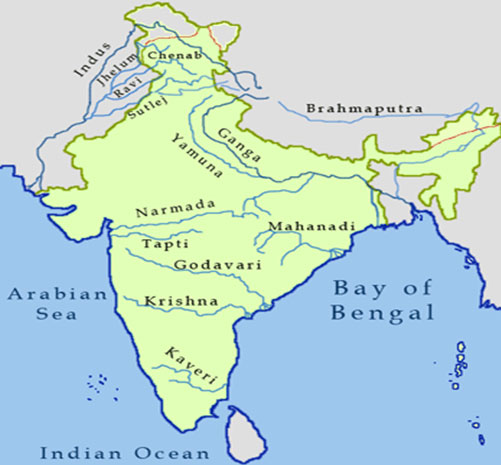
• India has nearly 18% of the world’s population but only 4% of global freshwater resources. India is currently confronting one of the gravest water crises of the twenty-first century. Water-fundamental to human survival, agricultural productivity, industrial development, and ecological balance-is becoming increasingly scarce across the country. Indian households, farmers, and industries are already experiencing severe water shortages, and the situation continues to deteriorate. What is particularly alarming is that this crisis is no longer a distant or hypothetical threat; it is unfolding in real time. Without immediate, coordinated, and decisive action, managing water availability over the next ten to fifteen years will become extraordinarily challenging, potentially pushing the nation toward a catastrophic and irreversible situation (NITI Aayog, 2018). India is home to nearly eighteen percent of the world’s population but possesses only about four percent of global freshwater resources, making it structurally vulnerable to water stress (World Bank, 2016). Over recent decades, rapid population growth, urbanisation, industrial expansion, and rising consumption patterns have significantly increased water demand. Simultaneously, the availability of usable water has declined due to pollution, excessive extraction, and environmental degradation (World Bank, 2019). Rivers, lakes, wetlands, and aquifers that once sustained communities for generations are now under unprecedented strain. A major driver of India’s water crisis is its heavy reliance on groundwater. Groundwater accounts for approximately eighty-five percent of rural drinking water supply, nearly half of urban water consumption, and about sixty percent of irrigation demand (CGWB, 2022). Unregulated extraction has resulted in alarming depletion levels, particularly in states such as Punjab, Haryana, Rajasthan, Tamil Nadu, Karnataka, Telangana, and Maharashtra. In Punjab, for instance, groundwater extraction exceeds natural recharge by more than fifty percent in several districts (CGWB, 2022). As water tables continue to fall, wells must be drilled deeper, increasing costs and disproportionately affecting small and marginal farmers. Agriculture, which consumes nearly eighty percent of India’s freshwater resources, is the sector most vulnerable to water scarcity (FAO cited in World Bank, 2016). Water-intensive crops such as rice and sugarcane are widely cultivated in low-rainfall regions, intensifying groundwater depletion. Crop failures, declining yields, and rising input costs have heightened farmer distress and pose serious threats to food security, particularly in rain-fed regions that depend heavily on monsoon rainfall (IMD, 2021). Industrial activity is also increasingly constrained by water scarcity. Thermal power plants, steel manufacturing units, textile industries, and food processing facilities all require reliable water supplies. Several industrial plants have faced shutdowns due to inadequate cooling water, leading to power shortages and significant economic losses (World Bank, 2016). Consequently, water scarcity is emerging as a critical constraint on industrial growth, productivity, and employment generation. Climate change has further intensified India’s water crisis by altering rainfall patterns and increasing the frequency and severity of extreme weather events. The Indian monsoon, which accounts for nearly seventy percent of annual rainfall, has become increasingly erratic, characterised by prolonged dry spells punctuated by short bursts of intense rainfall that cause floods rather than facilitating groundwater recharge (IMD, 2021; IPCC, 2021). Additionally, Himalayan glacier melt and changing snowfall patterns pose long-term threats to river flows and downstream water availability (IPCC, 2022). Climate change thus acts as a force multiplier, amplifying uncertainty and insecurity for both farmers and policymakers. Per capita water availability in India has declined sharply-from over 5,000 cubic metres in 1951 to approximately 1,300 cubic metres today-and is projected to decrease further (NITI Aayog, 2018). According to NITI Aayog, India is already experiencing one of the most severe water crises of the modern era. Households, farmers, and industries nationwide face acute shortages, and the situation continues to worsen. If urgent action is not taken, managing water availability over the next ten to fifteen years could become extraordinarily difficult, potentially pushing the country toward an irreversible crisis. Projections suggest that, if current trends persist, water demand could exceed supply by as much as fifty percent by 2030. Such a scenario could result in economic instability, increased migration, and conflicts over water resources. Addressing this escalating crisis requires immediate and comprehensive policy intervention. Key measures include regulating groundwater extraction, promoting river water harvesting, restoring traditional water bodies, adopting efficient irrigation technologies, expanding wastewater reuse, and integrating climate-resilient planning into water governance (World Bank, 2016; IPCC, 2022). Equally critical are public awareness, strong institutional coordination, and data-driven decision-making. In conclusion, India’s water crisis poses a profound threat to human well-being, agricultural sustainability, economic growth, and national stability. Depleting groundwater reserves, climate change, and inefficient water management have brought the country to a critical crossroads. Immediate, sustained, and coordinated action is essential to ensure water security for both present and future generations. India’s River Systems: Enormous Potential, Limited Utilisation The Himalayan rivers-particularly the Ganga and the Brahmaputra-are perennial and contribute the largest share of river flows. Fed by glaciers, snowmelt, and intense monsoon rainfall, these rivers carry vast volumes of water over relatively short periods. In contrast, peninsular rivers such as the Godavari, Krishna, and Narmada are largely rain-fed and seasonal. Despite the presence of dams and diversion structures, substantial volumes of water continue to flow into the sea during peak monsoon months, often resulting in floods rather than productive use. Managed Aquifer Recharge: A Practical and Sustainable Path This approach offers multiple advantages. Storing water underground significantly reduces evaporation losses, protects water quality, and stabilises groundwater levels. Recharge wells can be constructed relatively quickly, scaled at the local level, and maintained through community participation. Unlike large-scale infrastructure projects, MAR works in harmony with natural river dynamics, allowing floodwaters to percolate through riverbeds and floodplains into aquifers. Several countries-including Australia, the United States, and Israel-have successfully incorporated large-scale recharge systems into their national water management strategies. In contrast, India has yet to implement a coordinated, nationwide approach to conserving the enormous volumes of freshwater that its rivers carry each year. Allowing this water to flow unutilised into the sea represents a significant missed opportunity to strengthen national water security.
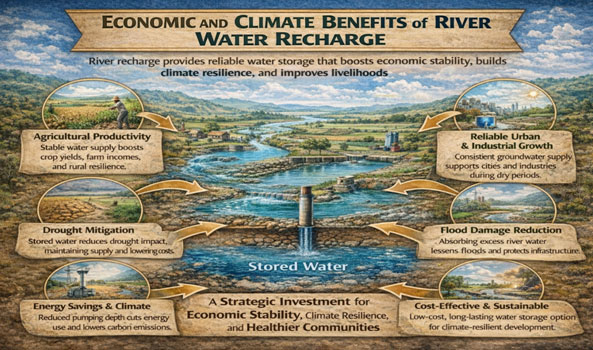
Over time, river-based recharge systems generate substantial microeconomic benefits by securing drinking water supplies, stabilising irrigation, reducing pumping costs, and protecting farmers from drought. Simultaneously, they deliver macroeconomic gains by lowering disaster-related losses, reducing dependence on capital-intensive infrastructure, enhancing urban and rural resilience, and sustaining ecosystems. Reference………….
Chapter - 2
Qanat System-Also Known as Karez
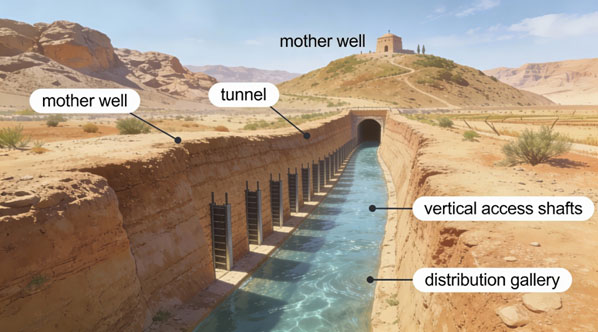
The Qanat system is believed to have originated around 1000 BC in ancient Persia (present-day Iran), where communities faced extreme climatic conditions characterized by low rainfall, high evaporation rates, and limited surface water availability. To overcome these challenges, Persian engineers devised a method to tap groundwater from upland aquifers and convey it gently to settlements through underground tunnels, minimizing evaporation losses. From Persia, the technology spread widely through cultural diffusion, conquest, and trade, particularly along the Silk Road. Over centuries, qanats were adopted and adapted across a vast geographical region, including Central Asia, Afghanistan, Pakistan, western India (especially Gujarat and Rajasthan), the Arabian Peninsula, and North Africa (notably Morocco and Algeria). Although local names, construction materials, and design details varied, the fundamental principles of the qanat system remained remarkably consistent across regions. Design and Working Principle The tunnel slope is carefully calculated-too steep and erosion occurs, too shallow and water stagnates. This precise engineering ensured a continuous, controlled flow of groundwater without mechanical pumping, making the system energy-efficient and environmentally sustainable. Sustainability and Water Governance Moreover, qanats were traditionally managed through community-based governance systems, where maintenance responsibilities and water-sharing arrangements were clearly defined. Water distribution was often regulated using time-based allocation systems, ensuring equitable access for agriculture, domestic use, and livestock. These social institutions played a crucial role in sustaining qanats for centuries. Examples and Regional Variations Decline and Modern Challenges Contemporary Relevance Structurally, a Qanat consists of a gently sloping underground tunnel that transports groundwater from upland aquifers to lower-lying settlements using gravity alone. Its main components include a deep vertical “mother well” that taps into the aquifer, a long underground gallery that conveys water over considerable distances, a series of vertical shafts that provide ventilation and access for maintenance, and an outlet where water emerges for irrigation and domestic use. The precise gradient of the tunnel is carefully calculated to ensure a steady flow without causing erosion or stagnation. The working mechanism of the Qanat system is entirely natural and energy-efficient. Water flows continuously under gravity, without the need for pumps or external power. Because the channels run underground, evaporation losses are minimal, making the system particularly effective in hot and dry climates. This design allowed communities to rely on a stable and dependable water supply throughout the year. Although primarily intended for groundwater extraction, Qanats also played a significant role in groundwater recharge. During wet seasons, rainwater and mountain runoff infiltrated the tunnel walls and vertical shafts, gradually percolating into surrounding aquifers. In this way, Qanats functioned as recharge galleries, helping to stabilize groundwater levels and maintain long-term water security. The environmental and socio-economic benefits of the Qanat system were substantial. It enabled sustainable water use with limited discharge, minimized ecological disruption compared to modern borewells, and supported permanent settlements and agriculture in otherwise inhospitable regions. The system also fostered community ownership and collective maintenance, ensuring equitable distribution of water resources and reinforcing social cohesion. Despite its many advantages, the Qanat system began to decline with the introduction of mechanized pumps and tube wells, which allowed rapid but often uncontrolled extraction of groundwater. Over-extraction, coupled with neglect and insufficient maintenance, led to the abandonment of many traditional systems. In recent years, however, Qanats have regained attention for their contemporary relevance. Many have been recognized as UNESCO World Heritage sites, particularly in Iran, and are increasingly viewed as models for climate-resilient water management. Their principles align closely with modern concepts such as sustainable groundwater use, nature-based solutions, and managed aquifer recharge, making them valuable references for current water conservation initiatives. In conclusion, the Qanat (Karez) system stands as a remarkable example of ancient engineering that successfully balanced human needs with environmental sustainability. Its dual function in groundwater extraction and recharge offers important lessons for addressing today’s challenges of water scarcity, groundwater depletion, and climate change. Medieval India:
Khooni Bhandara System The water for the Khooni Bhandara was sourced mainly from natural springs and groundwater originating in the nearby Satpura hills. Rainwater and underground seepage were collected and guided into the system. As the water passed naturally through layers of soil, sand, and rock, it underwent natural filtration, making it clean and suitable for drinking even before entering the storage chambers. Structurally, the Khooni Bhandara consists of a network of underground tunnels, arched chambers, and reservoirs built using brick, stone, and lime mortar. The arched construction provided strength and durability while allowing the structure to withstand soil pressure above. Ventilation shafts and small openings were incorporated to allow air circulation and light, helping in maintenance and preventing stagnation. Stepped platforms inside the chambers made it easier to control and monitor water levels. Water storage was achieved through large underground chambers that maintained a cool and stable environment. This reduced evaporation losses and preserved water quality. As water flowed slowly through the chambers, heavier particles settled at the bottom, allowing clearer water to move forward. Excess water was carefully redirected to lower chambers, ensuring balance and preventing overflow damage. The distribution of water from the Khooni Bhandara worked entirely on the principle of gravity. From the higher elevation storage points, water travelled through gently sloping underground channels to different parts of the city. It supplied palaces, gardens, fountains, public tanks, and residential neighborhoods without the use of pumps or mechanical devices. Being underground, the channels were protected from contamination and temperature changes. The Khooni Bhandara system reflects an advanced understanding of hydrology, engineering, and sustainable design. It efficiently managed water resources using natural processes, minimal energy, and durable materials. Even today, it stands as an excellent example of traditional water wisdom and highlights how ancient systems can offer valuable lessons for modern water conservation and urban planning. The 19th Century: Emergence of Scientifically Managed Groundwater–Surface Water Interaction Systems Birth of Riverbank Filtration (RBF) The earliest large-scale applications of RBF were developed in the Netherlands around 1879, followed soon after by extensive implementation in Germany, particularly along the Rhine and Elbe rivers. These regions had well-developed alluvial aquifers composed of sand and gravel, which proved ideal for natural filtration. Engineers observed that water abstracted from riverbank wells was significantly clearer, less odorous, and biologically safer than untreated river water, even during periods of high pollution. Scientific Mechanisms of Natural Filtration The resulting water is typically a mixture of filtered river water and native groundwater, often requiring only minimal post-treatment before distribution. This discovery was scientifically significant because it demonstrated that geological formations could function as natural water treatment systems, effectively pre-treating water at a fraction of the cost of engineered filtration plants. A Shift toward Engineered Groundwater Systems The success of RBF also contributed to the emergence of hydrogeology as a scientific discipline, as engineers began to systematically study aquifer properties, hydraulic gradients, and river–aquifer connectivity. This marked a turning point in water engineering, where subsurface systems were recognized as integral components of urban water infrastructure. From Filtration to Recharge: A Conceptual Breakthrough Instead of relying solely on induced infiltration caused by pumping, surface water could be intentionally introduced into aquifers through infiltration basins, recharge wells, or river modifications, stored underground for extended periods, and later recovered during times of scarcity. This idea laid the foundation for modern Aquifer Storage and Recovery (ASR) and Managed Aquifer Recharge (MAR) techniques, which are now widely used to manage seasonal variability, drought resilience, and water security. Even today, Riverbank Filtration is widely practiced across Europe, the United States, and parts of Asia. In Germany, more than half of public water supply in some regions relies on RBF. In the United States, cities such as Louisville (Ohio River) and Omaha (Missouri River) use RBF as a key component of municipal water supply systems.
Chapter - 3
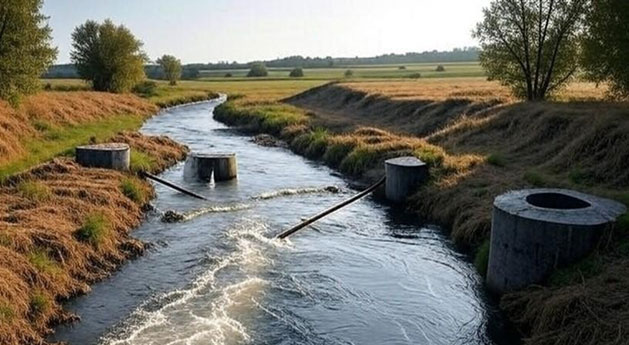
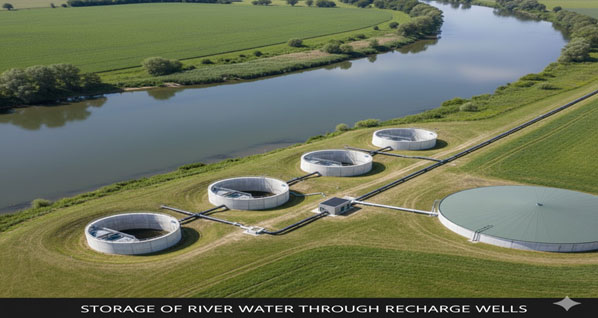
India’s growing water crisis-driven by rapid population growth, climate variability, and groundwater overexploitation, and uneven monsoon rainfall- demands solutions that are both scientifically sound and economically viable. One such practical and innovative solution is the systematic harvesting of riverwater through recharge wells constructed along both banks of major rivers, particularly on government-owned land. This approach focuses on strengthening groundwater reserves by directly linking surface water availability with subsurface storage.
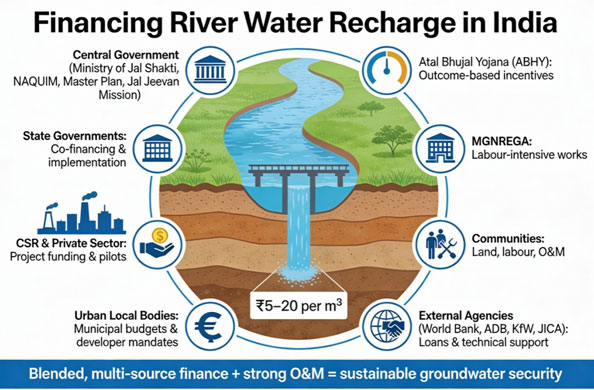
Recharge wells located along riverbanks can capture river water throughout the year, including monsoon flows, lean-season base flows, and regulated releases from upstream reservoirs. When strategically designed and spaced, these wells allow water to percolate directly into aquifers, recharging the vast underground water systems that extend across thousands of kilometres beneath the Indian subcontinent. Unlike surface storage, underground recharge minimizes evaporation losses and protects water from contamination and misuse. By diverting carefully calculated volumes of river water into multiple recharge wells, the volume of freshwater flowing unused into the sea can be substantially reduced without compromising ecological flows. This is particularly relevant in India, where enormous quantities of monsoon runoff are lost annually due to limited storage capacity. Recharge wells convert this “excess” water into a long-term asset by raising groundwater levels across both rural and urban regions. Improved groundwater availability enables sustainable extraction for agriculture, domestic supply, and industrial use throughout the year, reducing dependence on erratic rainfall and energy-intensive pumping. A major strength of this strategy lies in its decentralised and cost-effective nature. Recharge wells require relatively modest capital investment compared to large dams or inter-basin transfer projects. Construction is technically simple, scalable, and adaptable to local hydrogeological conditions. Importantly, implementation need not rely solely on public finances. Philanthropic organisations such as Rotary Clubs, Lions Clubs, and social trusts can actively participate in constructing and maintaining recharge wells as part of community service and environmental stewardship initiatives. Their involvement also promotes local ownership and long-term maintenance. Additionally, Corporate Social Responsibility (CSR) funding offers a powerful mechanism to mobilise private-sector participation. Industries that depend heavily on water-such as manufacturing, power generation, and food processing-can invest in recharge infrastructure along nearby rivers, aligning environmental responsibility with business continuity and national water security goals. The broader outcome of harvesting river water through recharge wells would be the gradual transformation of India into a water-secure nation. Reliable, round-the-clock water availability would enhance farmer resilience, stabilise urban water supplies, and support industrial growth, all without imposing a heavy financial burden on the government. Improved water security has strong economic implications; increased agricultural productivity, reduced water conflicts, and expanded industrial activity could together contribute to an estimated 25 percent increase in India’s GDP, while also improving public health and overall quality of life.
Chapter - 4
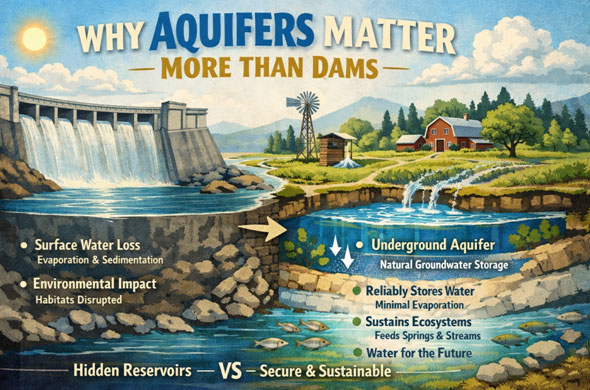
For decades, India’s water strategy has been dominated by the construction of large dams and surface reservoirs. These structures have played an important role in irrigation, hydropower generation, and flood moderation. However, changing climatic conditions, rising water demand, and growing environmental and social constraints have exposed the limitations of a dam-centric approach. In today’s Indian context, aquifers matter more than dams not because dams are unnecessary, but because aquifers provide scale, resilience, flexibility, and affordability that surface reservoirs cannot match.
1. Aquifers Store Far More Water Than Dams : Indian example: 2. Aquifers Do Not Lose Water to Evaporation: Aquifers store water underground, where evaporation loss is almost zero. This makes aquifer storage especially valuable in tropical and semi-arid climates like India’s. In Rajasthan, canal-linked aquifer recharge under the Indira Gandhi Canal has proven more reliable than surface storage, because underground water remains available even during extreme heat. 3. Aquifers Require No Large Land Acquisition or Displacement: Aquifer recharge, by contrast, uses existing floodplains, riverbanks, ponds, and subsurface formations, requiring little or no displacement. Recharge structures are usually small, dispersed, and locally managed. Indian example: 4. Aquifers Provide Water Where People Actually Need It: Indian example: 5. Aquifers Are More Resilient to Climate Variability: Aquifers act as natural buffers, absorbing excess water during wet periods and releasing it slowly over time. This makes them inherently more climate-resilient. During drought years, regions with healthier groundwater levels-such as parts of Gujarat with strong recharge programmes-fare better than areas dependent only on surface reservoirs. 6. Aquifers Support Agriculture, Drinking Water, and Industry Simultaneously Indian example: In urban areas like Ahmedabad and Chennai, riverbank filtration and recharge support municipal water supply while also stabilising groundwater for nearby users. Indian example: 8. Dams without Aquifers Are Incomplete: Conclusion: By shifting focus from only building dams to recharging and governing aquifers, India can transform floods into storage, scarcity into security, and water management into a truly sustainable system. The future of India’s water does not lie only behind dam walls-it lies beneath the ground.
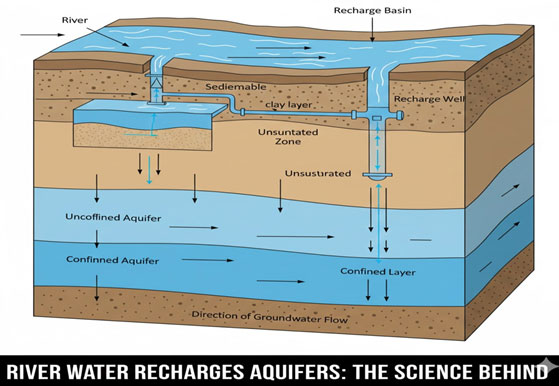
Chapter - 5 Rivers and aquifers are part of one continuous hydrological system. Although they are often managed separately, science shows that rivers have always played a central role in replenishing groundwater. In India, where rivers carry enormous volumes of water during the monsoon while aquifers decline due to over-extraction, understanding this river–aquifer connection is essential for sustainable water management. An aquifer is an underground layer of permeable material such as sand, gravel, or fractured rock that stores and transmits water. Aquifers are recharged when water from rainfall, rivers, lakes, or canals infiltrates downward through the soil and rock layers. In riverine landscapes, especially during periods of high flow, rivers naturally act as sources of groundwater recharge rather than merely surface channels.
One of the most fundamental recharge processes is vertical seepage through the riverbed. As a river flows, part of its water infiltrates downward through the sediments at the bottom of the river channel. These sediments are often composed of sand and gravel, which allow water to pass through pore spaces under gravity. The rate of recharge depends on the permeability of the riverbed and the depth of the groundwater table. In India, this process is clearly observed along the Ganga River, where long stretches of sandy riverbeds allow significant seepage into the underlying alluvial aquifers. Studies by the Central Ground Water Board have shown that during the monsoon, the Ganga acts as a “losing river” in many reaches, meaning it supplies water to groundwater rather than receiving it.
In addition to vertical seepage, rivers recharge aquifers through lateral flow across riverbanks. When river water levels rise during the monsoon or flood events, water moves sideways from the river channel into adjacent floodplain sediments. This lateral movement is particularly important in wide alluvial plains, where riverbanks are composed of thick layers of sand and silt. As water travels laterally, it undergoes natural filtration, removing suspended particles and many contaminants. This process is deliberately harnessed in riverbank filtration systems, such as those implemented in Haridwar and Ahmedabad. In Haridwar, wells located near the Ganga draw water that is partly river water and partly groundwater. The river water is naturally filtered through riverbank sediments before entering the aquifer, providing both recharge and improved water quality for municipal supply. Another powerful natural mechanism of recharge occurs during floodplain inundation. When rivers overflow their banks during floods, water spreads across floodplains and remains there for extended periods. Floodplains are typically made up of highly permeable alluvial deposits, making them ideal recharge zones. Historically, floodplain recharge was one of the most important ways rivers replenished aquifers. In India, this process is evident along the Ganga and Yamuna floodplains, where seasonal flooding allows large volumes of water to infiltrate into shallow and intermediate aquifers. Pilot projects in the Ganga floodplain near Kanpur and Patna have demonstrated that reconnecting rivers with their floodplains can significantly raise groundwater levels over wide areas. Modern water management seeks to enhance these natural processes through Managed Aquifer Recharge (MAR). MAR involves deliberately guiding river water into recharge zones using scientifically designed structures. This approach does not replace natural recharge; instead, it accelerates and controls it to improve efficiency and reliability. In India, MAR is being applied through recharge wells, infiltration basins, and floodplain recharge projects under programmes such as Jal Shakti Abhiyan and Atal BhujalYojana. For example, in the Ramganga basin in Uttar Pradesh, excess monsoon water is diverted into village ponds and then allowed to percolate into aquifers, combining traditional water bodies with modern recharge techniques. The effectiveness of river water recharge depends heavily on local geology and soil conditions. Alluvial aquifers, such as those found in the Indo-Gangetic plains, are particularly well suited for recharge because they consist of thick layers of sand and gravel with high permeability and storage capacity. This is why recharge efforts along rivers like the Ganga, Yamuna, and Brahmaputra show strong results. In contrast, much of peninsular India is underlain by hard rock aquifers, where recharge occurs mainly through fractures and weathered zones. In these regions, such as parts of Maharashtra and Telangana, river recharge is still possible but requires careful site selection and targeted structures like recharge shafts and check dams. As river water moves from the surface to the aquifer, it passes through the unsaturated zone, which acts as a natural filter. This zone traps sediments, reduces pathogens, and facilitates chemical reactions that improve water quality. This is why groundwater is often cleaner than surface water. In riverbank filtration systems along the Sabarmati in Ahmedabad, this natural filtration allows river water to be used for drinking supply with minimal treatment, while simultaneously recharging the aquifer. In urban areas where land availability is limited, Aquifer Storage and Recovery (ASR) is used to recharge aquifers directly. In ASR systems, treated river water is injected into confined aquifers through wells and recovered later when needed. Scientific control of water chemistry and pressure is essential to prevent clogging or contamination. In Delhi’s Yamuna floodplain, ASR pilots have demonstrated that treated surface water can be safely stored underground and recovered during periods of high demand, reducing stress on surface reservoirs. Recharge is not instantaneous and depends on factors such as sediment permeability, duration of water availability, and aquifer storage characteristics. Recharge rates are typically highest at the beginning of the monsoon, when sediments are clean and water spreads widely. Over time, silt deposition can reduce infiltration, which is why maintenance and desilting are critical components of recharge projects. Experiences from canal-linked recharge in Rajasthan’s Indira Gandhi Canal command area show that without regular maintenance, recharge efficiency declines even when water availability is adequate. Water quality is a critical scientific consideration in river recharge. Polluted river water can contaminate aquifers if recharged without safeguards. Therefore, scientific recharge requires pre-treatment, sediment removal, and continuous monitoring. Once contaminated, aquifers are extremely difficult to clean. Indian programmes increasingly recognise this risk and link recharge efforts with river pollution control initiatives such as Namami Gange. Monitoring is the backbone of recharge science. Measuring groundwater levels, recharge volumes, and water quality before and after recharge allows managers to evaluate effectiveness and make improvements. Projects that lack monitoring often fail not because recharge is impossible, but because its impacts are never properly assessed. In conclusion, the science behind river water recharging aquifers is well established and proven in both natural and managed systems. Rivers recharge aquifers through riverbed seepage, lateral bank flow, and floodplain infiltration-processes that have sustained groundwater for centuries. Managed Aquifer Recharge builds on this science to make recharge more reliable and effective. In India, where rivers carry seasonal surpluses and aquifers face increasing stress, applying this science systematically offers one of the most powerful pathways to long-term water security.
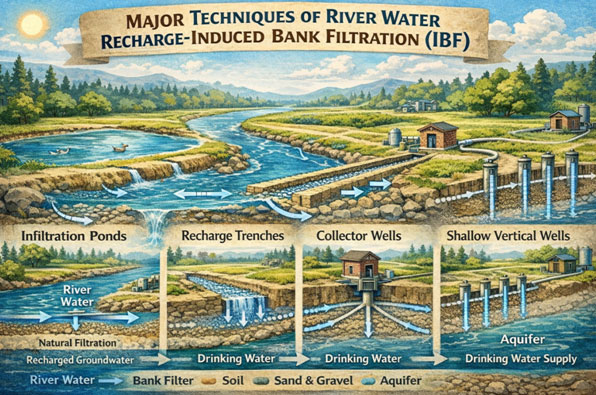
Chapter - 6 River water can be recharged into aquifers using several techniques, each suited to specific conditions.Floodplain recharge allows river water to spread over natural floodplains, where it infiltrates into shallow aquifers.Riverbank filtration (RBF) uses wells near riverbanks that draw water through sediments, naturally filtering it while recharging aquifers.Injection wells and Aquifer Storage and Recovery (ASR) involve directly injecting treated river water into deeper aquifers, especially in urban areas. Infiltration basins and ponds store water temporarily to allow slow percolation.Canal-linked recharge uses seepage and structures along canals to recharge groundwater.Together, these methods form a flexible toolkit for river-aquifer integration. 1. Induced Bank Filtration (IBF):
Technology: The fundamental principle of IBF is based on hydraulic gradients created by pumping. When groundwater is extracted from wells located close to a river, it lowers the local groundwater level, causing river water to move laterally and vertically through the riverbed sediments toward the wells. These sediments-typically composed of sand, gravel, and fine soils-act as natural filters. During this passage, suspended solids, pathogens, organic matter, and some chemical contaminants are removed or reduced through sedimentation, adsorption, biodegradation, and microbial activity. The resulting water is a blend of naturally filtered river water and native groundwater. Advantage: One of the major advantages of Induced Bank Filtration is its ability to provide high-quality drinking water with minimal artificial treatment. The natural filtration process reduces turbidity, microbial contamination, and organic pollutants, often lowering the need for extensive chemical disinfection and advanced treatment technologies. This makes IBF a cost-effective and energy-efficient alternative to conventional surface water treatment plants. Applications: IBF has been widely adopted in Europe, particularly in countries such as Germany and the Netherlands, where it forms a critical component of municipal water supply systems. Along major rivers like the Rhine, Elbe, and Danube, bank filtration wells have been used for over a century to supply safe drinking water to urban populations. In the United States, IBF is also employed along rivers such as the Ohio, Mississippi, and Missouri, where it supports reliable water supplies for many cities. In addition to improving water quality, Induced Bank Filtration enhances water supply reliability. Aquifers connected to rivers act as natural storage reservoirs, buffering seasonal variations in river flow and providing resilience during droughts or short-term pollution events. During floods, excess river water can be temporarily stored underground, while during dry periods, stored water can be recovered through wells. Effectiveness: Despite its benefits, IBF requires careful site selection and management. The effectiveness of the process depends on local hydrogeological conditions, including sediment composition, aquifer permeability, river flow patterns, and water quality. Continuous monitoring is essential to prevent the migration of harmful contaminants such as nitrates, pesticides, or industrial pollutants into the aquifer. In conclusion, Induced Bank Filtration represents a proven, nature-based solution for sustainable water supply. By harnessing the natural filtering capacity of riverbank sediments, it offers a reliable, economical, and environmentally friendly approach to producing safe drinking water. Its long-standing success in Europe and the United States highlights its potential for wider adoption, especially in regions facing increasing water scarcity and water quality challenges. 2. Infiltration Basins and Galleries
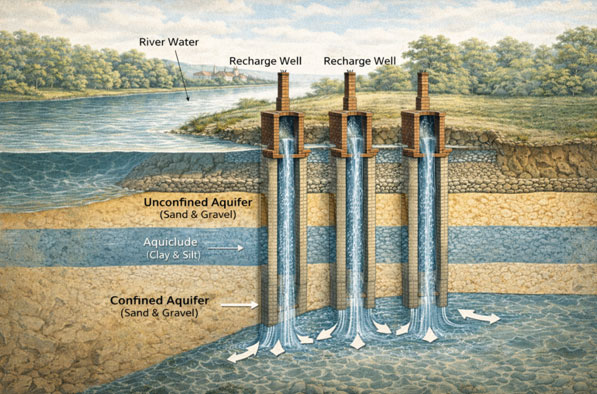
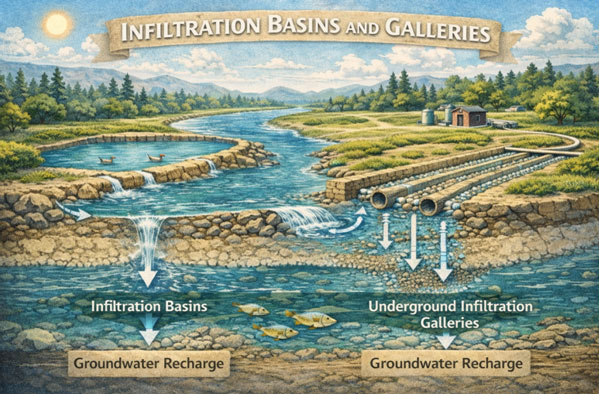
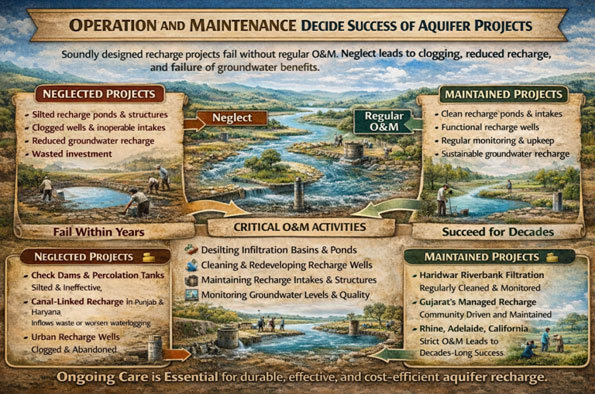
Infiltration basins are shallow, open ponds or engineered depressions constructed near rivers, canals, storm water drains, or floodplains. During periods of surplus flow, river water is diverted into these basins and temporarily stored, allowing it to slowly infiltrate through the underlying soil. As water percolates downward through layers of sand, gravel, and finer soils, it undergoes natural physical, chemical, and biological filtration. This process removes suspended sediments, reduces turbidity, breaks down organic matter, and significantly lowers pathogen concentrations before the water reaches the aquifer. A practical example can be found in California (USA), where large infiltration basins are used to recharge groundwater with surplus river water and treated wastewater during wet years. Similarly, in India, infiltration basins have been constructed along seasonal rivers in Gujarat and Rajasthan to capture monsoon runoff and enhance groundwater availability in drought-prone areas. The effectiveness of infiltration basins depends largely on soil permeability, basin size, and maintenance practices. Over time, fine sediments can accumulate at the basin floor, forming a clogging layer that reduces infiltration rates. Periodic drying of basins and mechanical removal of sediments are therefore essential to maintain performance. When properly designed and managed, infiltration basins can raise groundwater levels over large areas at relatively low cost, making them suitable for both rural and peri-urban settings. Infiltration Galleries Infiltration galleries are particularly effective in alluvial river plains, where thick deposits of sand and gravel provide high infiltration capacity. For example, riverbank filtration systems along the Rhine River in Germany and the Ganga floodplain in northern India often incorporate infiltration galleries that function continuously during river flow periods. In many cases, galleries serve a dual purpose-acting both as recharge systems and as collection systems for drinking water supply. Hydrogeological Suitability They are less effective in regions dominated by clayey soils or hard-rock terrains, where infiltration rates are low and groundwater movement is limited. Advantages and Limitations However, challenges include land requirements, sediment clogging, water quality concerns, and the need for regular monitoring. Poor-quality source water may introduce contaminants into aquifers if pre-treatment measures such as sedimentation or screening are not applied. Applications and Conclusion 3. InjectionWells/Aquifer Storageand Recovery (ASR): Injection Wells and Aquifer Storage and Recovery (ASR) are advanced methods of Managed Aquifer Recharge (MAR) in which treated river water, floodwater, or surplus surface water is directly injected into confined or semi-confined aquifers through specially engineered wells. The same wells are later used to recover the stored water during periods of high demand, drought, or emergency. ASR is particularly well suited to urban areas and land-limited regions, where large surface recharge structures such as infiltration basins are impractical.
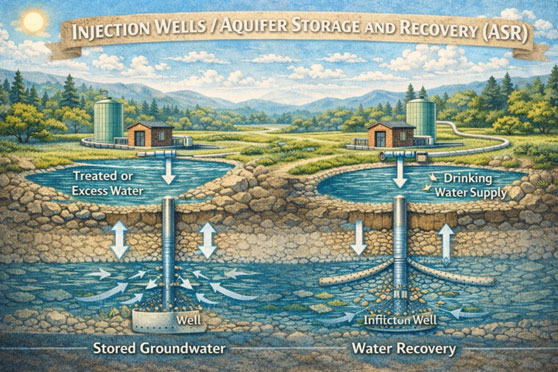
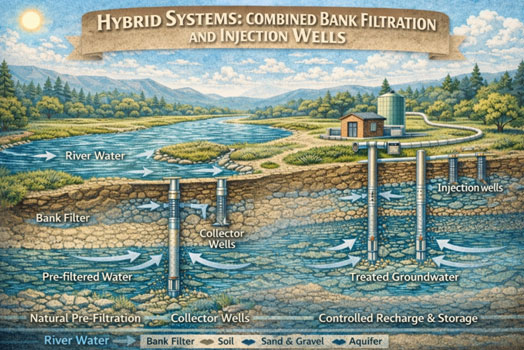
Concept and Working Mechanism: The ASR system operates in three key stages: treatment, injection, and recovery. During periods of excess water availability-such as monsoon seasons, floods, or times of low demand-surface water is first treated to meet strict physical, chemical, and biological quality standards. This treatment is essential to prevent clogging of injection wells and to protect the aquifer from contamination. Once treated, the water is injected under controlled pressure into a confined aquifer through deep, engineered wells. Confined aquifers are preferred because they are bounded by impermeable layers, which help retain the injected water and minimize losses. During dry seasons or peak demand periods, the stored water is pumped back from the same wells and supplied for municipal, industrial, or domestic use. Hydrogeological Requirements: Successful ASR implementation depends on suitable geological and hydrogeological conditions. These include: Detailed site investigations, aquifer testing, and continuous monitoring are essential components of ASR projects. Advantages: ASR offers several important advantages over surface-based recharge methods. It requires minimal land, making it ideal for densely populated cities. Evaporation losses are negligible, which is especially beneficial in hot and arid climates. ASR provideshigh operational control, allowing utilities to store and recover water as needed. It also strengthens drought resilience, creates strategic water reserves, and reduces pressure on over-exploited groundwater sources. Limitations and Challenges: Despite its benefits, ASR is technically complex and capital-intensive. High-quality water treatment, skilled operation, and strict monitoring are mandatory. Potential challenges include well clogging, geochemical reactions between injected water and aquifer materials, and the risk of contaminant mobilization if quality standards are not maintained. Regulatory approvals and strong institutional capacity are therefore crucial for successful ASR implementation. 4. Hybrid Systems: Combined Bank Filtration and Injection Wells Hybrid water recharge systems combine the advantages of Induced Bank Filtration (IBF) and Injection Wells / Aquifer Storage and Recovery (ASR) to create a highly efficient and controlled approach to groundwater management. In these systems, river water is first naturally pre-filtered as it passes through riverbed and bank sediments and is then deliberately injected into aquifers using engineered wells. This integrated approach ensures improved water quality while allowing precise control over recharge volumes and storage.
Concept and Working Mechanism: The hybrid system operates in two distinct but interconnected stages. In the first stage, wells located near a river induce river water to flow through the riverbank sediments. During this process, natural filtration removes suspended solids, pathogens, organic matter, and some chemical contaminants. This stage acts as a natural pre-treatment system, significantly reducing the treatment burden. In the second stage, the pre-filtered water is collected through collector wells or shallow abstraction wells and further treated if necessary. The water is then injected into deeper confined or semi-confined aquifers through injection wells. This controlled recharge allows water to be stored underground with minimal losses and recovered later during periods of high demand or drought. Hydrogeological Requirements: Hybrid systems require favourable geological conditions, including: 1. Permeable riverbank sediments for effective bank filtration Detailed hydrogeological investigations and continuous monitoring are essential to ensure system performance and aquifer protection. Advantages: Hybrid systems offer several key benefits. The initial bank filtration stage significantly improves water quality through natural processes, reducing the need for expensive and energy-intensive treatment. The injection well stage provides high operational control, allowing utilities to manage recharge and recovery efficiently. This combination minimizes land requirements, reduces evaporation losses, and enhances drought resilience. Hybrid systems are also more robust against sudden pollution events in rivers, as the bank filtration stage acts as a protective buffer. Limitations and Challenges: Despite their advantages, hybrid systems are technically complex and require higher capital investment than standalone IBF or MAR methods. Coordinated operation, advanced monitoring, and strict water quality management are essential. Inappropriate design or poor operation can lead to well clogging, geochemical reactions, or aquifer contamination. Applications and Suitability: Hybrid systems are best suited for large urban centers, industrial corridors, and regions facing both water scarcity and land constraints. They are particularly effective where river water quality is variable and where high reliability and control over groundwater recharge are required. Indian and Global Relevance: Hybrid systems are increasingly being explored in cities along major rivers in India, such as the Ganga and Yamuna basins, where bank filtration already exists and can be integrated with injection-based recharge. Globally, countries like Germany, the Netherlands, the United States, and Australia are adopting hybrid approaches as part of advanced managed aquifer recharge strategies for climate-resilient water supply. Conclusion: Hybrid systems that combine bank filtration with injection wells represent an advanced and sustainable evolution in groundwater management. By integrating natural filtration with engineered recharge, these systems offer improved water quality, high operational control, and enhanced resilience to climate variability. When properly designed and managed, hybrid systems provide a powerful solution for long-term water security in urban and water-stressed regions. Comparative Analysis of Recharge Technologies Comparison of IBF, MAR, and ASR
Chapter - 7
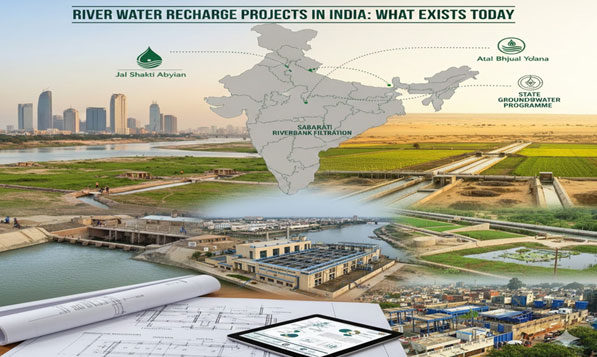
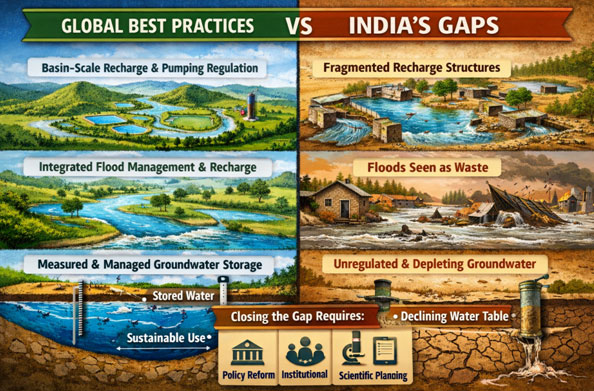
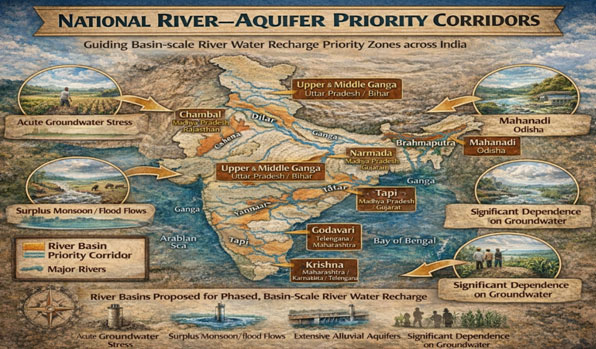
India already has several river-linked recharge initiatives. These include floodplain recharge projects along the Ganga, Yamuna floodplain ASR in Delhi, Sabarmati riverbank filtration in Ahmedabad, canal-linked recharge in Rajasthan and Punjab, and urban recharge initiatives in Chennai. Most of these projects are localised or pilot-scale, often implemented under broader schemes such as Jal Shakti Abhiyan, Atal BhujalYojana, and state groundwater programmes. While they demonstrate technical feasibility, they remain fragmented and lack basin-scale coordination. Nevertheless, these initiatives provide a strong foundation for scaling river water recharge nationally.
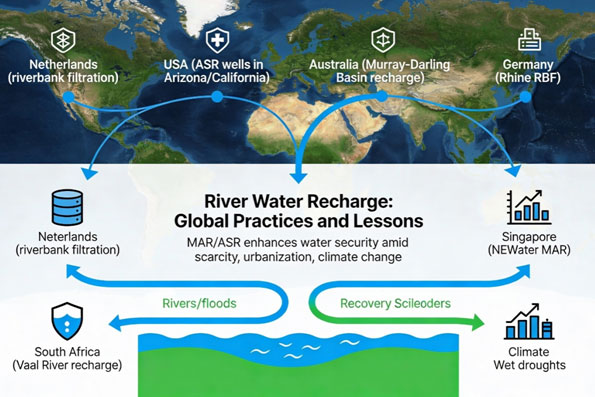
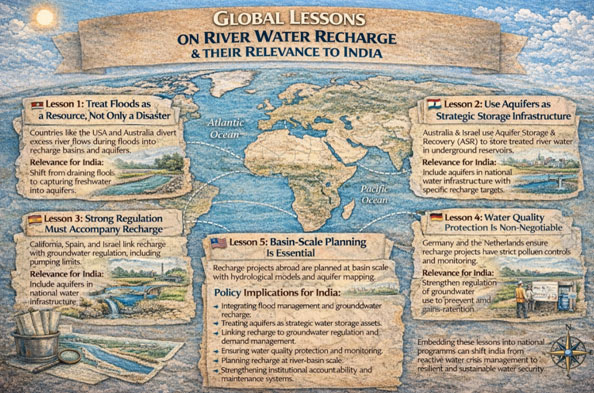
1. River Water Recharge Projects in India: A careful review of these projects suggests that operational and management shortcomings are the primary reasons for their limited outcomes. Although several government agencies have supported and endorsed the concept of river-water recharge through aquifer systems-recognising its technical feasibility, cost-effectiveness, and reliance on simple, time-tested methods-the level of implementation has remained far below its potential. Given that India has experimented with nearly every other major water-provisioning strategy over the past six to seven decades, with results still falling short of national needs, it is imperative for the government to pursue this approach vigorously. A well-designed and widely implemented recharge-well programme could significantly strengthen water security and foster broad-based prosperity across the country. River water recharge wells are a proven, scalable, and environmentally sound method of sustaining groundwater in arid and semi-arid regions. Australia, America, and Israel demonstrate diverse applications-from floodwater capture to urban drought resilience- backed by rigorous scientific design and governance. The success of these systems depends on hydrogeological suitability, pre-treatment quality, continuous monitoring, and community engagement.
A Few Initiative Projects in India 1. Ramganga Basin UTFI Project: The basic idea behind UTFI is simple. Instead of allowing excess floodwater from the Ramganga River to flow downstream unchecked, a portion of it is diverted into existing village ponds. From these ponds, the water is guided into specially constructed recharge wells, which allow it to seep into underground aquifers. The entire system largely relies on gravity, making it energy-efficient and suitable for village-scale implementation. Once stored underground, the water becomes available for irrigation during periods when rainfall is scarce. The Ramganga pilot demonstrated that this approach is technically feasible. Over several years of monitoring, the system was able to recharge between approximately 26,000 and 72,000 cubic metres of water annually, depending on rainfall and operating conditions. Farmers in nearby areas benefited from improved groundwater availability during the dry season, and the diversion of floodwater helped reduce local flood impacts. Perhaps most importantly, the project showed that existing village ponds-often neglected or underused-can be transformed into valuable infrastructure for water security. However, the pilot also revealed several practical challenges. One of the most significant problems was a sharp decline in recharge rates over the course of each monsoon season. While recharge was rapid at the beginning, it slowed dramatically later due to the accumulation of silt, organic matter, and biological growth. In some cases, recharge efficiency fell by more than 70 percent. This highlighted the need for better sediment management, such as settling basins, filtration systems, and regular desilting. Water quality also emerged as a concern. Floodwater often carries high levels of suspended solids and contaminants, which can affect both recharge performance and groundwater quality if not properly managed. Continuous monitoring and basic pre-treatment are therefore essential to ensure that recharge does not create new environmental risks. Institutional and governance issues posed additional challenges. Regular operation and maintenance-such as cleaning recharge wells and desilting ponds-are essential for long-term success, yet responsibility for these tasks was not always clearly defined. Questions about who controls floodwater diversion, who bears maintenance costs, and how benefits are shared among users must be addressed through strong local institutions and clear policy support. Despite these challenges, the Ramganga Basin UTFI project offers valuable insights for India’s broader water management strategy. It demonstrates that floods need not be seen only as disasters; with the right infrastructure and planning, they can be converted into a resource that strengthens groundwater reserves and supports agriculture. Decentralised, village-scale recharge systems like UTFI complement large dams and canals and can play a crucial role in building climate resilience. To realise this potential, India must adopt a more integrated approach to water management-one that links flood control, groundwater recharge, water quality protection, and community participation. UTFI should be expanded carefully through additional pilots in different river basins, supported by robust monitoring, institutional arrangements, and long-term maintenance plans. In conclusion, the Ramganga Basin UTFI project shows that turning floods into water security is not only possible but practical. While the approach requires refinement and supportive governance, it offers a promising pathway toward addressing India’s twin challenges of flooding and water scarcity. By capturing surplus monsoon water and storing it underground, India can move closer to a future of sustainable and reliable water availability. 2. Aquifer Recharge from Rivers under Atal BhujalYojana (ABHY) Under ABHY, aquifer recharge from rivers is implemented as part of a broader Managed Aquifer Recharge (MAR) approach. The objective is to capture surplus river water-especially during the monsoon and high-flow periods-and allow it to percolate into depleted aquifers. This helps restore groundwater levels, improves base flows, and enhances water availability during the dry season. Rather than relying solely on large reservoirs, ABHY promotes decentralised, locally appropriate recharge solutions linked to natural hydrological systems. The scheme is currently implemented in seven states-Gujarat, Haryana, Karnataka, Madhya Pradesh, Maharashtra, Rajasthan, and Uttar Pradesh-covering water-stressed blocks where groundwater extraction exceeds recharge. In several of these areas, rivers, seasonal streams, and floodplains are used as natural recharge zones. Recharge interventions include riverbank recharge structures, floodplain recharge works, recharge shafts, injection wells, and enhancement of riverbed infiltration. In canal- and river-linked regions, controlled diversion of surface flows into recharge structures is also encouraged. A key feature of ABHY is its emphasis on scientific planning based on aquifer mapping. Recharge structures are designed after assessing local geology, aquifer characteristics, groundwater trends, and river flow patterns. This ensures that recharge efforts are targeted, effective, and environmentally sustainable. Equally important is the scheme’s focus on community-led implementation. Gram Panchayats and Water User Groups are actively involved in identifying recharge sites, maintaining structures, and monitoring outcomes. Aquifer recharge from rivers under ABHY is closely linked with groundwater demand management. Recharge alone is not treated as a solution; it is complemented by measures such as crop diversification, micro-irrigation, water budgeting, and regulation of extraction. This integrated approach helps ensure that gains from recharge are not offset by excessive pumping. Early outcomes under ABHY indicate localised improvement in groundwater levels, increased awareness of groundwater as a shared resource, and better coordination between surface water and groundwater management. However, challenges remain, including the need for regular maintenance of recharge structures, managing sediment loads in river-fed systems, and strengthening long-term monitoring. In conclusion, aquifer recharge from rivers under the Atal BhujalYojana represents a shift from purely infrastructure-driven water management to a governance- and science-based approach. By combining river-linked recharge with community participation and demand control, ABHY provides a scalable framework for improving groundwater sustainability in India’s most stressed regions. If strengthened and expanded, this approach can play a significant role in enhancing national water security. 3. Aquifer Recharge from Rivers under Jal Shakti Abhiyan Under JSA–CTR, aquifer recharge from rivers is promoted through decentralised and location-specific interventions. During the monsoon, rivers and seasonal streams carry large volumes of water, much of which flows away quickly, often causing floods. The campaign encourages states and districts to capture this surplus water and allow it to percolate into underground aquifers, thereby strengthening groundwater reserves for use during dry periods. Recharge from rivers under the campaign is implemented through a variety of measures, including riverbed recharge structures, floodplain recharge works, recharge pits and shafts near riverbanks, revival of traditional ponds connected to rivers, and diversion of runoff into recharge zones. In many districts, desilting and restoration of river-linked tanks, lakes, and village ponds are taken up so that they function as natural recharge systems during the rainy season. A key strength of the Jal Shakti Abhiyan – Catch the Rain is its nationwide coverage and time-bound execution. The campaign is implemented across all states and Union Territories, with district administrations playing a central role. Activities are planned before the monsoon and executed during the rainy season to maximise recharge. The programme also places strong emphasis on convergence-bringing together resources from schemes such as MGNREGS, PMKSY, AMRUT, and state programmes to support river and aquifer recharge works. Unlike purely engineering-driven approaches, JSA-CTR emphasises people’s participation and ownership. Local communities, urban local bodies, Panchayati Raj Institutions, and line departments are encouraged to take collective responsibility for maintaining recharge structures and protecting river catchments. Public awareness campaigns highlight the importance of rivers not only as surface water channels but also as key contributors to groundwater replenishment. The campaign has led to large-scale creation and revival of recharge structures across the country and has helped improve groundwater levels in many water-stressed districts. However, challenges remain, including the need for better scientific site selection, regular maintenance of structures, and sediment management in river-fed systems, and stronger monitoring of actual recharge outcomes. In conclusion, aquifer recharge from rivers under the Jal Shakti Abhiyan-Catch the Rain represents a mass-mobilisation approach to groundwater sustainability. By encouraging states and communities to capture monsoon flows and reconnect rivers with aquifers, the programme helps convert seasonal rainfall into long-term water security. With stronger technical support and outcome-based monitoring, this approach can play a significant role in mitigating groundwater depletion and building climate resilience across India. 4. Aquifer Recharge from Rivers under Ganga Floodplain Aquifer Recharge Projects The primary objective of these initiatives is to use surplus river water-particularly during the monsoon and high-flow periods-to replenish depleted groundwater aquifers in the Ganga floodplain. Every year, large volumes of freshwater flow through the Ganga, much of which eventually reaches the sea after causing floods. By reconnecting the river with its floodplains and underlying aquifers, these projects aim to convert seasonal river flows into long-term underground water storage. Aquifer recharge under these projects is achieved through a combination of natural floodplain processes and engineered recharge interventions. Key methods include floodplain infiltration zones, recharge shafts, recharge wells, riverbank filtration systems, and the restoration of ponds and wetlands linked to the river. During the monsoon, river water either spreads naturally across floodplains or is directed into recharge structures, where it slowly percolates through sandy and permeable sediments into the aquifers below. Major project locations include Haridwar–Roorkee in Uttarakhand, Kanpur–Unnao–Prayagraj in Uttar Pradesh, and Patna and surrounding areas in Bihar. In these areas, the Central Ground Water Board (CGWB), working with state irrigation departments, urban water utilities, and local authorities, has implemented pilot and operational recharge schemes. The results have shown that Ganga floodplain aquifers are capable of storing large quantities of water and respond effectively to recharge during high-flow periods. These projects provide several important benefits. They help stabilise groundwater levels, improve drinking water security for towns and cities, support irrigation during the dry season, and reduce reliance on deep and unsustainable groundwater pumping. In many locations, riverbank filtration systems also enhance water quality through natural filtration as river water passes through floodplain sediments. One of the major strengths of the Ganga floodplain recharge approach is its low energy requirement and high storage efficiency. Water stored underground is protected from evaporation losses and remains available for use when surface water supplies decline. The approach complements conventional surface water management and aligns closely with national initiatives such as the Jal Jeevan Mission, Atal Bhujal Yojana, and Jal Shakti Abhiyan. Despite its potential, several challenges remain. Successful implementation requires protection of floodplains from encroachment, effective management of sediment and pollution, and regular maintenance of recharge structures. There is also a need to strengthen monitoring and data systems to measure actual recharge volumes and assess long-term impacts on groundwater levels. In conclusion, the Ganga Floodplain Aquifer Recharge Projects represent a strategic move toward integrated river–aquifer water management. By treating the Ganga floodplain as a natural water storage system, these initiatives offer a sustainable and climate-resilient solution to groundwater depletion in the basin. With improved scientific planning, stronger institutional coordination, and protection of floodplain areas, this approach can play a crucial role in securing water for millions of people who depend on the Ganga River system. 5. Aquifer Recharge from Rivers under Yamuna Floodplain Recharge & ASR Projects The primary objective of these projects is to utilise surplus river water and treated surface water to recharge depleted aquifers in the Yamuna floodplain. Despite chronic water shortages in Delhi and surrounding areas, large volumes of water flow through the Yamuna during monsoon periods. Much of this water is lost downstream after causing floods, while groundwater levels in the region continue to decline. The floodplain recharge and ASR projects aim to bridge this gap by converting seasonal river flows into reliable underground water storage. Aquifer recharge under the Yamuna floodplain projects is implemented through a combination of natural infiltration and engineered recharge systems. These include recharge wells, infiltration galleries, recharge shafts, and riverbank filtration structures constructed along the Yamuna floodplain. In selected locations, treated surface water is also injected directly into aquifers through ASR wells to augment recharge during non-monsoon periods. The sandy and permeable sediments of the Yamuna floodplain allow water to percolate efficiently into underlying aquifers. Major project sites are located along the Yamuna floodplain in north and central Delhi, including areas such as Palla, Majnu-ka-Tila, Akshardham, and upstream floodplain stretches. These initiatives are implemented by agencies such as the Delhi Jal Board (DJB), with technical support from the Central Ground Water Board (CGWB) and coordination with state and local authorities. Pilot and operational systems have demonstrated that floodplain aquifers respond positively to recharge when water quality and site conditions are suitable. The Yamuna floodplain recharge and ASR projects offer several important benefits. They help stabilise declining groundwater levels, enhance urban drinking water security, and reduce dependence on distant surface water sources. Riverbank filtration systems also improve water quality through natural filtration, reducing treatment costs. By storing water underground, the projects minimise evaporation losses and provide a buffer against droughts and supply disruptions. However, the projects face significant challenges. High pollution levels in the Yamuna River, floodplain encroachment, and competing land-use pressures limit the extent of recharge. Effective implementation requires strict protection of floodplain areas, careful water quality management, regular maintenance of recharge structures, and continuous monitoring of groundwater levels and quality. Institutional coordination among multiple agencies remains a critical requirement. In conclusion, the Yamuna Floodplain Recharge & ASR Projects represent an important step toward integrated urban water management in one of India’s most water-stressed regions. By reconnecting the Yamuna River with its floodplain aquifers and combining natural recharge with engineered ASR systems, these initiatives provide a sustainable and climate-resilient approach to groundwater restoration. With stronger pollution control, floodplain protection, and scientific monitoring, the Yamuna floodplain recharge model can play a vital role in improving long-term water security for Delhi and the surrounding region. 6. Aquifer Recharge from Rivers under Ahmedabad Riverbank Filtration & Recharge (Sabarmati) The Sabarmati River, which flows through Ahmedabad, carries regulated releases of surface water, primarily supported by the Narmada Canal system. While surface water availability has improved, groundwater levels in parts of Ahmedabad have remained under stress due to urbanisation and increasing demand. The riverbank filtration and recharge scheme seeks to use river flows to naturally recharge aquifers and improve groundwater quality, thereby creating an additional and reliable source of water for the city. Under this scheme, a series of wells are constructed along the banks of the Sabarmati River. When water is pumped from these wells, river water is induced to flow laterally through the riverbank sediments toward the wells. During this subsurface movement, the water undergoes natural filtration, which removes suspended solids, pathogens, and some chemical contaminants. At the same time, the process helps maintain groundwater levels by facilitating continuous recharge from the river to the adjacent aquifer. The project is implemented and operated by the Ahmedabad Municipal Corporation, with technical inputs from groundwater and water supply experts. The system functions as both a water treatment mechanism and an aquifer recharge process, reducing dependence on energy-intensive surface water treatment and deep groundwater extraction. The aquifers along the Sabarmati respond well to this method due to the presence of permeable alluvial sediments. The Ahmedabad RBF and recharge scheme provides several important benefits. It enhances urban drinking water security, improves groundwater quality, and reduces pressure on over-exploited aquifers. The underground storage of water minimises evaporation losses and provides resilience during periods of supply disruption. The scheme also supports sustainable urban water management by integrating surface water flows with groundwater systems. However, the success of riverbank filtration depends on maintaining adequate river flows and good water quality. Variations in river discharge, sediment load, and upstream pollution can affect system performance. Regular monitoring of water quality and groundwater levels, along with maintenance of wells and riverbanks, is essential for long-term sustainability. In conclusion, the Ahmedabad Riverbank Filtration & Recharge Scheme on the Sabarmati River represents a successful example of nature-based urban water management in India. By harnessing the natural filtration and recharge capacity of riverbank aquifers, the scheme contributes to long-term water security while reducing environmental and energy costs. With continued protection of river corridors and careful system management, this approach offers a replicable model for other cities located along regulated rivers. 7. Aquifer Recharge from Rivers under the Haridwar Riverbank Filtration Project: The project is based on the principle of riverbank filtration, a natural process in which river water infiltrates through riverbed and riverbank sediments into adjoining aquifers. As water moves through layers of sand, gravel, and soil, it undergoes physical, chemical, and biological filtration, resulting in improved water quality. Pumping from wells located near the river induces a continuous flow of river water into the aquifer, thereby maintaining groundwater levels. The Haridwar RBF system draws water from collector wells and vertical wells located along the Ganga floodplain. These wells tap shallow alluvial aquifers that are hydraulically connected to the river. During periods of pumping, river water is induced to flow laterally into the aquifer, effectively recharging it. This process ensures a reliable supply of filtered water even during dry seasons, when surface water availability may fluctuate. One of the key strengths of the Haridwar Riverbank Filtration Project is its high reliability and low operational cost. Because much of the treatment occurs naturally underground, the need for complex and energy-intensive surface water treatment is reduced. The system also provides a buffer against short-term pollution events in the river, as contaminants are attenuated during subsurface passage. The project delivers multiple benefits beyond drinking water supply. It helps stabilise groundwater levels in the floodplain, reduces dependence on deep groundwater abstraction, and protects water from evaporation losses by storing it underground. The aquifer acts as a natural reservoir, providing resilience against seasonal and climate-related variability in river flows. The success of the Haridwar RBF Project can be attributed to favourable hydrogeological conditions, including highly permeable alluvial sediments and strong hydraulic connectivity between the river and the aquifer. Clear institutional responsibility with the urban water utility has ensured regular operation, maintenance, and monitoring of the system. However, continued success depends on maintaining adequate river flows and protecting the floodplain from pollution and encroachment. Regular monitoring of water quality and groundwater levels is essential, particularly given increasing upstream pressures on the Ganga River. In conclusion, the Haridwar Riverbank Filtration Project represents a proven, nature-based approach to river-linked aquifer recharge and sustainable urban water supply. By effectively integrating river water with groundwater systems, the project provides a replicable model for other towns and cities located along perennial rivers. With appropriate protection of river corridors and institutional support, riverbank filtration can play a vital role in strengthening India’s long-term water security. 8. Aquifer Recharge from Rivers under the Indira Gandhi Canal Recharge Program (Rajasthan) The central objective of the Indira Gandhi Canal Recharge Program is to augment groundwater resources in water-scarce desert areas by allowing canal water to percolate into underground aquifers. Prior to the canal’s construction, groundwater in much of western Rajasthan was deep, saline, and unreliable. The introduction of canal water created new opportunities to improve groundwater availability through canal seepage, recharge structures, and managed infiltration. Aquifer recharge under the programme occurs through a combination of natural seepage from the canal network and engineered recharge interventions. These include recharge shafts, percolation tanks, injection wells, and spreading structures constructed along canal alignments and command areas. Seasonal releases of canal water enable infiltration into sandy and permeable soils, allowing water to move downward and recharge shallow and intermediate aquifers. The programme covers districts such as Sri Ganganagar, Hanumangarh, Bikaner, Jaisalmer, and Jodhpur, where canal-linked recharge has led to noticeable changes in groundwater levels. In many areas, groundwater tables have risen, enabling the development of wells for irrigation and domestic use. The recharge has also helped reduce dependence on distant water sources and improved water security for rural settlements. One of the major advantages of the Indira Gandhi Canal recharge approach is its large spatial scale and continuous water availability. Unlike rain-dependent recharge systems, canal water provides a relatively stable source of recharge in an otherwise extremely dry environment. Underground storage also reduces evaporation losses, which are particularly high in desert climates. However, the programme has also highlighted important challenges. In some areas, excessive recharge without adequate drainage and extraction control has resulted in waterlogging and soil salinity, affecting agricultural productivity. Managing the balance between recharge and groundwater use remains a critical issue. Additionally, regular maintenance of recharge structures and careful regulation of canal releases are essential to sustain benefits and avoid adverse impacts. In conclusion, the Indira Gandhi Canal Recharge Program demonstrates how inter-basin river water transfers can be used not only for surface irrigation but also for large-scale aquifer recharge in arid regions. By converting canal flows into underground water storage, the programme has significantly improved water availability in western Rajasthan. With better groundwater regulation, drainage management, and monitoring, canal-linked recharge can serve as a powerful tool for long-term water security in desert and drought-prone regions. 9. Aquifer Recharge from Rivers under the Bhakra Canal & Sutlej Basin Recharge Programme (Punjab & Haryana) The primary objective of the recharge process in the Bhakra canal system is not only to deliver surface water for irrigation, but also to augment groundwater storage through canal seepage and managed recharge structures. Prior to the introduction of canal irrigation, groundwater levels in many parts of Punjab and Haryana were deeper and less reliable. Continuous canal flows created favourable conditions for aquifer recharge, especially in alluvial plains with high permeability. Aquifer recharge under this programme occurs through a combination of natural seepage from canals and distributaries and engineered recharge interventions. Canal beds and embankments allow water to percolate into the subsurface, recharging shallow and intermediate aquifers. In addition, recharge shafts, percolation structures, village ponds, and low-lying floodplain areas connected to the canal system further enhance groundwater recharge during periods of canal operation. The recharge effects are observed across large parts of central and southern Punjab and northern and eastern Haryana, where groundwater levels initially showed improvement following canal expansion. In many areas, canal-linked recharge enabled the widespread development of tube wells, which later became the backbone of agricultural growth during the Green Revolution. One of the major strengths of the Bhakra canal recharge system is its scale and reliability. Unlike rainfall-dependent recharge, canal flows provide a relatively stable and predictable source of recharge. Underground storage protects water from evaporation losses and supports conjunctive use of surface water and groundwater, which has been a defining feature of agriculture in the region. However, the programme has also revealed significant challenges. Over time, intensive groundwater pumping for water-intensive crops such as paddy and wheat has far exceeded recharge, leading to widespread groundwater depletion, particularly in Punjab. In some canal-command areas, waterlogging and salinity have also emerged due to excessive recharge combined with poor drainage. These issues highlight the need for better regulation and balance between recharge and extraction. The experience of the Bhakra Canal and Sutlej Basin shows that aquifer recharge alone cannot ensure sustainability without groundwater governance and demand management. Crop diversification, regulation of pumping, energy pricing reforms, and improved irrigation efficiency are essential to complement recharge efforts. In conclusion, the Bhakra Canal & Sutlej Basin Recharge Programme demonstrates both the potential and limitations of large-scale river- and canal-linked aquifer recharge. While the canal system has significantly enhanced groundwater availability and supported agricultural prosperity, long-term sustainability depends on integrating recharge with responsible groundwater use. With improved management and policy support, canal-linked recharge can continue to play a vital role in securing water resources in Punjab and Haryana. 10. Aquifer Recharge from Rivers under Chennai River–Aquifer Recharge (Araniyar–Kosasthalaiyar) The Araniyar and Kosasthalaiyar rivers form an important part of Chennai’s hydrological system, carrying seasonal monsoon flows and supporting a network of tanks, lakes, and floodplains. Despite this, much of the river water flows rapidly to the sea during heavy rainfall events, while groundwater levels decline sharply during dry periods. The river–aquifer recharge scheme seeks to capture Surplus River and floodwater and store it underground, converting short-term surface flows into reliable groundwater reserves. Aquifer recharge under the scheme is achieved through a combination of engineered recharge structures and natural infiltration processes. Key interventions include recharge wells, infiltration basins, percolation ponds, check dams, and the restoration of river-linked tanks and lakes within the basin. During the monsoon, river flows are diverted into these recharge zones, allowing water to percolate through sandy alluvial soils and recharge underlying aquifers. In some locations, treated surface water is also used to supplement recharge during non-monsoon periods. The scheme covers several areas in north Chennai and adjoining districts, where groundwater aquifers play a vital role in supporting domestic, industrial, and emergency water supply. Monitoring has shown that targeted recharge has helped improve groundwater levels locally and reduced the severity of water shortages during dry seasons, particularly following the severe droughts experienced by Chennai in recent years. One of the key strengths of the Chennai river–aquifer recharge approach is its role in urban drought resilience. Underground storage protects water from evaporation losses and provides a buffer against erratic rainfall and climate extremes. The scheme also complements other water supply sources, including surface reservoirs and desalination plants, by reducing dependence on any single source. However, the initiative faces several challenges. Pollution in river water, rapid urbanisation, encroachment on river corridors, and the need for regular maintenance of recharge structures pose ongoing risks. Effective water quality monitoring, protection of recharge zones, and strong institutional coordination are essential for long-term sustainability. In conclusion, the Chennai River–Aquifer Recharge Scheme in the Araniyar–Kosasthalaiyar basin represents an important shift toward integrated urban water management. By reconnecting rivers, tanks, and aquifers, the scheme offers a sustainable and climate-resilient solution to groundwater depletion and water scarcity in the Chennai region. With continued investment, scientific planning, and protection of river systems, this approach can significantly enhance long-term water security for the city. 11. Aquifer Recharge from Rivers under Krishna & Godavari Basin Recharge Projects Both river basins exhibit strong seasonal variability. During the southwest monsoon, rivers convey large volumes of water, often resulting in floods and rapid runoff to the sea. In contrast, groundwater levels decline sharply during the dry season due to intensive dependence on bore wells for irrigation, drinking water, and industrial use. The basin recharge projects aim to capture surplus monsoon flows and store them underground, thereby improving water availability during periods of scarcity and reducing vulnerability to drought. Aquifer recharge in the Krishna and Godavari basins is implemented through a combination of riverbed recharge structures, floodplain recharge works, percolation tanks, check dams, recharge shafts, and injection wells. In several locations, excess river water is temporarily impounded behind small structures or diverted into designated recharge zones, allowing it to percolate through weathered rock, alluvial deposits, and fractured formations into underlying aquifers. These recharge interventions are often integrated with existing irrigation schemes and watershed development programmes. Major recharge efforts are concentrated in districts along the upper and middle reaches of the Krishna and Godavari rivers, particularly in Telangana and Maharashtra, where groundwater stress is severe. State Water Resources Departments, supported by technical agencies such as the Central Ground Water Board (CGWB), have implemented pilot and operational projects to stabilise groundwater levels and improve well yields in surrounding villages. The projects offer multiple benefits, including slowing groundwater decline, improving irrigation reliability during dry months, and strengthening drinking water security in rural areas. Underground storage reduces evaporation losses and provides a buffer against rainfall variability. In some regions, recharge has also contributed to the revival of traditional tanks and connected water bodies. However, challenges remain. Recharge performance varies due to complex hard-rock geology, siltation of structures, limited infiltration capacity, and inadequate maintenance. Moreover, recharge efforts are often not accompanied by effective groundwater extraction regulation, reducing long-term sustainability.In conclusion, the Krishna and Godavari Basin Recharge Projects demonstrate the potential of river-linked aquifer recharge as a climate-resilient water management strategy. While local benefits are evident, achieving basin-scale impact will require stronger scientific planning, improved maintenance, and integration of recharge with groundwater governance and demand management.
Chapter - 8 Experience across states shows that recharge succeeds where geology, governance, and maintenance align. Uttarakhand’s riverbank filtration works well due to favourable aquifers and utility ownership. Gujarat benefits from integrated surface-groundwater planning. Rajasthan has improved groundwater availability through canal-linked recharge. In contrast, Punjab and Haryana struggle due to excessive groundwater pumping that overwhelms recharge. In parts of Maharashtra and peninsular India, complex geology limits recharge effectiveness. The key lesson is clear: recharge fails not because of technology, but because of weak regulation, poor maintenance, and lack of basin-level planning.
River-Linked Aquifer: A State-wise Performance Analysis: River-Linked Aquifer Recharge Projects in India:
In Uttar Pradesh, the Ramganga Basin UTFI pilot stands out as one of India’s most innovative river-to-aquifer recharge experiments. By diverting excess floodwater into village ponds and then recharging it through gravity-fed wells, the project successfully improved groundwater availability during the dry season. However, the initiative remained confined to pilot scale. Recharge efficiency declined rapidly due to siltation, and the absence of strong operation and maintenance mechanisms prevented wider replication. The experience shows that while technology can work, institutional ownership is critical for scaling. Uttarakhand presents one of the more consistent success stories. Riverbank filtration systems along the Ganga at Haridwar and the Alaknanda at Srinagar have functioned reliably for years, providing clean drinking water while maintaining aquifer stability. Favourable geology, combined with clear responsibility assigned to state water utilities, has ensured sustainability. However, these systems are primarily used for abstraction rather than deliberate recharge, limiting their broader groundwater restoration potential. In Delhi, aquifer recharge efforts along the Yamuna floodplain have produced mixed results. Recharge wells and infiltration galleries have helped stabilise groundwater levels in select locations, particularly for urban water supply. Yet severe river pollution, floodplain encroachment, and fragmented implementation have constrained impact. The Delhi experience highlights that urban river recharge cannot succeed without parallel action on pollution control and land protection. Bihar benefits from naturally high recharge potential due to the vast floodplains of the Ganga. Seasonal flooding enables effective natural recharge, and simple floodplain structures have helped replenish shallow aquifers. However, the absence of systematic monitoring and weak coordination between flood management and groundwater agencies has limited long-term planning. Bihar’s case demonstrates that favourable natural conditions alone are insufficient without institutional capacity. In Gujarat, river-linked recharge along the Sabarmati and widespread recharge structures under state programmes have contributed to stabilising groundwater in several regions. Strong groundwater governance and integration with canal systems have supported these efforts. At the same time, heavy reliance on Narmada water transfers has sometimes obscured local water stress, and maintenance of recharge structures remains uneven. Gujarat’s experience shows the value of integrated water system management, but also the risks of over-dependence on inter-basin transfers. Rajasthan has made extensive use of canal-linked recharge through the Indira Gandhi Canal, successfully improving groundwater availability in arid zones. Recharge shafts in sandy aquifers have been effective, but in some areas they have led to waterlogging and salinity due to lack of extraction control. This highlights an important lesson: recharge without regulation of groundwater pumping can create new environmental problems. In Punjab, river-linked recharge has largely failed to offset severe groundwater depletion. Although canal seepage provides incidental recharge, aggressive extraction driven by water-intensive cropping patterns has overwhelmed natural and artificial recharge. The Punjab case illustrates that policy incentives and agricultural practices can undermine even technically sound recharge systems. Haryana has implemented recharge shafts and wells linked to the Yamuna with some local success. However, these projects remain fragmented and small in scale. The absence of basin-level planning and sustained funding has prevented meaningful impact. Haryana’s experience shows that pilot projects alone do not translate into water security without institutional mechanisms for expansion. In Madhya Pradesh, floodplain recharge structures along the Narmada have worked seasonally, raising groundwater levels during the monsoon. Yet their impact fades during the dry season due to limited year-round planning and weak integration with irrigation management. This suggests that recharge must be continuous and strategically linked to water use patterns. Maharashtra presents one of the more challenging cases. Complex and fractured geology has limited the effectiveness of riverbed recharge structures, many of which silt up quickly. While some percolation tanks have improved local groundwater availability, inconsistent performance and poor maintenance have reduced overall impact. The state’s experience demonstrates that standardised recharge designs often fail in geologically complex regions. In Telangana and Andhra Pradesh, river recharge efforts are largely confined to check dams and small structures. Although these provide local benefits, the absence of scientific aquifer targeting and long-term monitoring has kept outcomes uncertain and seasonal. These states illustrate the limits of structure-focused approaches without groundwater science. Tamil Nadu, particularly Chennai, has shown how crisis can drive innovation. After severe droughts, the city invested in river-aquifer recharge using infiltration basins and recharge wells linked to seasonal rivers. These measures improved urban water resilience, but high pollution levels and maintenance challenges persist. The lesson here is that emergency-driven solutions must evolve into permanent institutional systems. In Karnataka, recharge efforts along the Cauvery basin have yielded limited success. Local improvements have been observed near recharge structures, but continued over-extraction through bore wells undermines gains. Similarly, West Bengal’s Hooghly floodplains naturally support recharge, yet limited engineered intervention and weak groundwater governance restrict long-term security. Across states, common reasons for failure emerge clearly. Many projects suffer from siltation and clogging due to inadequate sediment management. Operation and maintenance funding is often absent. Recharge is frequently implemented without regulating groundwater extraction, leading to net losses. Institutional fragmentation, lack of basin-scale planning, and poor monitoring further weaken outcomes. Conversely, successful projects share distinct characteristics. They are located in suitable aquifers, managed by accountable agencies or utilities, supported by regular maintenance, integrated into broader water supply planning, and monitored for outcomes rather than merely counted as structures. In conclusion, India’s experience with river-linked aquifer recharge shows that the challenge lies not in the absence of technology, but in the absence of systems thinking. Recharge can be a powerful tool for water security only when it is basin-based, scientifically targeted, institutionally governed, and linked to demand management. Without these elements, recharge projects risk remaining isolated successes in an otherwise worsening water crisis.
Chapter - 9 As water scarcity intensifies due to population growth, urbanisation, and climate change, many countries have adopted river water recharge projects as a strategic tool to enhance groundwater storage and improve long-term water security. These projects are commonly implemented under the broader framework of Managed Aquifer Recharge (MAR) or Aquifer Storage and Recovery (ASR). By intentionally transferring Surplus River or floodwater into underground aquifers, countries are able to store water during wet periods and recover it during droughts, thereby increasing resilience to climate variability. Several countries across different climatic and geographic regions have developed mature and well-documented river water recharge programmes. Their experiences offer valuable lessons for nations seeking sustainable water management solutions.
United States: In California, river water from the Sacramento and San Joaquin river systems is diverted during high-flow periods into spreading basins, floodplain recharge zones, and recharge canals. These basins allow water to infiltrate into large alluvial aquifers beneath the Central Valley, which supports one of the world’s most productive agricultural regions. The state’s Sustainable Groundwater Management Act (SGMA) has further strengthened recharge planning by legally linking recharge to groundwater extraction limits. In Arizona, recharge of Colorado River water is carried out through large-scale infiltration basins and injection wells as part of the Arizona Water Banking Authority. This programme stores surplus river water underground for future use, providing drought protection for cities such as Phoenix and Tucson. Australia: In the Murray–Darling Basin, surplus river water is recharged into aquifers using injection wells and infiltration basins. Cities such as Adelaide operate ASR schemes where treated river water is injected into confined aquifers and later recovered for municipal, industrial, and irrigation use. These systems are supported by strong regulatory frameworks governing water quality, storage rights, and recovery volumes. Australia’s experience demonstrates how urban ASR systems can function reliably at large scale, even under highly variable rainfall conditions. Israel is widely regarded as a global benchmark in integrated water management. River water recharge plays a critical role in the country’s strategy to balance limited natural freshwater resources. The Yarkon–Taninim Aquifer receives recharge from surface water systems, including diverted river flows and treated water. During periods of surplus, water is directed into recharge basins and injection wells, allowing aquifers to function as strategic underground reservoirs. Israel combines recharge with strict groundwater regulation, advanced monitoring, and water quality control, ensuring that stored water remains safe for long-term use. Israel’s success highlights the importance of strong institutions and regulation alongside technical infrastructure. Netherlands: In RBF systems, wells are located near riverbanks. When groundwater is pumped, river water is naturally drawn through riverbed and bank sediments into aquifers, undergoing filtration that improves water quality. This process simultaneously recharges aquifers and provides high-quality raw water for treatment plants. RBF has been operational for over a century in the Netherlands and remains a cornerstone of the country’s drinking water supply. Germany: Cities such as Berlin and Düsseldorf rely heavily on riverbank filtration and induced recharge to meet drinking water demand. These systems benefit from detailed hydrogeological planning, continuous monitoring, and strong pollution control regulations. Germany’s long experience shows that river-aquifer recharge can be sustained safely over decades. Spain: Surplus river flows are diverted into recharge basins and infiltration channels to replenish over-exploited aquifers. Spain’s approach often combines recharge with aquifer recovery plans, which include restrictions on pumping and protection of recharge zones. This integrated strategy has helped restore groundwater levels in several stressed basins. China: Along the Yellow River and the Hai River basin, surplus surface water and diverted flows are used for aquifer recharge through spreading basins and injection wells. These projects are often linked to large-scale water transfer schemes such as the South–North Water Transfer Project, which provides opportunities for planned recharge in water-scarce regions. Key Lessons from International Experience: Conclusion:
Chapter - 10 Across the world, countries facing chronic water scarcity, climate variability, and groundwater depletion have increasingly adopted river water recharge and Managed Aquifer Recharge (MAR) as a core strategy for long-term water security. Experiences from the United States, Australia, Israel, Germany, the Netherlands, Spain, and China demonstrate that aquifers, when scientifically managed, can function as vast, reliable underground reservoirs. These countries have shown that surplus river water-especially during floods-can be deliberately captured, stored underground, and recovered during dry periods.
These global lessons are highly relevant to India, which faces a unique paradox: intense monsoon floods occurring alongside chronic groundwater depletion. Each year, enormous volumes of freshwater flow unutilised into the sea, while large parts of the country experience falling water tables, drying wells, and growing dependence on tanker water. Learning from international experience offers India a pathway to transform this challenge into an opportunity. Lesson 1: Treat Floods as a Resource, Not Only a Disaster For example, California’s Flood-MAR programme integrates flood control infrastructure with recharge zones, allowing Excess River flows to replenish depleted aquifers. This dual-purpose planning improves both flood resilience and drought preparedness. Relevance for India: Lesson 2: Use Aquifers as Strategic Storage Infrastructure Israel, for instance, uses aquifers as strategic reserves to buffer against prolonged droughts, while Australia’s cities rely heavily on underground storage to stabilise urban water supply. Relevance for India: Lesson 3: Strong Regulation Must Accompany Recharge Relevance for India: Lesson 4: Water Quality Protection Is Non-Negotiable Relevance for India: Lesson 5: Basin-Scale Planning Is Essential Relevance for India: Lesson 6: Institutions Matter More Than Technology Relevance for India: Policy Implications for India Conclusion
Chapter - 11 Globally, groundwater recharge is treated as a strategic water management function rather than an isolated engineering activity. In many countries such as Australia, the United States, the Netherlands, and Spain, recharge planning is undertaken at the river basin or aquifer scale, ensuring that interventions align with the natural hydrology of the system. These efforts are closely linked with groundwater abstraction regulations, where pumping limits, licensing, and seasonal withdrawal rules are enforced alongside recharge initiatives. Importantly, recharge outcomes are quantified in terms of volumes of water stored, recovered, and sustainably available, allowing policymakers to evaluate effectiveness and adapt strategies over time. For example, Australia’s Managed Aquifer Recharge (MAR) programs explicitly measure recharge efficiency, recovery rates, and long-term impacts on aquifer health.
In contrast, India’s approach to groundwater recharge remains largely structure-centric and fragmented. Recharge efforts are often reduced to the construction of physical structures such as check dams, percolation tanks, recharge shafts, and farm ponds, frequently implemented without basin-scale hydrological assessment. These interventions are typically executed by multiple agencies-rural development departments, irrigation departments, urban local bodies, and NGOs-often working in silos and without coordination with groundwater regulation authorities. As a result, recharge is rarely linked to controls on groundwater extraction, meaning that newly recharged water is often rapidly overdrawn, yielding limited long-term benefits. Moreover, success is commonly measured in terms of number of structures built or funds spent, rather than the actual volume of groundwater replenished or sustained. Closing this gap between global best practices and India’s current approach requires fundamental policy and institutional reforms. Recharge must be repositioned as part of an integrated groundwater governance framework, with clear institutional responsibility, basin-level planning, and scientifically grounded design. This includes linking recharge investments with groundwater regulation, improving data collection and monitoring, and shifting from a structure-counting mindset to outcome-based planning focused on aquifer sustainability. Without such reforms, recharge efforts will continue to deliver limited and short-lived gains, failing to address India’s deepening groundwater crisis.
Comparative Table: Global Best Practices vs India’s Gaps in River Water Recharge
Chapter - 12 Aquifer recharge (often referred to as Aqua fire) has become an important part of India’s response to growing water scarcity and falling groundwater levels. Unlike large dams or desalination plants, aquifer recharge schemes are relatively low-cost, decentralised, and environmentally sustainable. However, financing these schemes does not rely on a single source of funding. Instead, India follows a blended, multi-source financing model, drawing resources from the central government, state budgets, employment schemes, external agencies, the private sector, and local communities.
This diversified financing approach reflects the distributed nature of aquifer recharge projects, which range from village-level structures to river-basin-scale interventions. Central Government Funding: Central funding is mainly used for technical studies, aquifer mapping, detailed project reports (DPRs), pilot projects, and large river-based recharge infrastructure. In most cases, it supports capital expenditure (CAPEX) rather than long-term operation and maintenance. This ensures that recharge projects are scientifically planned and technically sound before construction begins. Atal Bhujal Yojana: Under this scheme, funds are released only after measurable improvements in groundwater indicators, such as rising water levels or reduced extraction. Villages and local institutions receive incentives only when outcomes are achieved. This approach links recharge with demand management and community participation, making ABHY one of the most innovative financing mechanisms in the groundwater sector. State Government Budgets: The Main Implementers: State budgets are typically used for construction of recharge structures, river diversion works, urban recharge wells, and in some cases operation and maintenance. Most centrally sponsored schemes require states to co-finance projects, usually contributing 30–50 percent of the total cost. This shared responsibility strengthens state ownership of recharge initiatives. MGNREGA: By fully covering labour costs, MGNREGA can reduce the overall project cost by 40–60 percent. Its main limitation is that it cannot finance machinery, sensors, pumps, or automation, which must be funded through other sources. Urban Financing Mechanisms: External and Multilateral Funding: Such funding is typically used for large, strategic interventions, capacity building, and institutional strengthening. CSR and Private Sector Participation: Community and Beneficiary Contributions: Why Aquifer Recharge Is Financially Attractive: Key Financing Challenges: The Way Forward: A Best-Practice Financing Model: Conclusion:
Chapter - 13 River-based aquifer recharge projects are often designed with sound science and constructed with significant public investment. Yet, across the world-and especially in India-many such projects fail to deliver long-term benefits. The most common reason is not faulty design or lack of water availability, but weak or neglected operation and maintenance (O&M).
Aquifer recharge structures are not permanent, self-sustaining assets. They are living systems that interact continuously with rivers, sediments, groundwater, and human use. Without regular care, even the best-designed recharge projects lose effectiveness within a few years. Why O&M Is Critical in Aquifer Recharge: Key O&M activities include: When these activities are neglected, recharge rates decline sharply, often without being noticed until groundwater levels stop responding. Indian Experience: Where O&M Was Neglected Canal-Linked Recharge in Punjab and Haryana: The Bhakra canal system provided significant incidental recharge through seepage. However, poor drainage maintenance and unregulated pumping led to waterlogging in some areas and groundwater depletion in others. The lesson was clear: recharge without ongoing management and regulation can create new problems instead of solving old ones. Urban Recharge Wells in Indian Cities: Several cities mandated recharge wells through building bylaws. In many cases, these wells quickly clogged due to poor construction quality and absence of post-construction maintenance. Municipal bodies often lacked inventories of recharge wells, let alone O&M plans. As a result, large investments produced little lasting impact. Indian Success Stories: Where O&M Was Taken Seriously Gujarat’s Managed Recharge Efforts: In parts of Gujarat, recharge structures linked to river systems have performed well because local Panchayats and water user groups are actively involved in maintenance. Desilting is treated as a routine activity, often carried out before the monsoon, ensuring continued infiltration capacity. International Experience: O&M as a Core Design Principle Australia (Aquifer Storage and Recovery): In cities such as Adelaide, ASR systems recharge treated river water into confined aquifers. Early pilots revealed clogging and chemical compatibility issues. Instead of abandoning the systems, authorities invested in robust O&M protocols, including pre-treatment, regular well maintenance, and monitoring. Today, ASR is a trusted component of urban water supply. United States (California Floodplain Recharge): Floodplain recharge projects in California emphasise adaptive operations. Recharge sites are rotated, sediments are managed, and recharge timing is adjusted based on monitoring data. Dedicated agencies are responsible for long-term upkeep, recognising recharge as essential infrastructure. Why Projects Fail Without O&M: In such cases, recharge systems slowly degrade, often becoming completely non-functional while still being counted as assets on paper. The Role of Community Participation: Under Atal BhujalYojana, villages receive incentives only when groundwater indicators improve. This performance-based approach encourages communities to care for recharge structures as shared assets rather than abandoned government works. Key Lessons for Policy and Practice: Conclusion: International experience and Indian evidence point to the same truth: operation and maintenance are not supporting activities-they are the core of success. Recharge structures are living systems that require continuous care. When O&M is prioritised, aquifer recharge becomes a durable, cost-effective, and climate-resilient solution. When it is ignored, even the best intentions fail. In the end, sustainable water security depends not only on building recharge systems, but on committing to look after them-year after year.
Chapter – 14 River water recharge is far more than a technical response to groundwater depletion; it is a strategic investment in economic stability, climate resilience, and social well-being. In a country like India-where water availability directly influences agricultural output, industrial productivity, public health, energy use, and rural livelihoods-strengthening groundwater systems through systematic river water recharge delivers benefits that extend well beyond the water sector. By transforming short-lived surface flows into long-term underground storage, river recharge converts seasonal abundance into sustained economic security.
Strengthening the Agricultural Economy River water recharge helps stabilise groundwater levels, ensuring that water remains accessible at affordable depths. Stable water tables enable farmers to plan cropping patterns with greater confidence, adopt improved seeds and practices, and sustain multiple cropping seasons. Recharge also reduces the frequency of bore well failures, which are a major cause of economic distress in drought-prone regions. Over time, improved groundwater reliability translates into higher agricultural productivity, reduced income volatility, and more resilient rural livelihoods. Supporting Urban Water Security and Industrial Growth By recharging aquifers with surplus river water, urban centres and industrial clusters can reduce their vulnerability to seasonal shortages and climate-induced disruptions. This reliability lowers economic risks, reduces dependence on costly emergency water supply measures, and enhances investor confidence. In water-stressed regions, secure groundwater availability can become a decisive factor in attracting industrial investment and sustaining economic growth. Reducing the Economic Impacts of Drought By storing monsoon water underground, recharge acts as a natural insurance mechanism against drought. The economic benefits are substantial: fewer crop losses, reduced need for disaster relief spending, and lower social disruption. Over the long term, drought resilience supported by recharge strengthens food security and reduces poverty in vulnerable regions. Mitigating Flood Damage and Economic Losses This reduction in peak flows can significantly lower flood damage, protect livelihoods, and reduce the fiscal burden of disaster response and reconstruction. The economic savings from avoided flood losses are often overlooked but can be immense, especially in densely populated river basins. Energy Savings and Climate Mitigation Recharge that raises or stabilises groundwater levels reduces pumping depth and energy demand. This leads to lower electricity subsidies, reduced stress on power infrastructure, and lower greenhouse gas emissions from electricity generation. In this way, water security supports energy security, creating a virtuous cycle that contributes to climate mitigation and fiscal sustainability. Enhancing Climate Resilience Aquifers, by contrast, act as natural buffers. They absorb excess water during wet periods and release it gradually over time, smoothing out variability in water availability. Recharge strengthens this buffering function, making water systems more resilient at local, regional, and national scales. In a changing climate, this adaptive capacity is increasingly valuable. Cost-Effectiveness and Long-Term Economic Returns Because recharge benefits persist over decades, returns on investment accumulate over time, making it highly attractive from a public finance perspective. When indirect benefits-such as reduced disaster losses, energy savings, and improved health-are included, the economic case for river water recharge becomes even stronger. Social and Developmental Benefits Conclusion In conclusion, river water recharge should not be viewed merely as a water management intervention. It is a strategic economic and social investment that delivers high returns across multiple sectors. By transforming seasonal river flows into long-term underground storage, recharge strengthens climate resilience, reduces economic losses, and supports inclusive and sustainable growth for India’s future.
Chapter - 15 India’s water challenge is fundamentally spatial and seasonal. While groundwater depletion is widespread across the country, the availability of surplus river water during the monsoon is concentrated in specific river basins and floodplain stretches. Recognising this mismatch between where water is available and where it is needed, the concept of National River–Aquifer Priority Corridors is proposed as a strategic framework for phased, basin-scale implementation of river water recharge across India.
The primary purpose of identifying these priority corridors is to guide national action toward locations where river–aquifer connectivity is naturally strong, groundwater stress is acute, and recharge interventions can deliver the highest hydrological, social, and economic returns. Rather than dispersing resources thinly across the entire country, a corridor-based approach allows focused investment, scientific planning, and measurable outcomes. These corridors represent stretches of major river basins where surplus monsoon flows coincide with extensive alluvial aquifers and high dependence on groundwater for drinking water, agriculture, and livelihoods. Implementing river water recharge in such corridors can convert seasonal floods into long-term underground storage, stabilise groundwater levels, and strengthen climate resilience at scale. One of the most critical corridors is the Upper and Middle Ganga floodplains spanning Uttar Pradesh and Bihar. This region contains one of the largest and most productive alluvial aquifer systems in the world, supporting tens of millions of people. Despite the presence of abundant monsoon flows in the Ganga and its tributaries, groundwater levels in many districts continue to decline due to intensive irrigation and urban demand. Recharging these floodplain aquifers through a combination of floodplain restoration, riverbank filtration, recharge wells, and managed inundation offers unparalleled potential for national water security. Closely linked is the Yamuna floodplain corridor covering Delhi, Haryana, and western Uttar Pradesh. The Yamuna floodplain hosts highly permeable aquifers that historically acted as natural water storage systems for the region. Rapid urbanisation, encroachment, and pollution have weakened this function. Targeted recharge and Aquifer Storage and Recovery (ASR) interventions in this corridor can secure drinking water for one of the most densely populated urban–rural regions in the country while reducing dependence on distant surface water sources. In peninsular India, the Godavari floodplain corridor across Telangana and Maharashtra represents a major opportunity. The Godavari carries substantial monsoon flows, yet groundwater stress persists in its command areas due to uneven rainfall distribution and intensive agriculture. Recharge interventions along floodplain stretches and tributary confluences can significantly enhance groundwater availability in semi-arid regions that are otherwise vulnerable to drought. Similarly, the Krishna basin spanning Maharashtra, Karnataka, and Telangana is identified as a priority corridor because of its heavy agricultural dependence and recurring groundwater depletion. Although the basin is more geologically complex than the Indo-Gangetic plains, selected alluvial reaches and canal-linked zones offer viable recharge potential. Corridor-level planning can help integrate river regulation, canal operations, and groundwater recharge in a coordinated manner. The Narmada basin covering Madhya Pradesh and Gujarat represents another strategic corridor. While the basin hosts major surface water infrastructure, groundwater stress persists in many parts due to uneven distribution and seasonal variability. Floodplain and river-adjacent aquifers in the middle and lower reaches provide opportunities for managed recharge that complement existing reservoirs rather than competing with them. The Tapi basin across Madhya Pradesh, Maharashtra, and Gujarat is a smaller but hydrologically significant corridor. Short, intense monsoon flows often lead to rapid runoff and flooding, while groundwater levels decline during the dry season. Targeted recharge along suitable floodplain and riverbank stretches can improve water security for agriculture and urban centres in western India. In southern India, the Cauvery delta in Tamil Nadu stands out as a priority corridor due to its dense population, high agricultural intensity, and chronic groundwater stress. The delta’s alluvial sediments provide favourable conditions for recharge, particularly during high-flow periods. Restoring river–aquifer connectivity in the delta can help stabilise groundwater levels and reduce conflicts over surface water allocations. The Sabarmati basin in Gujarat is another important corridor, especially given the successful experience with riverbank filtration and managed recharge in Ahmedabad. Expanding recharge efforts upstream and downstream of urban centres can strengthen both urban and rural water security while building on existing institutional capacity. On the east coast, the Mahanadi delta in Odisha offers strong potential due to its extensive alluvial deposits, surplus monsoon flows, and dependence on groundwater for drinking and irrigation. Recharge in this corridor can also play a role in managing flood risks while improving dry-season water availability. Finally, the Brahmaputra floodplains in Assam form one of the most dynamic and water-rich corridors in the country. Despite abundant surface water, groundwater development remains uneven, and flood-related damage is severe. Carefully planned recharge in stable floodplain zones can enhance groundwater storage while complementing flood management efforts, provided that ecological sensitivity and river dynamics are fully respected. The selection of these priority corridors is based on a common set of criteria. These include high levels of groundwater stress or over-extraction, the presence of surplus monsoon or flood flows, extensive alluvial aquifers with high storage potential, and significant population and agricultural dependence on groundwater. Together, these factors ensure that recharge investments are both hydrologically effective and socially meaningful. It is emphasised that the corridors identified here are indicative. Detailed GIS-based mapping, hydrogeological assessment, and river–aquifer interaction studies will be required to refine corridor boundaries, identify specific recharge zones, and select appropriate techniques. This technical work should be undertaken by the Central Ground Water Board in collaboration with the National Remote Sensing Centre and relevant state agencies. In conclusion, the National River–Aquifer Priority Corridor approach provides a practical and scalable pathway for transforming India’s water management paradigm. By focusing national attention and resources on corridors where rivers and aquifers naturally work together, India can move from fragmented recharge projects to a coherent, basin-scale strategy that converts seasonal abundance into long-term water security.
Chapter - 16 The proposed framework for river-based aquifer recharge has been examined from the perspective of the constitutional distribution of legislative and executive powers in India, with particular attention to the federal structure and the respective roles of the Union and the States in water governance. The framework has been consciously designed to respect constitutional boundaries while enabling coordinated national action through cooperative federalism.
Under the Constitution of India, water is primarily a State subject. Entry 17 of the State List (List II) in the Seventh Schedule covers water, including water supplies, irrigation and canals, drainage and embankments, water storage, and water power, subject to the provisions of Entry 56 of the Union List. This establishes that the States have the principal authority over water resources within their territories, including the regulation and management of groundwater. At the same time, Entry 56 of the Union List (List I) empowers Parliament to regulate and develop inter-State rivers and river valleys to the extent such regulation and development are declared by Parliament to be expedient in the public interest. This provision recognises the national significance of major river systems that flow across State boundaries and provides a constitutional basis for the Union to play a coordinating and facilitative role in matters affecting inter-State river basins. Groundwater regulation, although not explicitly mentioned in the Constitution, has evolved through judicial interpretation and administrative practice as an integral part of water governance under Entry 17 of the State List. Consequently, States retain primary responsibility for groundwater management, including extraction controls, recharge measures, and local-level implementation. In light of this constitutional position, the proposed river–aquifer recharge framework does not seek to create any new statutory obligations or override State authority. It is conceived as an advisory and policy-based framework, rather than a legislative instrument. The framework provides technical guidance, planning principles, and institutional coordination mechanisms that States may adopt voluntarily based on local needs and priorities. Implementation of the framework is intended to occur through cooperative federalism, with the Union Government facilitating scientific support, national-level coordination, funding convergence, and capacity building, while States retain full control over project selection, execution, operation, and regulation. Central agencies such as the Central Ground Water Board and national technical institutions would function in an advisory and support role, working in partnership with State departments and local bodies. From a legal compliance perspective, the framework is fully aligned with existing national policy instruments and statutory regimes. It is consistent with the National Water Policy, which emphasises integrated water resources management, conjunctive use of surface water and groundwater, aquifer-based planning, and sustainability. The framework also operates within the scope of prevailing environmental and water-related laws, including legislation governing environmental protection, water pollution control, and land use, without requiring any amendments.Importantly, the framework does not create new rights, liabilities, or enforcement mechanisms. Its purpose is to enable better planning, coordination, and utilisation of existing constitutional and administrative powers, rather than to redefine them. States are free to adapt, modify, or phase implementation based on their hydrogeological conditions, institutional capacity, and socio-economic considerations. In conclusion, the proposed river–aquifer recharge framework is constitutionally valid, legally sound, and fully respectful of India’s federal structure. By functioning as an enabling, non-mandatory policy instrument grounded in cooperative federalism, it strengthens national water security objectives without encroaching upon State powers. As such, it is well within the constitutional competence of the Union and consistent with established principles of inter-governmental cooperation in water governance.
Chapter - 17 River Water Recharge Wells
The training programme is structured as a five-day residential course or an online–hybrid programme, providing flexibility while maintaining sufficient depth and continuity of learning. It is intended for officials from water resources and groundwater departments, rural and urban development agencies, district planning units, and other line departments involved in water-related works. The first module introduces participants to the fundamentals of river–aquifer systems. It explains how rivers and groundwater function as interconnected components of a single hydrological system, with a focus on Indian River basins. Key concepts such as gaining and losing rivers, floodplain aquifers, seasonal recharge processes, and the role of monsoon flows are explained in simple, practical terms. The second module focuses on recharge technologies and methods suitable for varying hydrogeological conditions. Participants are introduced to river-based recharge options such as floodplain infiltration, riverbank filtration, recharge wells and shafts, infiltration basins, canal-linked recharge systems, and Aquifer Storage and Recovery (ASR). The third module addresses project planning and Detailed Project Report (DPR) review, a key responsibility at the district level. This module trains officials to critically assess DPRs from both technical and administrative perspectives. Topics include site selection criteria, estimation of recharge potential, budgeting for operation and maintenance, and integration with existing schemes. Guidance is also provided on convergence with major programmes such as MGNREGA, Jal Jeevan Mission, and Atal Bhujal Yojana. The fourth module focuses on community engagement and institutional arrangements, recognising that recharge projects succeed only when local stakeholders are actively involved. This module provides practical guidance on working with Panchayats, urban local bodies, water user associations, and community groups. Officials learn effective communication strategies to explain the benefits of recharge, encourage local participation in maintenance, address conflicts, and promote responsible water use. The fifth module deals with monitoring, data collection, and reporting, which are essential for evaluating performance and ensuring accountability. Participants are trained to track groundwater levels, recharge performance, water quality indicators, and the physical condition of recharge structures. The module emphasises simple, field-friendly monitoring tools suitable for district-level use, along with reporting formats aligned with state and national requirements. The final module covers risk management and crisis response. Recharge projects face risks such as siltation, pollution events, flood damage, community disputes, and system failures. This module prepares officials to identify risks early, adopt preventive measures, and respond effectively during emergencies. Overall, the five-day programme allows a balanced mix of classroom instruction, case studies, practical exercises, and virtual or physical field exposure. In conclusion, this training manual aims to transform district officials from project administrators into informed managers of river–aquifer systems, strengthening the long-term effectiveness of river water recharge initiatives and contributing to sustainable water security at district and basin levels.
Chapter - 18 A National River–Aquifer Recharge Mission can unify India’s fragmented efforts. The mission would identify priority river-aquifer corridors, promote basin-scale planning, integrate recharge with flood management, and link recharge with groundwater regulation.By treating aquifers as national water assets, the mission can unlock massive underground storage capacity at low cost.
DRAFT PROPOSAL FOR 1. Background and Rationale: Despite having one of the world’s largest river networks and extensive alluvial aquifers, India lacks a coordinated national framework to capture surplus river water and store it underground. International experience demonstrates that Managed Aquifer Recharge (MAR) and Aquifer Storage and Recovery (ASR) can convert rivers and aquifers into an integrated, climate-resilient water storage system.The proposed National River–Aquifer Recharge Mission (NRARM) seeks to address this gap by establishing a basin-scale, science-based, and outcome-oriented framework to recharge aquifers using Surplus River and floodwater. 2. Mission Objective: 3. Key Outcomes: 4. Mission Scope: 5. Core Components: 5.2 Managed Aquifer Recharge Infrastructure 5.3 Scientific Planning and Monitoring 5.4 Water Quality Safeguards 5.5 Governance and Regulation 6. Institutional Framework: Mission Steering Committee 7. Implementation Strategy 8. Convergence with Existing Programmes 9. Financing Framework 10. Expected Economic and Social Impact 11. Risk Mitigation 12. Conclusion
Chapter - 19 A Framework for Integrated River–Aquifer Management and Long-Term Water Security.
Table of Contents 1. Executive Summary: River Water Recharge Projects provide a strategic opportunity to convert seasonal surface water surplus into long-term groundwater security. This white paper presents a comprehensive, government-oriented assessment of river recharge initiatives in India, evaluates their performance, identifies systemic causes of success and failure, and proposes a national framework for scaling up scientifically designed, basin-scale recharge systems. 2. National Water Security Context: Major river basins such as the Ganga, Godavari, Krishna, Cauvery, Narmada, and Tapi experience intense monsoon flows followed by prolonged dry periods. This seasonal imbalance underscores the urgent need to integrate surface water management with groundwater storage through planned recharge. 3. Objectives and Scope of the White Paper: The scope covers rural, urban, and peri-urban recharge initiatives linked directly or indirectly to river systems. 4. Conceptual Framework: River–Aquifer Integration: 5. Overview of River Water Recharge in India: 6. Typologies of River Water Recharge Projects: Each typology varies in land requirement, cost, control, recharge efficiency, and suitability across geological formations. 7. State-wise Assessment of Recharge Initiatives: Most projects remain at partial implementation stages, with limited outcome evaluation. 8. Performance Evaluation: Successes and Limitations: 9. Detailed Analysis of Failures in India: 10. Institutional and Regulatory Framework: 11. International Best Practices and Lessons: 12. Policy Gaps and Strategic Challenges: 13. Strategic Policy Recommendations: 14. Implementation Roadmap (2025–2040): 15. Financial Implications and Funding Models: 16. Monitoring, Evaluation, and Governance Framework: 17. Implementation Roadmap (2025–2040): 18. Economic and GDP Impact: Estimated annual benefit: Ra. 3–4 lakh crore through higher agricultural output and reduced input losses. (b) Urban and Industrial Water Security: Reliable groundwater buffers reduce dependence on long-distance water transfers, tankers, and emergency measures. ASR-based urban recharge can: Estimated annual benefit: Ra. 1–1.5 lakh crore through cost savings and productivity gains. (c) Energy and Fiscal Savings: Recharge reduces excessive groundwater pumping depth, leading to: • Lower electricity consumption for pumping Estimated annual fiscal and energy savings: ₹50,000–75,000 crore. (d) Flood and Drought Mitigation Benefits Estimated avoided losses: Rs. 30,000–50,000 crore annually. This yields a cost–benefit ratio of approximately 1:5 to 1:7, indicating high economic viability. (e) GDP Impact Assessment This aligns with international experience where integrated water security investments have delivered sustained macroeconomic growth. 19. Conclusion: 21. Glossary and Abbreviations:
Chapter - 20
National Framework for River Water Recharge Projects in India
Chapter –21
Water Scarcity: All-Time Solution
India, blessed with a myriad of rivers, faces a paradoxical challenge on water front. In spite of abundant water resources, yet rampant wastage of water is leading to a significant portion flowing into the sea untapped. This squandering of river water not only poses ecological threats but also serves as a formidable obstacle to the nation's economic development. Understanding this issue is crucial for devising sustainable solutions that harness this invaluable resource for India's progress.
Historical Water Management 1. Mughal Period: a) Nahr-i-Bihisht (Canal of Paradise): Built by Emperor Shah Jahan, this canal was an extension of an older canal constructed by Firuz Shah Tughlaq. It provided irrigation to the regions around Delhi and enhanced agricultural productivity. These efforts by the Mughal emperors not only improved water availability but also left a legacy in terms of water management infrastructure, many elements of which continue to be of historical and cultural significance today. 2. British Period: a) Ganga Canal Project: Started in 1842, this was one of the largest canal projects in Uttar Pradesh. Upper Ganga Canal in 1854 was further an extension of the Ganga Canal to further enhance irrigation facilities in the region. b) Sirhind Canal: Started in 1882, this was one of the largest canal projects in Punjab. The canal was built to improve irrigation in the fertile plains of Punjab, supporting agriculture and improving water availability. These projects reflect the British administration's efforts to develop infrastructure for irrigation and water management, thereby supporting agriculture and mitigating water scarcity issues in various regions of India. Magnitude of the Problem Globally, rivers discharge an estimated 36,000 cubic kilometres (km³) of fresh water into the oceans annually [Frontiers in Marine Science, 2022]. This breaks down to approximately 98.6 km³ per day. The Bay of Bengal contributes over half (around 2,950 km³/year) of the fresh water entering the Indian Ocean [Wikipedia - Indian Ocean]. For the Indian Ocean, several major rivers contribute significant volumes of fresh water, including the Ganges, Brahmaputra, Indus, Godavari, Krishna, and others. While comprehensive and precise daily discharge rates for each river might not be readily available in a consolidated format, there are estimates for annual discharges: • Ganges-Brahmaputra-Meghna: Approximately 1,350 km³ per year. By adding up these annual discharges and converting them to a daily rate, we can get an approximate idea: Summing these major contributions gives an approximate total of about 4.87 km³/day. This is a simplified calculation and does not account for all rivers or seasonal variations which can significantly alter discharge rates. Impact on Economic Development 1. Agriculture: 2. Industry: 3. Urban Development: 4. Environment:
Solutions for Sustainable Water Management Addressing the issue of river water wastage requires a multifaceted approach integrating policy reforms, technological innovations, and community participation: 1. Water Governance Reforms: 2. Infrastructure Investment: 3. Technology Adoption: 4. Public Awareness and Participation:
Government Action Plan The government of India has implemented various measures to prevent water wastage and increase water conservation efforts. Here are some initiatives along with facts, figures, and examples: 1. Jal Shakti Abhiyan (Water Power Mission): 2. National Water Mission: The National Water Mission represents a significant step towards sustainable water management in India. However, the program faces challenges with implementation, data collection, and addressing the root causes of water scarcity. A more data-driven approach, coupled with a focus on behavioural change, improved water governance, and sustainable financing, is necessary to achieve the NWM's long-term goals. 3. Pradhan MantriKrishiSinchayeeYojana (PMKSY): Since its inception, PMKSY has completed several major and medium irrigation projects. By 2023, 99 prioritized projects under AIBP were targeted for completion, aiming to provide irrigation benefits to about 76.03 lakh hectares of land. PMKSY dashboards report a rise in micro-irrigated area from 50.6 million hectares (ha) in 2014-15 to 111.7 million ha in 2022-23 (source: PMKSY website). The government allocated substantial funds for PMKSY. For instance, in the financial year 2020-21, about INR 4,000 crores were allocated, with significant portions directed towards AIBP and PDMC. The Pradhan MantriKrishiSinchayeeYojana has made significant strides in improving irrigation coverage and agricultural productivity in India. The scheme's achievements in expanding micro-irrigation and completing key projects highlight its potential to transform Indian agriculture. However, challenges such as project delays, financial underutilization, and uneven technological adoption need to be addressed to realize its full potential. Future efforts should focus on streamlining project implementation, ensuring effective utilization of funds, and promoting equitable technological access to ensure that every farmer benefits from the initiative. 4.Rain Water Harvesting: The primary objectives of the Rain Water Harvesting Yojana are augment the groundwater levels, provide a supplementary water supply, reduce urban flooding, and promote water conservation. The Yojana has significantly raised awareness about the importance of water conservation. Various states have implemented mandates for rainwater harvesting systems in buildings. Data from the Central Ground Water Board (CGWB) indicates that over 4 million structures for rainwater harvesting have been constructed nationwide. According to the Ministry of Jal Shakti, regions such as Tamil Nadu, Karnataka, and Rajasthan have seen noticeable improvements in groundwater levels. Tamil Nadu reported a 10-15% increase in groundwater recharge due to extensive adoption of rainwater harvesting practices. In cities like Chennai and Bangalore, which are prone to flooding, the implementation of rainwater harvesting systems has contributed to reducing the frequency and severity of urban flooding events. Chennai, for instance, reported a 20% reduction in urban flood incidents in areas with effective rainwater harvesting systems. Several states have integrated rainwater harvesting into their building codes. For example, in Delhi, all new buildings with an area of 100 square meters or more are required to install rainwater harvesting systems. The success of the Yojana varies widely across different states. States like Maharashtra and Uttar Pradesh lag in implementation due to insufficient funding and lack of public awareness. Data shows that only 30% of the planned rainwater harvesting projects in Maharashtra have been completed. A significant number of rainwaters harvesting systems fall into disrepair due to poor maintenance. A survey by the National Institute of Urban Affairs (NIUA) found that 40% of installed systems were non-functional due to clogging and structural damage. The Yojana has contributed to an increase in water availability in water-scarce regions. For example, in Tamil Nadu, the availability of water per capita increased from 900 cubic meters in 2015 to 1,200 cubic meters in 2020.As of 2023, approximately 4 million rainwater harvesting structures have been built across India, covering both urban and rural areas. This is a significant increase from the 1.5 million structures reported in 2010. The Rain Water Harvesting Yojana has made commendable progress in promoting water conservation and enhancing groundwater levels in various parts of India. However, its success is unevenly distributed, with significant disparities in implementation and maintenance across different states. While urban areas have benefitted substantially, rural regions continue to face challenges in adopting and maintaining these systems. For the Yojana to achieve its full potential, it is crucial to address the inconsistencies in implementation, ensure regular maintenance of rainwater harvesting systems, and improve data collection and monitoring mechanisms. Strengthening public awareness campaigns and providing adequate funding and technical support to lagging regions will also be essential steps towards making rainwater harvesting a sustainable and effective solution for India's water scarcity issues. 5. Water Budgeting and Management: 6. The Atal BhujalYojana (ABY): ABY emphasizes creating Water Security Plans (WSPs) through community involvement. In Rajasthan, about 82% of the WSPs were approved by the Quality Council of India. There have been positive trends in groundwater levels in certain areas. For instance, in Rajasthan's Kota district, the declining groundwater levels during pre-monsoon periods were reversed(CEEW). Similarly, in Nonavinakere, Karnataka, groundwater levels improved significantly from 16.6 meters below ground level in 2016 to 5.46 meters in 2022. The scheme has strengthened institutional frameworks and capacity building at the village level, which is crucial for the long-term sustainability of water resources management. Despite promoting efficient water use practices, the scheme has not achieved significant progress in changing cropping patterns, which is essential for long-term water sustainability. Only around 41% of VWSC members acknowledged the potential for changing cropping patterns, but practical changes have been minimal (CEEW). The Atal BhujalYojana has made commendable progress in raising community awareness and promoting sustainable groundwater management practices. However, challenges such as data inaccuracies, limited practical impact on crop patterns, and initial implementation delays need to be addressed to enhance the scheme's effectiveness. Continuous monitoring, capacity building, and ensuring accurate data reporting are crucial for the long-term success of the scheme. 7. National River Conservation Plan (NRCP): The main objectives of the NRCP include interception and diversion of sewage, wastewater treatment, riverfront development, prevention of industrial pollution, public awareness and participation, achievements, and successes. The NRCP has achieved several milestones since its inception. The program has been implemented in 190 towns along 41 rivers in 20 states. The total sanctioned cost of the projects is approximately INR 8,200 crores. 8. Sewage Treatment Capacity: The NRCP has made some progress in addressing the pollution of India's rivers, particularly in terms of creating sewage treatment infrastructure and raising public awareness. However, its impact has been limited by several significant challenges, including inadequate treatment of sewage, industrial pollution, financial constraints, and administrative inefficiencies. For the NRCP to achieve its goals, there needs to be a stronger focus on ensuring the maintenance of infrastructure, improving inter-agency coordination, securing consistent funding, and enhancing regulatory enforcement against industrial pollution. A comprehensive and integrated approach is essential for the sustainable conservation of India's rivers. 9.Inter Linking of Rivers: a) Himalayan Component: This involves linking rivers originating in the Himalayan region to those in the northern plains. Key links include the Ganga-Yamuna link, among others. • Ken-Betwa Link: This is the first project under the NRLP to receive substantial attention and funding. It aims to transfer surplus water from the Ken River to the Betwa River to provide irrigation and drinking water to drought-prone areas of Uttar Pradesh and Madhya Pradesh. Unquantifiable Sweet River Water Falling in Indian Ocean India has several major rivers, such as the Ganges, Brahmaputra, Yamuna, Godavari, and Krishna, among others, which contribute significant freshwater flow into the surrounding oceans. The exact volume of freshwater discharge into the ocean varies depending on factors such as seasonal variations in rainfall, snowmelt from the Himalayas, and human activities like damming and water extraction for irrigation and consumption. A systematic plan to hold this sweet water from falling into the ocean can solve the water problem for the entire country for many years to come. The wastage of river water in India represents not only a significant loss of a precious resource but also a formidable impediment to the nation's economic development. Addressing this challenge requires concerted efforts from policymakers, businesses, communities, and individuals alike. By adopting holistic water management strategies and fostering a culture of water conservation, India can unlock the full potential of its rivers, paving the way for sustainable economic growth and prosperity. Due to the long history of India, there are many figures throughout time who played a role in managing the country's resources and rivers. Here are some of the prominent examples. 1. RajendraChola (1014-1044 CE): 2. Rajaram Mohan Roy (1772-1833): 3. Arthur Cotton (1803-1879): 4. Sir Ganga Ram (1851-1927): Sir Ganga Ram is best known for his pioneering work in irrigation engineering. One of his major achievements was the development of the canal system in the Punjab region. He played a crucial role in the design and construction of the Upper Chenab Canal and the Lower Bari Doab Canal, which significantly enhanced the irrigation infrastructure of the region. His irrigation projects facilitated the conversion of large areas of arid land into productive agricultural land. This led to increased agricultural output and improved the livelihoods of countless farmers in the region. In addition to irrigation, Sir Ganga Ram also worked on drainage systems to prevent waterlogging and salinity, which are common problems in irrigated areas. His work helped maintain soil health and ensured sustainable agricultural practices. 5. Sir M. Visvesvaraya:(1861-1962): 6. Jawaharlal Nehru (1889-1964): 7. K. L. Rao (1902-1986): 8. Lal Bahadur Shastri (1904-1966): 9. Indira Gandhi (1917-1984): 10. Dr. A. P. J. Abdul Kalam (1931-2015): 11. Manmohan Singh (1932-2024): 12. Narendra Modi (1950- ): 13. RajendraSingh :( 1959- ):
Conclusion These initiatives reflect the government's commitment to reducing water wastage and conserving water resources, thereby preventing excessive flow into the ocean. While progress is being made, continuous efforts and community participation are essential to achieve sustainable water management goals. Despite endless planning, schemes, projects and expenditure of uncountable billions of scares rupees, the administrative, bureaucratic, governmental performance on waterfront since independence is far from satisfactory. If the god gifted sweet river water falling into the Indian Ocean can be saved and utilised, India can become one of the most prosperous nations in the world, without so many auxiliary plans and programmes. This does not require even a rocket science and not at all difficult but vested interest in keeping India poor and starving will never let it happen. This is the worst misfortune of our country. Development of water bodies, systematic collection, and distribution system of water along with the entire route of the all the rivers can make the whole country fertile and green. This will also improve the deteriorating underground water level across the country, without spending a penny.Many irrigation projects faced significant delays due to bureaucratic hurdles, land acquisition issues, and insufficient funding at the state level. As of 2021, only about 60% of the targeted projects were completed.
REFERENCES & CITATIONS A. India: Water Scarcity, Groundwater & Rivers 1. Central Ground Water Board (CGWB) 2. NITI Aayog 3. Ministry of Jal Shakti 4. Planning Commission / NITI Aayog 5. World Bank 6. Food and Agriculture Organization of the United Nations (FAO) B. Managed Aquifer Recharge (MAR): Concepts & Science 7. Dillon, P., et al. 8. UNESCO-IHE Institute for Water Education 9. Gale, I. (Ed.) 10. IAH Commission on Managed Aquifer Recharge 11. Central Ground Water Board (CGWB) 12. Ministry of Jal Shakti 13. Ministry of Jal Shakti and World Bank 14. International Water Management Institute (IWMI) 15. Central Ground Water Board and State Governments 16. Chennai Metropolitan Water Supply and Sewerage Board (CMWSSB) 17. Delhi Jal Board and Central Ground Water Board 18. Gujarat Water Supply and Sewerage Board 19. Water Resources Department, Rajasthan 20. Bhakra Beas Management Board (BBMB) D. Global River–Aquifer Recharge Practices 21. California Department of Water Resources 22. United States Geological Survey (USGS) 23. Arizona Water Banking Authority Australia 24. Commonwealth Scientific and Industrial Research Organisation (CSIRO) 25. Government of South Australia Israel 26. Mekorot – Israel National Water Company 27. Organisation for Economic Co-operation and Development (OECD) Europe 29. Netherlands Water Partnership 30. European Commission Spain E. Economics, Cost–Benefit & Climate Resilience 33. Asian Development Bank (ADB) 34. Organisation for Economic Co-operation and Development (OECD) 35. Food and Agriculture Organization of the United Nations (FAO) 36. Intergovernmental Panel on Climate Change (IPCC) F. Financing, Governance & Institutions 38. World Bank 39. Organisation for Economic Co-operation and Development (OECD) 40. Food and Agriculture Organization of the United Nations (FAO) 41. Comptroller and Auditor General of India (CAG) G. Employment, Cmmunity& Decentralised Water Managemen 43. Reserve Bank of India and Ministry of Corporate Affairs 44. Ostrom, E. Reader’s Reviews • “This book presents one of the most practical and forward-looking solutions to India’s water crisis. Written with clarity and conviction, it successfully bridges science, policy, and real-world application. The focus on aquifer recharge through rivers feels both urgent and achievable. A must-read for policymakers, planners, and anyone concerned about India’s water future.” • “Essential Reading for India’s Water Future… • “As an independent reader, I found this book deeply informative and thought-provoking. It challenges the conventional dam-centric approach and convincingly argues why aquifers are India’s most reliable water storage systems. The use of Indian and global case studies strengthens its credibility and makes the argument highly persuasive.” • “This is not just a book, but a well-researched call to action. The author explains complex hydrological concepts in a way that is accessible to non-specialists, while still offering depth for professionals. River water recharge wells emerge as a realistic, cost-effective, and climate-resilient solution for long-term water security.” • “A clear, practical solution to India’s water crisis.” • “A Practical Blueprint for Solving India’s Water Crisis… • “Clear, compelling, and timely. The book makes a strong case for integrating rivers and aquifers into a single water management framework. It offers hope by showing that solutions already exist-what is needed now is vision and political will. This work deserves serious attention from decision-makers at every level.” • “Turns rivers and aquifers into a single, powerful solution.” • “Timely, Insightful, and Deeply Relevant… • “This book offers a clear and convincing solution to India’s water crisis. By focusing on river water recharge and aquifers, it moves beyond theory into practical, scalable action. Informative, well-structured, and highly relevant.” ----------------------------------------------------- Mail to : Ahimsa Foundation |
||||||||||||||||||||||||||||||||||||||||||||||||||||||||||||||||||||||||||||||||||||||||||||||||||||||||||||||||||||||||||||||||||||||||||||||||||||||||||||||||||||||||||||||||||||||||||||||||||||||||||||||||||||||||||||||||||||||||||||||||||||||||||||||||||||||||||||||||||||||||||||||||||||||||||||||||||||||||||||||||||||||||||||||||||||