


A distinguished Jain monk of the Shvetambar Sthanakwasi Shraman Sangh
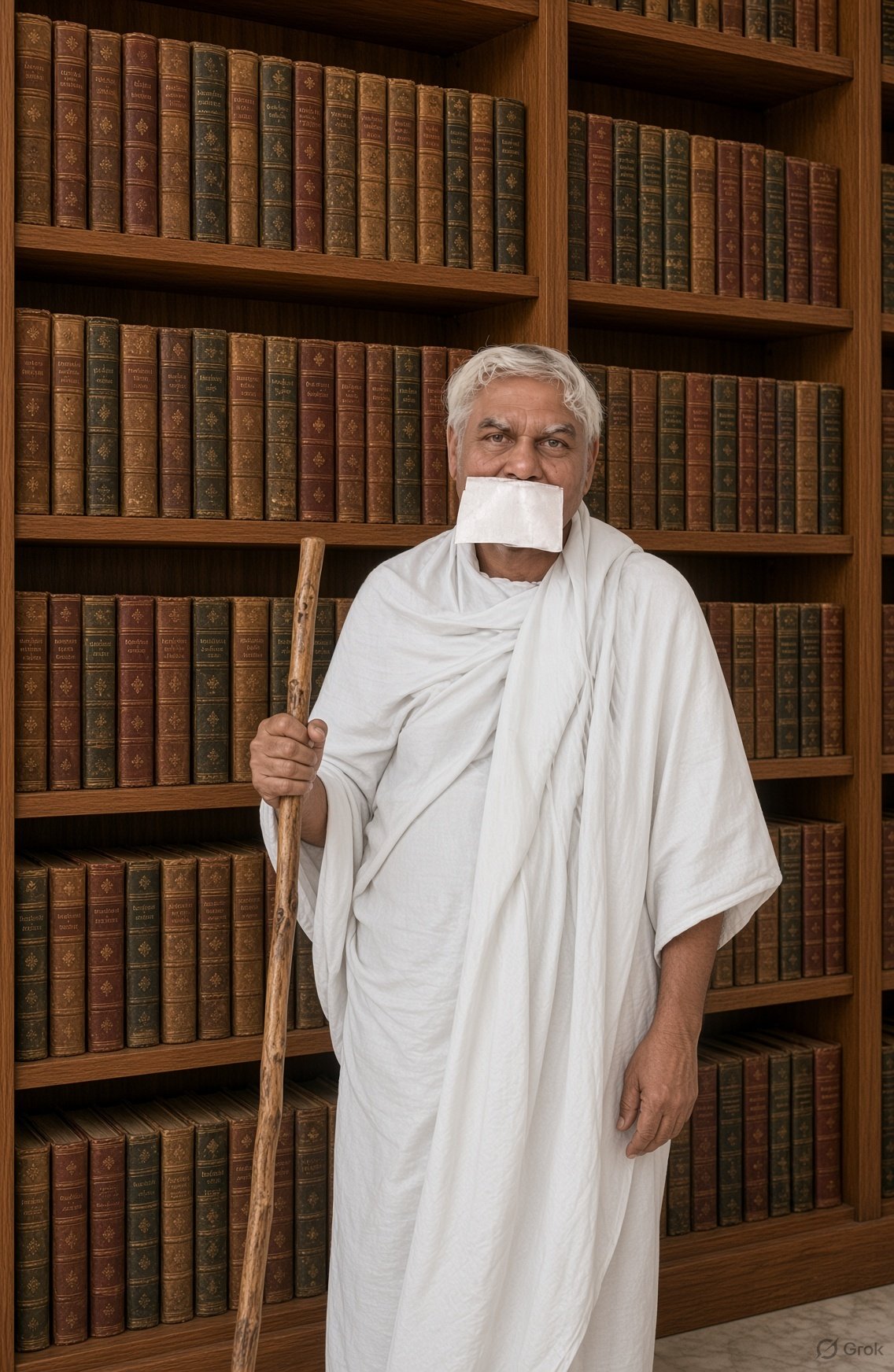
According to the biographical record published by JainSamaj.org, Dr. Rajendra Muniji Maharaj Saheb was born on 1 January 1954 in Badu village, near Merta City, Rajasthan. His family belonged to the Oswal Jain community. His family details are recorded as follows:
Particular | Details |
|---|---|
Birth name | Rajendra Kumar Dosi |
Date of birth | 1 January 1954 |
Birthplace | Badu village, near Merta City, Rajasthan |
Father | Shri Poonam Chand Dosi |
Mother | Smt. Dhapu Kunwar |
Community | Oswal Jain |
Elder brother | Upadhyay Shri Ramesh Muniji Maharaj Saheb |
Religious tradition | Shvetambar Jain; associated with the Sthanakwasi Shraman Sangh |
The family biography is particularly significant because his elder brother, Upadhyay Shri Ramesh Muniji Maharaj Saheb, also became a Jain monk. Their mother subsequently embraced religious renunciation and became known as Sadhvi Shri Prakashwati Ji. The family's religious commitment appears to have played an important part in the spiritual development of both brothers.
Rajendra Muniji grew up in a family whose values were influenced by Jain religious traditions. The biographical account describes how the religious environment provided by his parents was strengthened through contact with two influential Jain monks: Upadhyay Shri Pushkar Muniji Maharaj Saheb and Acharya Samrat Shri Devendra Muniji Maharaj Saheb. In Jainism, spiritual development is encouraged through the company of religious teachers, the study of sacred literature, self-discipline and reflection on the nature of the soul. For a young person considering renunciation, the example of an experienced monk can have a profound influence. The lives of Jain Acharyas demonstrate the importance of simplicity, non-violence, control over desires and the pursuit of spiritual knowledge. Rajendra Muniji's decision to embrace monastic life at a young age was a defining turning point in his life.
In 1965, at approximately eleven years of age, Rajendra Kumar Dosi accepted Jain Bhagwati Diksha at Garh Siwana, in present-day Barmer district, Rajasthan. His elder brother, Ramesh Muniji, also accepted diksha in the same year. The biography identifies Acharya Samrat Shri Devendra Muniji Maharaj Saheb as his diksha guru. Diksha is a profound commitment in Jainism. It marks the renunciation of worldly life and the acceptance of an ascetic discipline intended to reduce attachment, control passions and advance towards spiritual liberation.
The monastic path requires a commitment to principles including:
Ahimsa: Non-violence towards living beings.
Satya: Truthfulness in thought and speech.
Asteya: Refraining from taking what has not been given.
Brahmacharya: Observance of celibacy and restraint.
Aparigraha: Freedom from possessiveness and attachment.
Through this discipline, Rajendra Muniji entered a life devoted to Jain philosophy, religious study, preaching and service to the community.
Acharya Samrat Shri Devendra Muniji Maharaj Saheb occupies an important place in Rajendra Muniji's spiritual history. He was his diksha guru and is identified in the biographical record as his principal spiritual guide. The guru-disciple relationship is fundamental to the Jain Shraman tradition. A guru provides instruction in religious doctrine, guides the disciple's conduct and encourages the development of scriptural understanding and spiritual discipline. Rajendra Muniji's later accomplishments in religious scholarship, public speaking and institution-building can be understood within this tradition of disciplined learning and spiritual guidance.
One of the most distinctive aspects of Rajendra Muniji's life is his extensive academic and religious education. The biography records that he studied several languages, including:
Sanskrit
Prakrit
Hindi
Gujarati
Marathi
Bengali
His areas of study included Jain Agamas, logic and Nyaya, grammar, poetics and Hindi literature. The same record lists qualifications including Sahitya Ratna, Shastri, a master's degree, a PhD, Kavyatirtha, Mahopadhyaya and Jain Siddhantacharya. These studies reflect an engagement with both classical Indian learning and Jain philosophical traditions.
Prakrit and the Jain Agamas: Prakrit is important for understanding many traditional Jain scriptures and their historical language. Sanskrit and grammar: Knowledge of Sanskrit grammar and classical literature provides tools for interpreting philosophical texts and traditional commentaries. Nyaya and philosophy: Logical reasoning helps examine arguments, distinguish competing interpretations and clarify philosophical concepts. Poetics and literature: Literary knowledge enables a teacher to communicate complex ideas through stories, poetry, examples and accessible explanations. His education therefore provided a foundation for both scholarly work and religious preaching.
The biographical account describes Rajendra Muniji as an accomplished orator whose discourses attracted large audiences. It emphasises the combination of scholarly learning and public speaking in his religious activities. Religious preaching has a central place in the Sthanakwasi Jain tradition. Through discourses, monks explain Jain scriptures, discuss ethical dilemmas and encourage people to apply spiritual principles in their daily lives. A religious discourse can address a wide range of subjects, including the consequences of karma, the discipline of non-violence, the importance of truthfulness, the control of anger and greed, and the pursuit of inner peace. Rajendra Muniji's recorded training in languages, philosophy, grammar and literature would have provided a broad intellectual basis for this work. His role as a religious speaker also illustrates the importance of making philosophical teachings understandable to ordinary householders, young people and the wider community.
Rajendra Muniji's literary work is another major dimension of his biography. The published information records that he wrote and edited works across several genres, including:
Stories and fiction
Novels
Poetry
Jain Agama literature
Research and scholarly writings
His literary activities are significant because writing enables religious knowledge to reach audiences beyond those who can attend a discourse in person. Literature can also preserve the lives of saints, explain philosophical concepts, communicate ethical values and create a lasting record of religious scholarship. The combination of literary writing and public preaching reflects two complementary forms of service: the preservation of knowledge in written form and its transmission through direct teaching.
One of the most notable aspects of Rajendra Muniji's recorded contribution is his association with social and religious institutions. The biography information states that approximately 25 institutions associated with education, healthcare, religious life and community service were operating in different parts of India through the initiatives it describes. The categories include schools, colleges, Sthanaks, hospitals, gaushalas, Pushkar Guru Pavan Dham and meditation centres. hese activities illustrate how Jain religious values can be expressed through organised service.
Rajendra Muniji's family history is closely linked with that of his elder brother, Upadhyay Shri Ramesh Muniji Maharaj Saheb. Ramesh Muniji was born on 24 January 1951 in Badu, Rajasthan, and accepted diksha in 1965 under Upadhyay Shri Pushkar Muniji Maharaj Saheb. His recorded areas of study include Jain Agamas, Naya philosophy, ethics and related religious subjects. His biography also describes extensive literary and editorial work. The two brothers thus followed the Jain ascetic path at a young age, although their documented spiritual lineages and subsequent religious designations differed. Their lives provide an example of how religious learning, monastic discipline and family traditions can intersect in the development of Jain scholars and teachers.
The biography of Ramesh Muniji identifies their mother, Smt. Dhapu Kunwar, as having later accepted religious initiation and become Sadhvi Shri Prakashwati Ji. This detail gives the family history a further spiritual dimension. The decision to embrace religious renunciation is a deeply personal commitment involving a reorientation of life towards spiritual practice. The renunciation of a mother and the monastic lives of her two sons illustrate the influence of Jain religious values within this family. It is a distinctive part of the biographical context in which Rajendra Muniji's life developed.
The importance of a Jain monk's life is ultimately measured not only by education or institutional achievements, but also by the spiritual values that guide his conduct and teaching. Several principles of Jain philosophy are particularly relevant to understanding Rajendra Muniji's work.
Ahimsa — non-violence
Jainism teaches respect for all living beings. The practice of non-violence extends beyond physical actions to speech, intentions and everyday decisions.
Anekantavada — many-sided understanding
This principle encourages consideration of different perspectives when understanding complex questions. It promotes intellectual humility and careful reasoning.
Aparigraha — non-possessiveness
Reducing attachment to possessions, status and material ambitions is central to the Jain path of renunciation.
Samyam — self-restraint
Discipline over one's desires, speech and conduct is essential to spiritual progress.
Swadhyaya — continuous study
The study and contemplation of religious teachings enable knowledge to become a guide for ethical conduct.
Karuna — compassion
Compassion finds expression in concern for the suffering of others, charitable service and the protection of living beings. These values provide a framework for understanding the relationship between Jain ascetic life, scholarship and social service.
Up-Pravartak Dr. Shri Rajendra Muniji Maharaj Saheb's biography presents the story of a Jain monk whose life combined early renunciation, advanced study, religious preaching, literary activity and the encouragement of social institutions. Born into an Oswal Jain family in Badu, Rajasthan, in 1954, he accepted diksha at approximately eleven years of age. His subsequent education encompassed several Indian languages, Jain scriptures, philosophy, grammar and literature. His recorded work as a writer, preacher and supporter of institutions demonstrates the diverse ways in which Jain religious life can serve both spiritual and social purposes. His family history is also significant: his elder brother, Upadhyay Shri Ramesh Muniji Maharaj Saheb, became a Jain monk, and their mother subsequently embraced renunciation as Sadhvi Shri Prakashwati Ji. The broader message of this life is that religious knowledge acquires its fullest meaning when it encourages compassion, humility, restraint and service to others. May the teachings of Lord Mahavir continue to inspire all people to follow the path of Ahimsa, truth, self-discipline, tolerance and universal compassion.
श्रमणसंघीय प्रवर्तक पूज्य गुरूदेव डॉ. राजेन्द्र मुनि जी म.
श्रमणसंघीय प्रवर्तक पूज्य गुरूदेव डॉ. राजेन्द्र मुनि जी म. भारतीय सन्त परम्परा के उज्ज्वल नक्षत्र आर्चाय सम्राट् श्री देवन्द्र मुनि जी म. के प्रधान शिष्य रत्न हैं। आपश्री का जन्म मेवाड़ सिटी के समीप बडूग्राम राजस्थान में 1 जनवरी, सन् 1954 को माता श्रीमती धापकुंवर, पिता श्रीमान् पूनमचन्द जी ओसवाल डोसी परिवार में हुआ। माता-पिता के पावन संस्कार बचपन में पल्लवित पुष्पित होते रहे जो परम श्रद्धेव उपाध्याय श्री पुष्कर मुनि जी महाराज एंव श्रद्धेव गुरूदेव आर्चाय पूज्य श्री देवेन्द्र मुनी जी महाराज के सत् सन्निध्य को पाकर विराट् रूप् धारण करने लगे। परिणामस्वरूप आपने अपने बड़े भ्राता उपाध्याय श्री रमेश मुनि जी महाराज के साथ सन् 1965 में 11 वर्ष की अल्पायु में राजस्थान के बाड़मेल जिले के गढ़ सिवाणा ग्राम में जैन भागवती दीक्षा स्वीकार की।
आपने अपना सम्पूर्ण जीवन व क्रिया हेतु समर्पित कर दिया। संस्कृत, प्राकृत, हिन्दी, गुजराती, मराठी, बांग्ला आदि भाषाओं का अध्ययन तथा आगम न्याय, व्याकरण, काव्य, हिन्दी साहित्य का गहन अध्ययन किया। आपश्री ने साहित्यरत्न शास्त्री एम. ए., पी - एच. डी. काव्यतीर्थ महोपाध्याय, जैन सिद्धांताचार्य आदि उच्चतम परीक्षाएं उत्तीर्ण की। अध्ययन के साथ वक्तृत्व कला का भी आपके जीवन पें अदभुत साम्य है। जब आपका प्रवचन होता है हजारों लोग मंत्रमुग्ध हो उठते हैं, ऐसा लगता है आपकी वाणी में मां सरस्वती अवतरित हो रही है। लेखक के क्षेत्र में कहानी, उपन्यास, काव्य, आगम, शोध आदि ग्रंथों का आपने लेखन सम्पादन किया है। सामाहिक क्षेत्र में स्कूल, कॉलेज, स्थानक, हॉस्पिटल, गौशाला, पुष्कर गुरू पावन धाम, ध्यान केन्द्र आदि के रूप में लगभग 25 संस्थाएं भारत के विभिन्न क्षेत्रों में कार्यरत है।
Father's Name Shri Punam Chand Ji Dosi
Mother's Name Smt. Dhapu Kunwar
Date of Birth Posh Badi-10, Dt. 01-01-1954
Place of Birth Badu, Merta City
Date of Deeksha March, 1965
Place of Deeksha Sivana, Rajasthan
Sect / Subsect Swetambar
Deeksha Provided By Acharya Samrat Sh.Devendra Muni Ji M. S.
Acharya of Sect (At The Time of Deeksha) Acharya Samrat Sh.Devendra Muni Ji M. S.
Qualifications M.A., P.H.D., Sahitya Ratna, Shastri, Visharad, Jain Sidantacharya Etc.
-----------------------------------------------------

R26102026
Ahimsa Foundation warmly welcomes information, photographs, literature, articles, and other meaningful contributions for publication on this web portal: www.jainsamaj.org | ✉ CAINDIA@HOTMAIL.COM
We also invite advertisements and sponsorship support to help us expand the reach of this social initiative and promote public awareness of Jain ideology.

Copyright © 2026 jainsamaj. All rights reserved.


